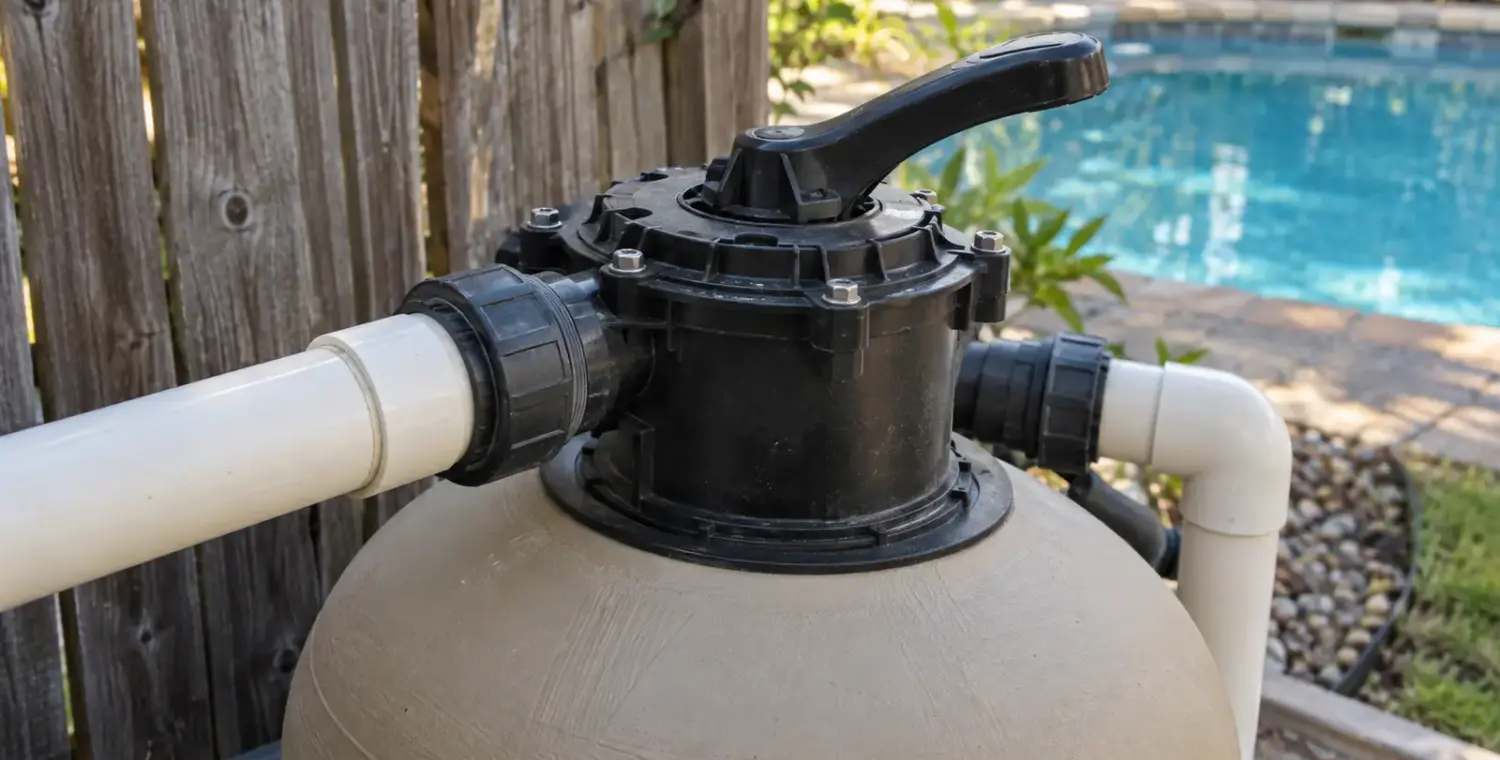
Filter sends water through the filter and back to the pool. Backwash reverses the cleaning flow to waste; Rinse sends water through the sand bed to waste. Waste bypasses the filter and discharges water, while Recirculate bypasses it and returns water to the pool. These common names describe different routes, not interchangeable ways to make water clearer.
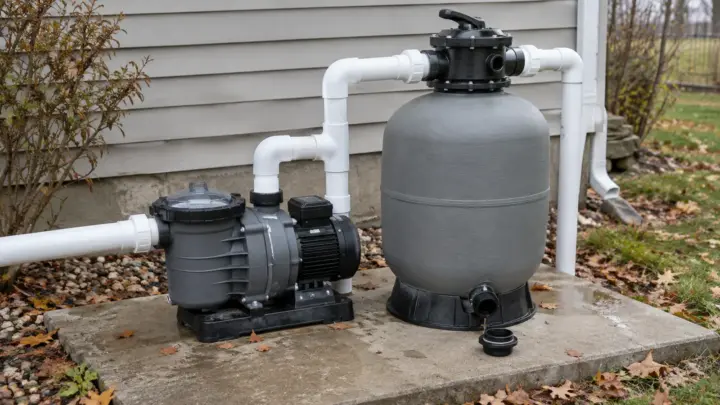
The explanations below use a sand-filter multiport as the main example. Check your installed valve and filter manual for available functions, compatible routing and exact procedures.
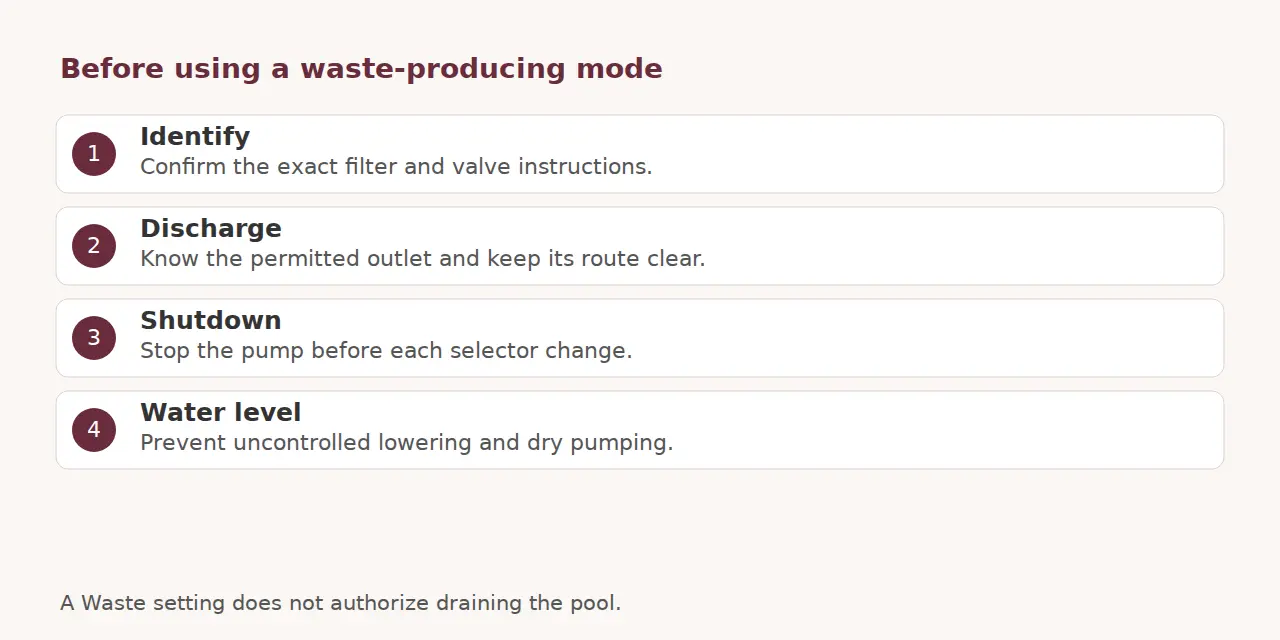
Stop the pump before every position change
Turn the pump off and prevent automatic restart before moving the selector. Follow the valve’s instructions for its handle and the filter’s pressure-release and restart sequence. Never force a stuck handle, move it with the pump running or open a valve housing to investigate pressure.
Know where the discharge line goes before choosing a waste-producing mode. A blocked or kinked outlet is a problem to correct with the system stopped, not by increasing pump speed. If the installed sequence is unclear, get a qualified professional to demonstrate it.
The five common positions at a glance
| Position | Through filter media? | Destination | Main purpose |
|---|---|---|---|
| Filter | Yes | Pool | Normal particle removal |
| Backwash | Yes, reversed for cleaning | Waste line | Flush trapped material out |
| Rinse | Yes, normal sand-flow direction | Waste line | Resettle sand and flush after backwashing |
| Waste | No | Waste line | Approved direct discharge |
| Recirculate | No | Pool | Circulation without filtration |
The Sand Dollar/Cristal-Flo II manual documents these routes. Valve and filter families differ; a similar handle doesn’t establish interchangeable parts or maintenance procedures.
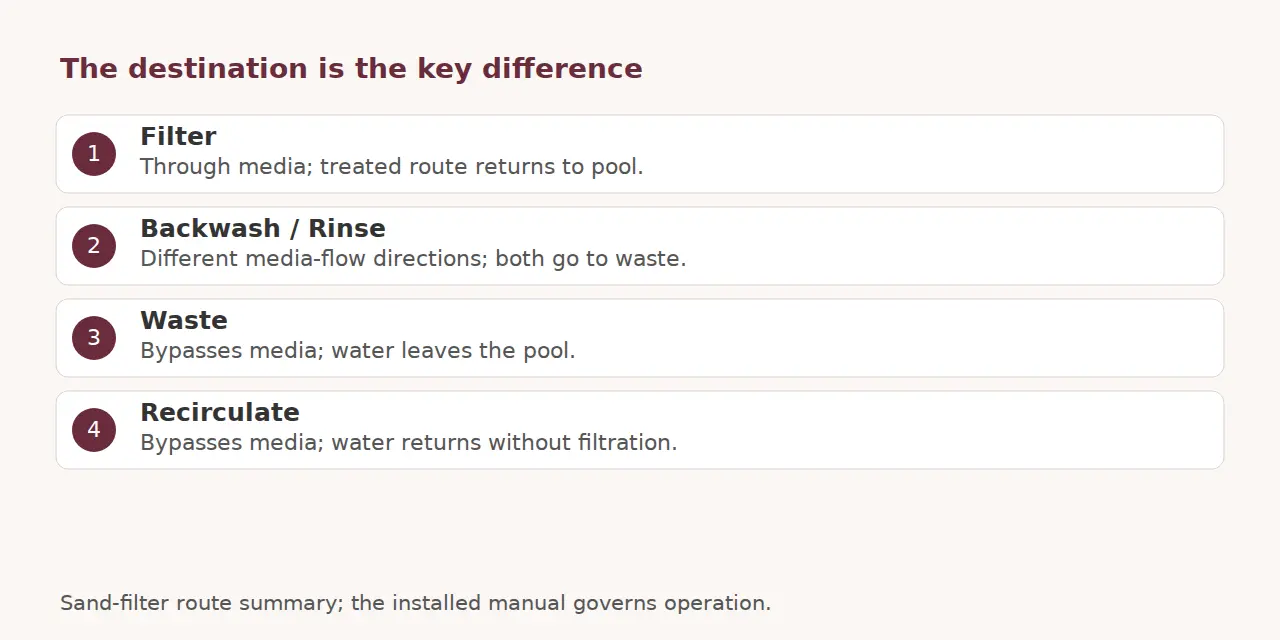
Filter is the normal operating route
In the sand-filter example, water travels down through the media and returns through the centre pipe toward the pool. Trapped dirt increases the resistance over a cleaning cycle. Keep the clean operating-pressure record specified by your filter manual.
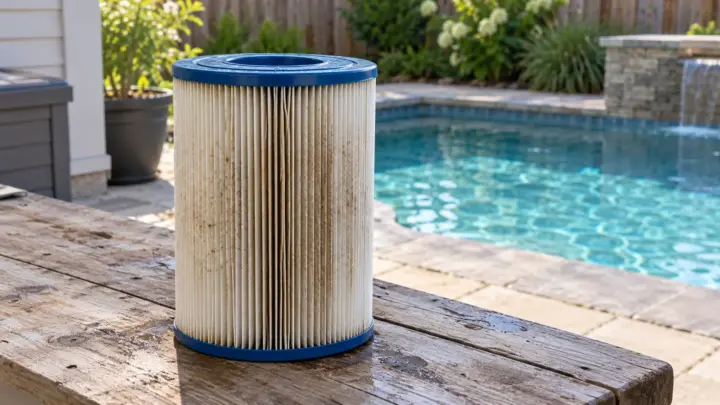
Filtration removes particles; water chemistry needs its own testing and treatment. Changing selector modes won’t correct every cloudy-water problem. For broader equipment differences, read our sand, cartridge and D.E. comparison.
Backwash and Rinse have different cleaning jobs
Backwash reverses flow through the sand bed to carry trapped material out through the waste route. Rinse then follows normal sand-flow direction but still discharges to waste, helping settle the bed before normal filtration resumes.
Use the exact filter’s cleaning instructions, including the shutdown between positions, permitted pump mode and discharge endpoint. Timings printed for one model or for initial commissioning aren’t a universal routine. D.E. filters have their own media and restart requirements; don’t apply a sand sequence to them by appearance.
Waste and Recirculate both bypass the media
The destination is the difference. Waste sends water away from the pool; Recirculate sends it back. Recirculate provides movement without particle capture, so it isn’t a replacement for a working filter.
Waste has legitimate applications such as model-approved vacuum-to-waste work, but water leaves the pool throughout that operation. Confirm the lawful disposal route and the required water level. Read the water-level troubleshooting guide if loss is unexpected.
A listed Waste setting is not permission to drain your pool. Emptying needs assessment of shell, liner, groundwater and disposal risks. Get professional guidance before significant lowering, and never let a pump draw air or run dry.
Closed and winter positions need their own instructions
Never run the pump in CLOSED: that setting provides no circulation path. A winter position is for the model’s shutdown procedure, not routine filtration. Some filters instead use a slide valve with fewer positions, so follow the labels actually present.
If a mode doesn’t behave as expected
Unexpected waste-line flow during filtration, sand returning to the pool, leaks or a selector that won’t seat need qualified diagnosis. Note the mode, recent maintenance and pressure reading, then stop the equipment when operation is unsafe. Leave internal seals and pressurized housings to service.
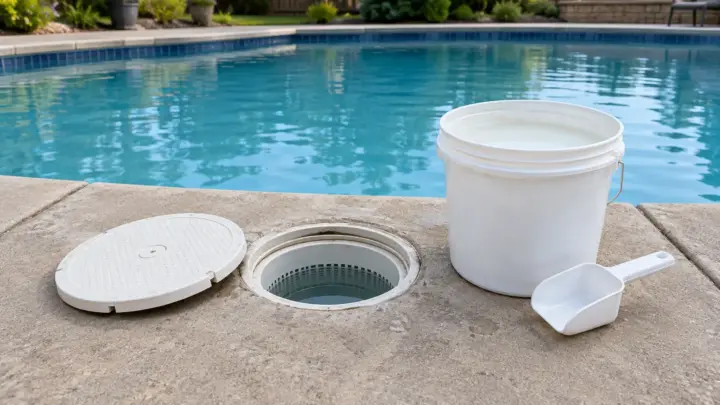
Keep swimmers clear of suction outlets and close the pool for a damaged or missing drain cover until corrected. A different selector position cannot repair a suction-safety problem.
Research checked 2026-10-03.