A confirmed drop in free chlorine during a genuinely dark overnight interval points you toward chlorine demand, water replacement or a testing problem rather than direct sunlight loss during that interval. It deserves investigation, but the result alone cannot identify algae or tell you a treatment dose.
First make sure the two readings are comparable. Record what the sanitizer system and pool actually did between them. Keep swimming suspended whenever adequate sanitation cannot be verified.
Check what “overnight” includes
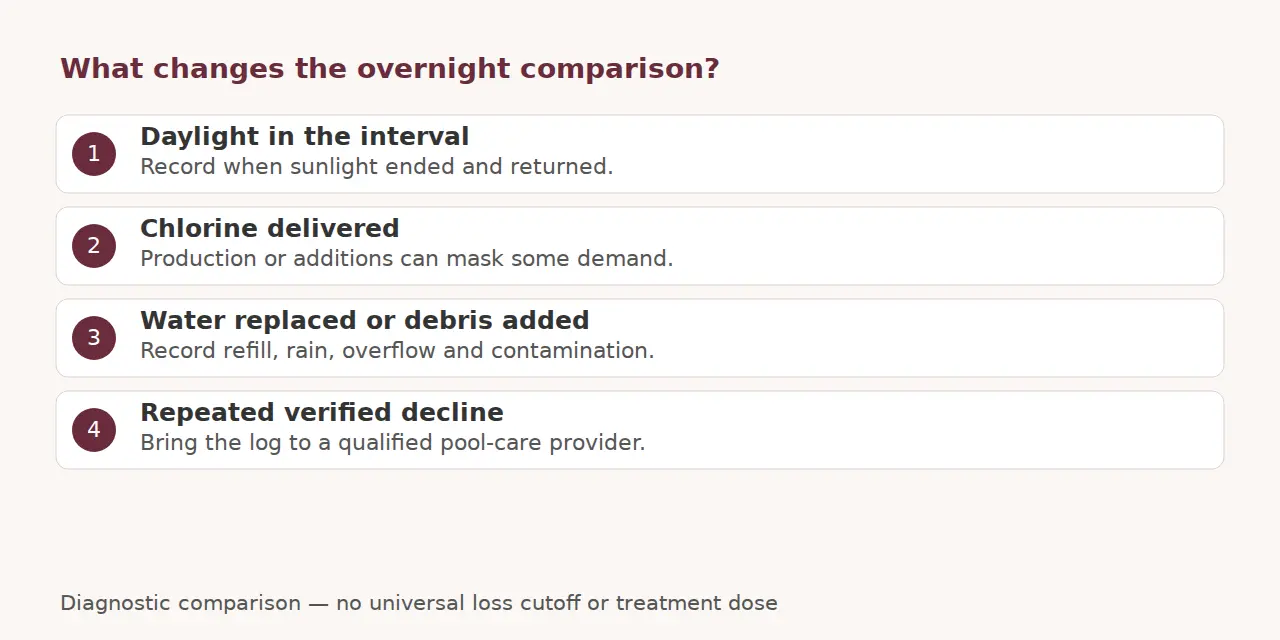
An evening reading taken while the pool still receives sunlight, followed by a midmorning reading, includes daylight exposure. Label the real times rather than attributing the whole change to darkness. CDC guidance identifies sunlight and contaminants among causes of chlorine reduction.
A comparison made after sunlight has ended and before it returns narrows one influence. Other influences remain: contamination already in the water, additional debris, water changes and sanitizer delivery. This is a diagnostic inference, not a standardized laboratory demand test.
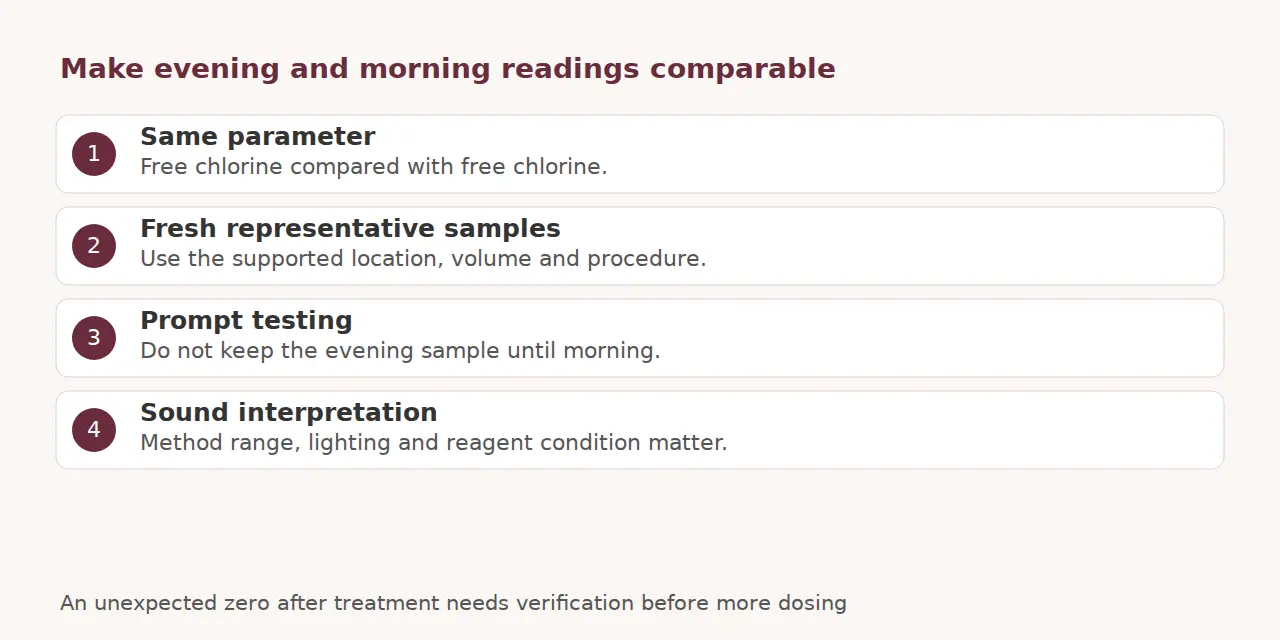
Use the same chlorine measurement twice
Compare free chlorine with free chlorine. Total chlorine includes free and combined chlorine, so a total-only result answers a different question. The test manufacturer’s explanation of chlorine forms helps identify what your kit reports.
Follow the exact sample volume, reagent order and timing. Collect representative fresh samples using the same supported method and test promptly. Taylor’s testing-error guidance warns that samples left exposed to air can change, especially sanitizer readings. Saving an evening sample until morning would introduce a second experiment.
Use appropriate lighting for color matching and sound, correctly stored reagents. Repeat an unexpected result properly rather than choosing the reading that looks most plausible. If the reading exceeds the method’s range, use its approved confirmation procedure or obtain suitable testing.
A zero after substantial chlorine treatment deserves extra care. CDC warns that chlorine above 10 ppm can bleach the discussed DPD test and produce a false low or zero. Pause blind additions until that possibility is resolved.
Write down what happened between readings
- The evening and morning times, free-chlorine readings and test method.
- Recent bathing, leaves or other debris, plus any visible algae or slippery surfaces.
- Rain, refill, overflow or other known water replacement.
- Any chlorine addition and the required circulation/waiting instructions.
- The normal pump and sanitizer schedule, status messages and whether production occurred.
Keep the established safe equipment program intact. A salt generator’s output and operating hours influence chlorine delivery; the IntelliChlor manual also requires pump operation for production. Record actual operation rather than assuming the controller’s setting proves chlorine entered the pool.
A system that added chlorine overnight masks some demand in the observed change. Conversely, a stopped generator does not replace chlorine consumed during that period. Never bypass flow protection or alter unfamiliar feed equipment just to obtain a cleaner-looking test.
Use the pattern to choose the next check
If repeat testing disagrees, resolve the measurement first. If the readings are reliable and the dark-period loss persists, review contamination and delivery with a qualified pool-care provider. Health Canada guidance explains that contaminants increase sanitizer needs and algae consumes sanitizer; clear appearance also leaves microbial safety unresolved.
If the decline mainly appears across daylight hours, sunlight and stabilizer context deserve attention alongside the other causes. Our low-chlorine diagnostic guide covers that wider investigation. Avoid adding stabilizer solely because one pair of readings fell.
What this comparison cannot decide
The reviewed primary sources do not establish one universal overnight-loss cutoff for every residential pool. Report changes at the resolution your kit supports. A small uncertain color difference and a repeated clearly measurable decline deserve different confidence, without inventing decimal precision.
A stable reading with ongoing chlorine delivery does not prove zero demand. A falling reading does not isolate one contaminant. Give the provider your log, product labels, current balance tests and equipment details rather than requesting a guessed shock amount.
Correct confirmed problems through the applicable product and equipment instructions, then retest as directed. Continue the full water-testing routine; never mix treatments or use overnight stability alone to declare swimming safe.
Research checked 2026-10-03.