Pool water testing is useful when you know what each result measures and what decision it supports. A chlorine reading cannot explain calcium balance, and clear water cannot confirm that disinfectant and pH are suitable. Start with a representative sample, the correct test method and a written set of targets for your pool. If chlorine is unexpectedly low, work through the checks in our guide to common causes of low chlorine in a pool before adding more product.
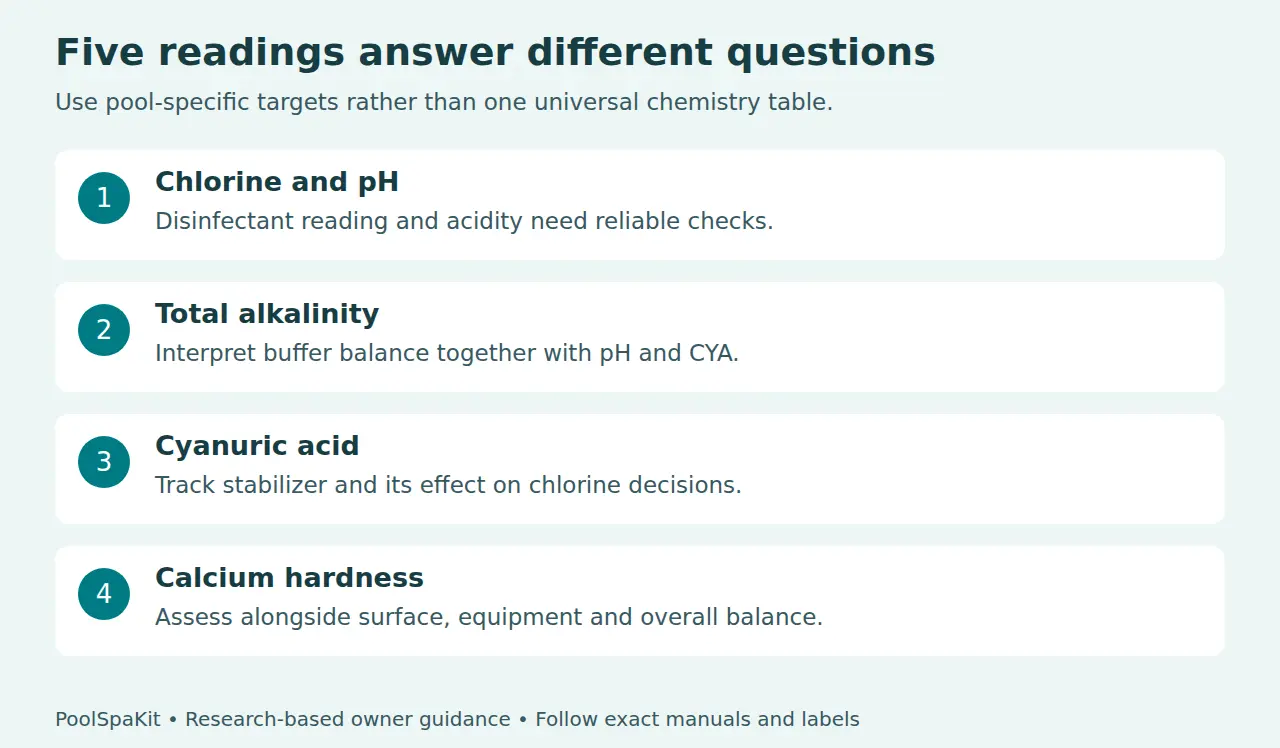
This guide explains chlorine, pH, total alkalinity, cyanuric acid and calcium hardness. Product labels, equipment instructions and applicable local requirements govern treatment in the US, UK, Canada and Australia.
We only claim hands-on testing when we’ve actually tested the product ourselves.
Start with safety and a pool-specific target sheet
If sanitation is uncertain, pause swimming while you confirm the readings and correct the problem. Do not use appearance or smell to declare water ready. Health Canada notes that clear pool water can still contain microorganisms. A saltwater pool also needs disinfectant testing: its generator produces chlorine rather than replacing chlorine chemistry.
Before interpreting a full panel, write down the pool volume, surface type, sanitizer products and generator model if fitted. Obtain the target ranges and test procedures required by those labels and manuals. Include local requirements where applicable. Keep the source of each target beside it, rather than copying an unexplained chart.
As a US public-health reference, CDC recommends pH of 7.0–7.8 and at least 1 ppm chlorine in pools, increasing the chlorine minimum to at least 2 ppm when cyanuric acid or stabilized chlorine is used. These minimum recommendations are not a complete operating band, a shock-treatment dose or permission to swim immediately after adding chemicals. Your actual product and system instructions may require a different working target.
Do not combine numbers from different programs into a homemade standard. A commercial facility, a bromine spa and a residential chlorine pool have different contexts. For spa readings, see our guide to hot tub pH and alkalinity. If your instructions conflict, ask the equipment or chemical supplier to resolve the discrepancy before treatment.
Collect and test a representative sample
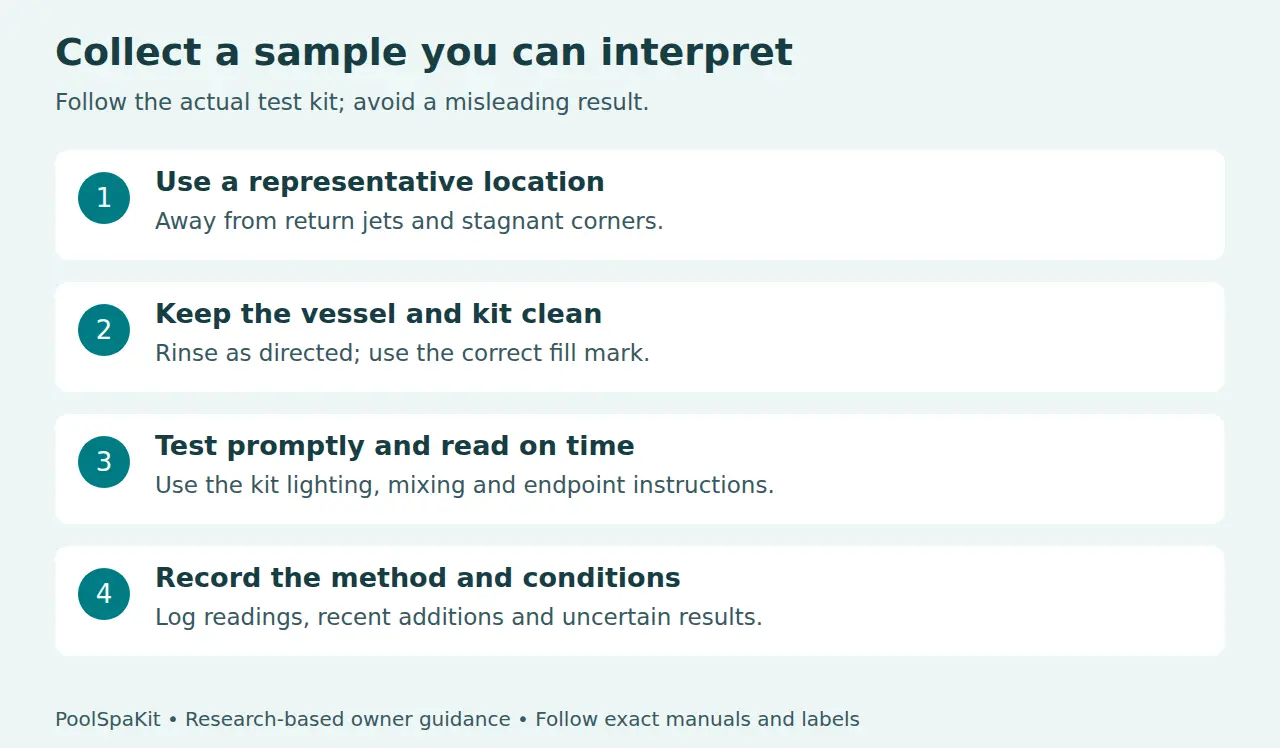
- Prepare the kit. Read its sequence, sample volume, mixing, timing and endpoint instructions before opening reagents. Confirm it measures the parameters you need.
- Choose the location. Collect away from return jets and stagnant corners, below the surface at the depth specified by the kit. Keep yourself safely positioned; you do not need to enter the pool.
- Use a clean vessel. Rinse as directed. Residue from cleaning products or an earlier test defeats the purpose of a representative sample.
- Fill accurately. Follow the marked sample volume. For a curved water surface, use the kit’s meniscus instructions rather than estimating from above.
- Test promptly. Follow the stated lighting, reading time and mixing procedure. Record recent chemical additions and whether the required circulation and waiting period have been completed.
A shop analysis can help investigate confusing results, but label the sample with collection time and conditions and follow the shop’s transport instructions. A result from a sample left sitting around is not interchangeable with an immediate poolside reading. Record the method used so you can compare like with like next time.
Chlorine: free, combined and total are different readings
Free chlorine is the chlorine available for disinfection. Combined chlorine represents chlorine that has reacted with contaminants to form chloramines. Total chlorine includes both; it equals free chlorine plus combined chlorine. Check which measurement your kit reports before comparing it with a free-chlorine target.
A total-only result cannot tell you how much free chlorine remains. Kits differ in how they obtain free and total readings or calculate combined chlorine. Use the supplied procedure and reporting resolution. Do not subtract values from unrelated methods or treat an uncertain endpoint as an exact laboratory result.
If free chlorine is below the applicable target, investigate the reliable reading and your sanitizer instructions. Consider recent use, rainfall, additions and generator operation when recording the circumstances. Do not infer a treatment dose from odor or from the word “shock” on a generic checklist.
An apparent zero deserves particular care after a substantial chlorine addition. CDC warns that chlorine above 10 ppm can bleach a DPD test and produce a misleading low or zero reading. Adding more chlorine without checking the method can worsen the mistake. Follow the kit’s high-range instructions or obtain suitable confirmatory testing.
pH: the acidity reading affects interpretation
pH describes how acidic or alkaline the water is; it is a scale, not a concentration reported in ppm. CDC explains that high pH reduces chlorine’s germ-killing effectiveness, while low pH increases corrosion concerns. A sanitizer number therefore belongs beside a reliable pH reading, not on its own. For a deeper troubleshooting path, see our guide to pool pH that is too high or too low.
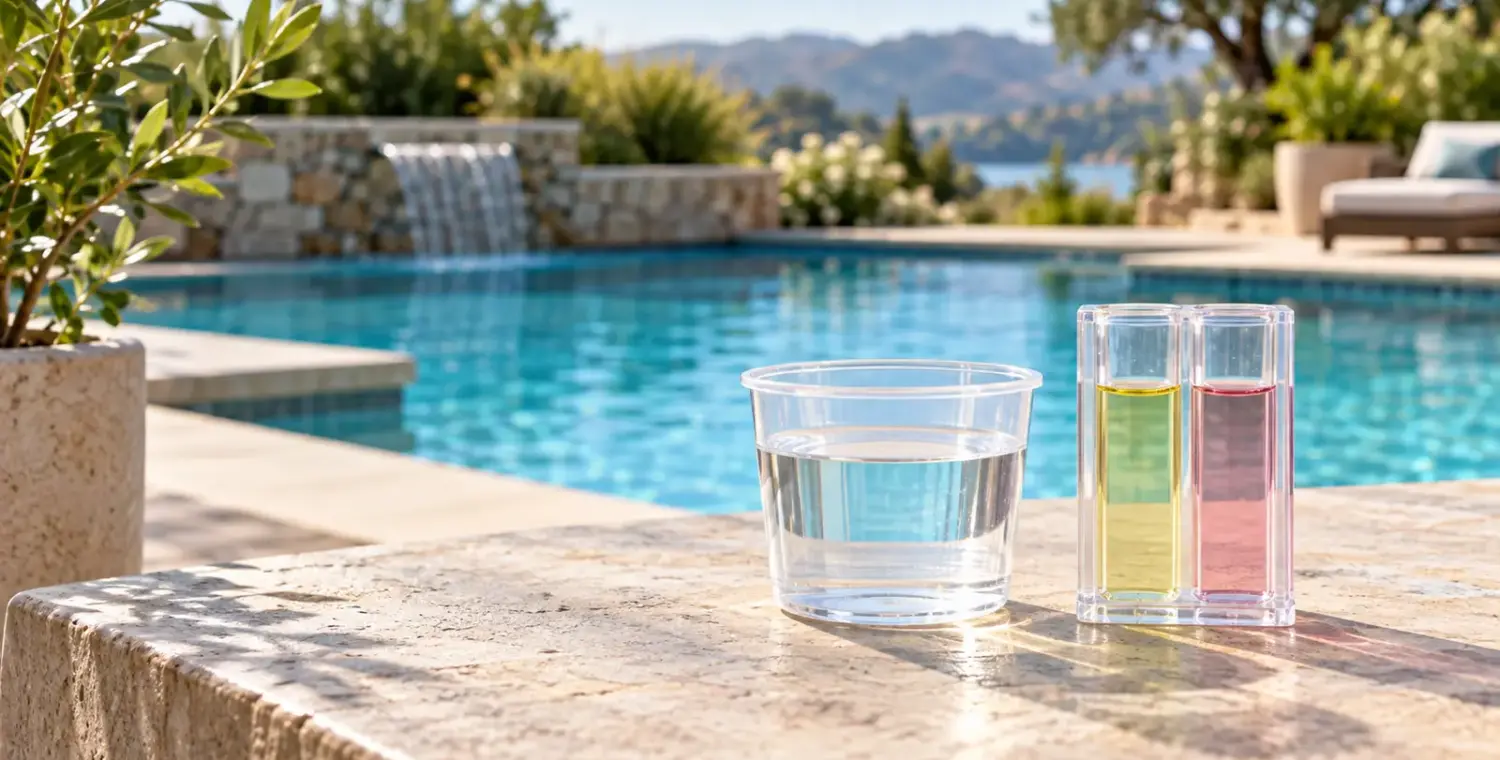
For a color-comparison kit, use the specified reagent and matching comparator. Taylor cautions that different phenol-red formulations are not interchangeable across its kits. Compare at the prescribed time and in appropriate lighting; do not decide from an old sample or a photograph whose colors have shifted.
High sanitizer concentrations can also interfere with some pH tests. An unusual color after treatment is a reason to consult the test instructions. Do not improvise sample dilution or add neutralizer unless the kit directs it. Confirm the reading before using it to calculate a chemical correction.
Total alkalinity: related to pH, but not the same test
Total alkalinity, usually reported in ppm, helps describe the water’s buffering behavior and belongs in an overall balance assessment. It is not another name for high pH. Record both readings rather than assuming that a satisfactory result for one establishes the other. If the result is outside your intended range, use our guide to pool alkalinity that is too high or too low.
Many kits use a drop-count titration for alkalinity. The sample volume, reagent order and endpoint matter. Apply the conversion factor printed for that procedure; a drop does not have one universal ppm value across every kit and sample size.
Cyanuric acid can contribute to measured alkalinity. Taylor’s technical guidance distinguishes a measured total-alkalinity result from an adjusted value used in some balance calculations. Keep the raw result in your log and use the correction required by the actual calculation method. Do not automatically subtract a fraction of CYA from every target or test report.
If pH keeps moving outside the intended range, alkalinity is one part of the investigation. Review the full readings and treatment history with your supplier rather than repeatedly adjusting pH from an isolated number.
Cyanuric acid: track stabilizer alongside chlorine
Cyanuric acid, commonly shortened to CYA or called stabilizer, reduces sunlight-related chlorine loss. Stabilized chlorine products such as dichlor and trichlor also introduce CYA. Their repeated use is therefore relevant to the stabilizer trend, even if you have not added a separate stabilizer product. For a fuller explanation of buildup, testing and chlorine context, see our guide to cyanuric acid in pools.
More stabilizer is not automatically better. Elevated CYA reduces chlorine’s effectiveness, and the chlorine decision must account for the applicable program. Avoid treating “chlorine lock” as a complete diagnosis or using a single internet ratio in place of your product and system requirements.
Follow your CYA test’s mixing, viewing and endpoint instructions. Some methods use turbidity and a disappearing black dot rather than a color match. Report results within the method’s range and resolution; an off-scale result is not an exact number. Confirm an unexpectedly high reading before deciding on a correction.
Do not drain water automatically from one CYA result. Any water-replacement plan also needs the pool manufacturer’s draining guidance, structural or groundwater assessment where relevant, and local discharge rules. Ask a qualified pool professional when those conditions are uncertain.
Calcium hardness: check what the kit actually measures
Calcium hardness measures the calcium component of hardness. Total hardness includes other components, notably magnesium, so a total-hardness result should not be silently relabeled as calcium hardness. Read the kit description and report the measurement it actually provides.
Calcium is part of water-balance assessment, particularly for calcium-containing finishes. Taylor explains that scale-forming or potentially aggressive conditions depend on interacting measurements, including pH, alkalinity, calcium, temperature and dissolved solids. A calcium number alone does not establish whether a pool will scale or a finish will etch. For practical next steps after a low or high result, see our guide to calcium hardness in pool water.
Use the surface and equipment guidance to establish the appropriate target. For a titration, follow the correct sample size, endpoint and drop factor. If you use a saturation-index calculation, enter the parameters and any corrections that calculation requires. Do not substitute a generic hardness chart for the requirements of your particular pool.
When results disagree, troubleshoot the test first
Repeat an unexpected result with a fresh representative sample and the same correctly performed method. Check the sample mark, reagent identity, expiry guidance, reading time and measurement range. Where a treatment-related interference is possible, use the maker’s approved confirmation method or seek professional testing.
Keep reagents tightly closed with their own caps. Taylor recommends cool, dark storage away from treatment chemicals and protection from temperature extremes. Clean and dry equipment as directed, and inspect comparators for stains, cracks or faded markings. Replace reagents and damaged components according to the maker’s guidance.
For persistent cloudiness, use the complete test record with our cloudy pool water diagnostic guide. Do not assume that a clear sample means the filter, sanitizer and balance have all passed inspection.
Keep a log and act on confirmed results
Record the date, time, test method, five readings, relevant water temperature, recent additions and the target source. Note uncertainty explicitly. CDC recommends checking chlorine and pH at least twice daily and more during heavy use; plan the other balance checks around your actual care program and changes in conditions. Our guide to how often to test pool water turns that into a seasonal schedule.
Once a result is confirmed, use the exact treatment label and known pool volume. Never mix chemicals. Predissolve only when instructed, and follow protective-equipment, circulation, waiting and reentry directions. Make a clear record of the correction and retest as directed before deciding what to do next.
Seasonal products also require measured decisions; our pool closing chemicals guide explains that separate task. A useful testing routine leaves you with evidence you can interpret, a documented next step and a clear reason to request help when the result remains uncertain.
Sources and editorial basis
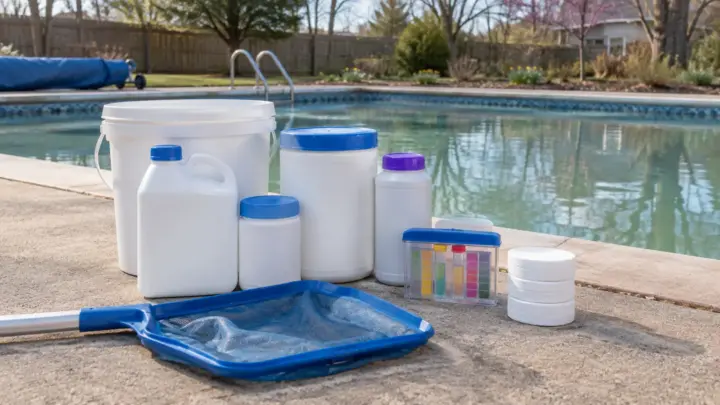
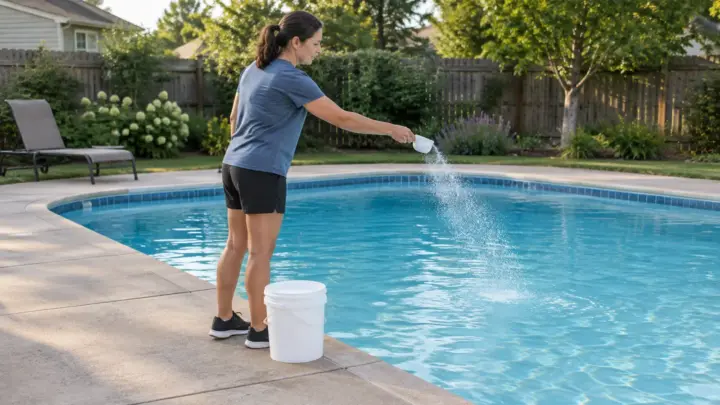
Prepared by PoolSpaKit Editorial using public-health and test-manufacturer guidance. Original illustrations explain the workflow; they do not show measured results or a product endorsement.
- CDC: home pool treatment and testing
- Health Canada: swimming pool and spa cleaning
- CDC: pool chemical injury prevention
- Taylor: free, combined and total chlorine
- Taylor: sample collection
- Taylor: technical FAQs
- Taylor: cyanuric acid
- Taylor: calcium hardness
- Taylor: water balance
- Taylor: kit and reagent care