Calcium hardness in pool water measures its dissolved calcium, but a low or high result does not tell the whole story. The practical question is whether that water suits your pool finish and equipment, alongside its pH, alkalinity and temperature. Start by confirming the test, checking the applicable instructions and looking at the complete water balance before buying a treatment.
White deposits, rough surfaces or cloudy water can justify investigating calcium. They cannot diagnose it on their own. Equally, clear water can still have an unsuitable balance. This guide explains how to separate a calcium reading from a surface symptom and choose a response without guessing a chemical dose.
What calcium hardness measures
Calcium hardness, often shortened to CH, describes the calcium portion of water hardness. Total hardness includes calcium and magnesium; a reading labelled “total hardness” is therefore not automatically interchangeable with calcium hardness. The USGS explanation of water hardness is useful background on these minerals and how local water supplies vary.
Pool CH results commonly use parts per million, or ppm, expressed as calcium carbonate (CaCO3). That reporting convention matters when comparing a laboratory report with your test kit. A result expressed as calcium itself needs interpretation before comparison; do not assume that matching-looking numbers use the same units.
Hardness also differs from total alkalinity. Alkalinity describes resistance to a change in pH; hardness describes mineral content. They interact in water balance, but raising one is not a substitute for measuring the other. Use our pool water testing guide to assemble the wider panel.
Why there is no single right calcium number for every pool
Begin with the requirements for your actual finish, heater and treatment equipment. A cementitious finish, such as plaster or a cement-based aggregate finish, has different material considerations from a vinyl liner or a fibreglass shell. Tile grout and equipment may introduce additional requirements. A liner pool still needs appropriate water chemistry; its surface type is not permission to ignore hardness.
Published guidance is not all written for the same setting. NSW Health’s 2026 public-pool guidance discusses calcium alongside the rest of water balance and distinguishes surface types in its balance appendix. Its public-venue requirements are not a universal residential rule for the US, UK, Canada or Australia. A domestic water supplier’s description of “hard water” is not a pool maintenance target either.
Ask your builder or service professional to identify the applicable maintenance document, including the finish’s age and any start-up requirements. If equipment and finish recommendations appear inconsistent, resolve that conflict before adjusting the water. Keep the test report and the instructions together so that future decisions use the same basis.
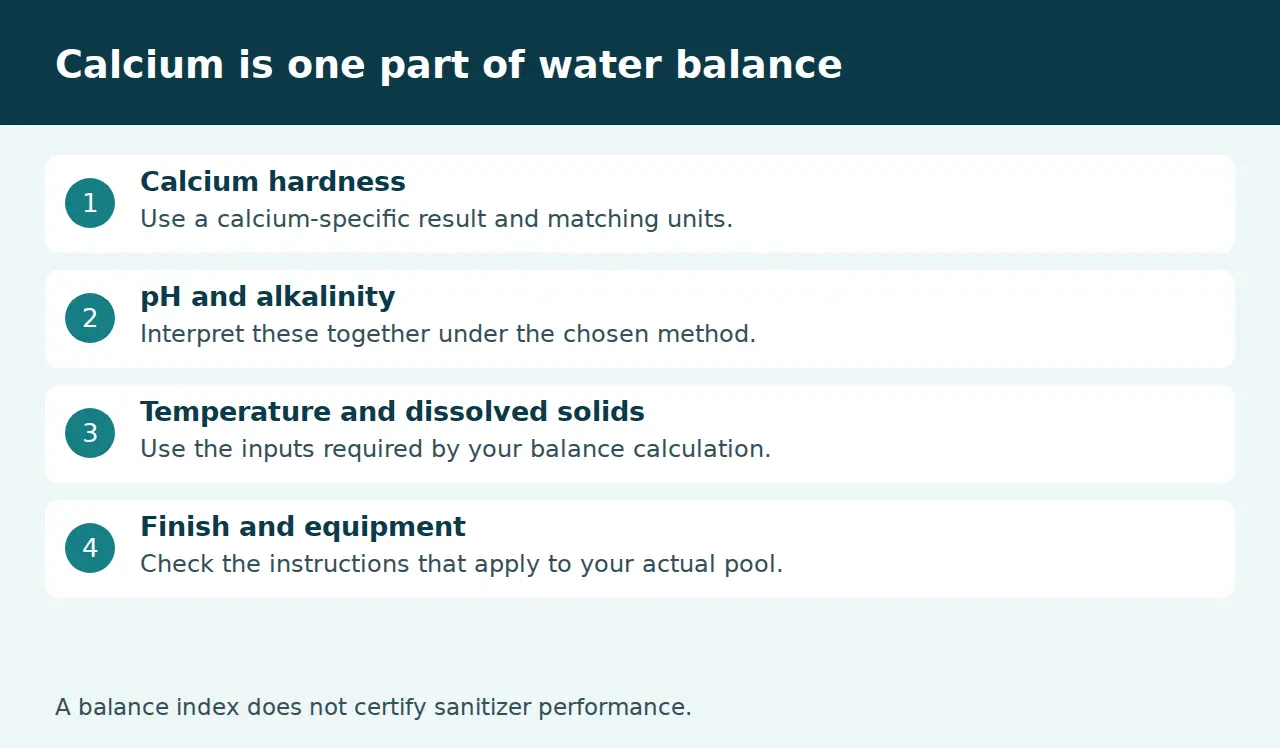
Assess the whole balance, not just hardness
A calcium-carbonate saturation assessment considers pH, calcium hardness, alkalinity, temperature and dissolved solids. Where stabilizer is present, the alkalinity input may need adjustment under the chosen method. A suitable balance calculator can help interpret these relationships, provided its inputs and instructions match your situation.
The result estimates the water’s tendency to dissolve or deposit calcium carbonate. It does not certify sanitizer performance, swimming safety or every possible cause of metal corrosion. Avoid changing pH outside its permitted operating limits simply to make an index look better. Water can meet one numerical goal while failing another important requirement.
Confirm the calcium test before treating
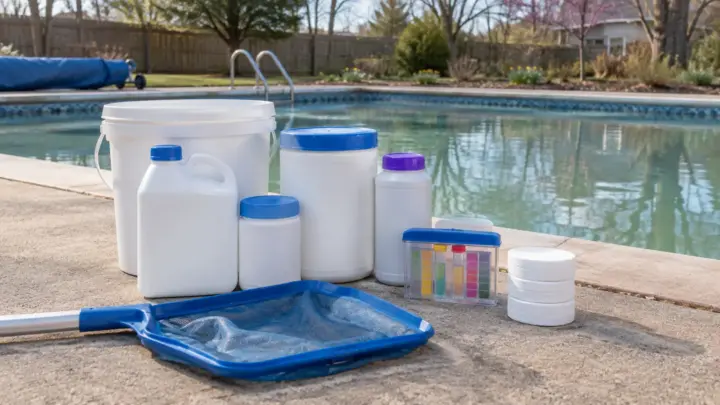
- Check what the test measures. Use a method that reports calcium hardness when that is the required parameter. Some products report total hardness instead; read the specification rather than relying on the word “hardness” on the packaging.
- Follow the exact method. Sample volume, reagent sequence, mixing and the drop-count conversion factor belong to that kit. Do not borrow a multiplier from another kit or change sample size without its instructions.
- Check reagent condition. Follow the storage and expiry requirements. A repeated result is more useful when the reagents and technique are reliable.
- Investigate an unclear endpoint. Taylor’s technical FAQs identify metal interference as a possible cause of a purple calcium-test endpoint. Its remedy is specific to the Taylor method; it is not a generic instruction to add extra drops to any test.
- Compare pool and refill water. Test the actual source you would use for topping up or replacement. A regional hardness map or an old water report cannot establish today’s CH at your hose.
Record the date, CH result and units, pH, alkalinity, water temperature and other inputs required by your balance method. Include recent water replacement and treatment changes. If a result is off-scale, unexpectedly different or hard to interpret, seek a suitable confirmatory test before a major correction.
Low versus high calcium: what to investigate
| Finding | Possible concern | Useful next check |
|---|---|---|
| CH below the applicable recommendation | Unsuitable carbonate balance, especially for cementitious materials | Finish instructions, pH, alkalinity and saturation assessment |
| CH above the applicable recommendation | Greater scaling concern when the wider balance favours deposition | Full chemistry panel, temperature and refill-water CH |
| White haze or rough deposits | Possible scale; appearance alone is inconclusive | Confirm chemistry and ask for finish-compatible diagnosis |
| Unclear or inconsistent test | Method, reagent or interference problem | Repeat correctly or obtain a confirmatory calcium-specific test |
If calcium hardness is low
Start with your water source and replacement history. Water with less calcium can leave the pool below its intended operating requirement. The concern for cementitious surfaces is greater when the full chemistry favours dissolving calcium compounds; low CH alone does not prove that existing marks were caused by calcium deficiency.
Etching or deterioration needs a finish-specific assessment. Correcting the water can address the ongoing balance problem, but it should not be presented as a way to rebuild material already lost. Do not diagnose all staining, cracks or roughness as a hardness problem from a photograph.
If calcium hardness is high
Test the refill supply rather than assuming that replacing water will help. High-CH make-up water can limit the usefulness of an exchange. Review the treatment products as well: establish which ingredients you are adding instead of choosing them solely by terms such as “shock” or “balance.”
Scaling depends on the surrounding chemistry. White haze may be consistent with scale, while heat can make deposition in heaters particularly troublesome. Manufacturer guidance describes heater scale as a barrier to heat transfer. A heater performance problem nevertheless needs equipment diagnosis; hardness is one consideration, not proof of the fault.
If the water is cloudy, use the cloudy pool water guide to investigate sanitizer, filtration and other causes as well. Adding a calcium treatment to every cloudy pool would skip that diagnosis.
How to respond safely
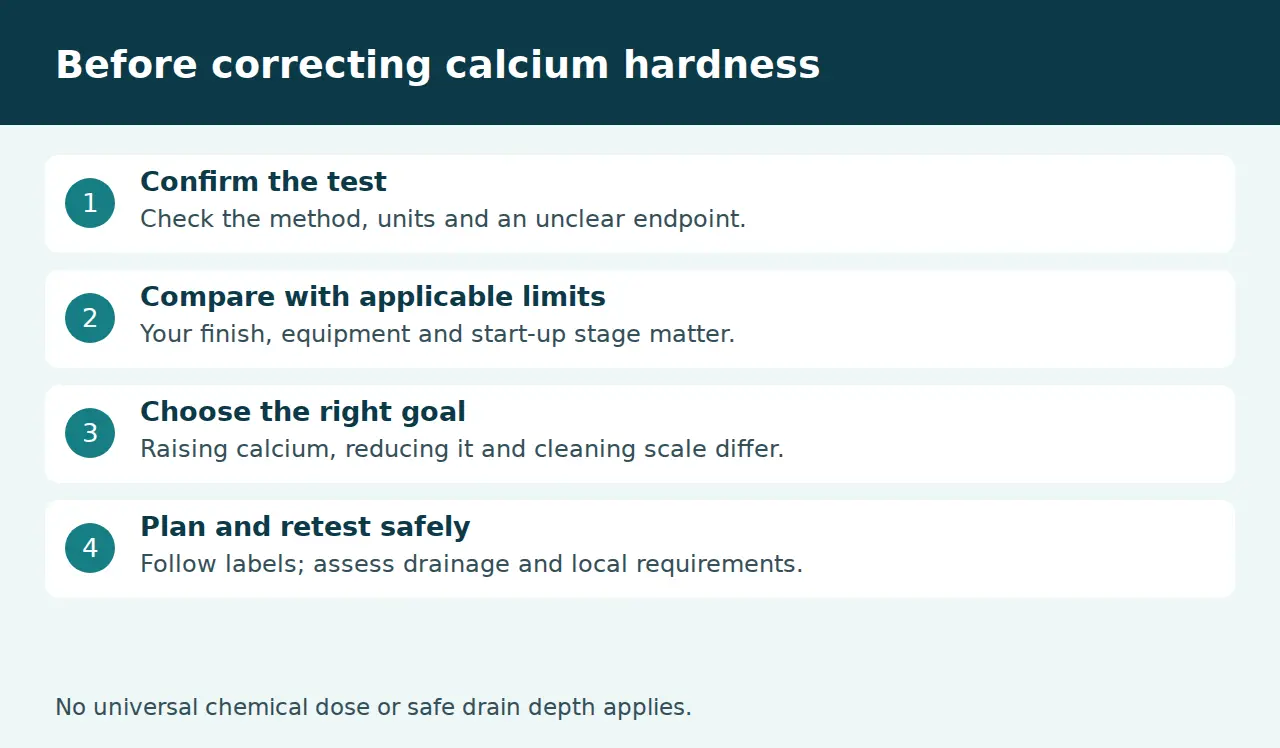
Raising confirmed low calcium hardness
Calcium chloride is used to raise calcium hardness. Choose a pool product compatible with your system and use its current label to determine the quantity, application method, precautions, circulation and retesting requirements. The decision requires a reliable result, the applicable target and the actual pool volume. Our calcium chloride dose guide shows how the amount scales with volume and the rise you need.
Do not copy an online dose or a preparation method from a differently concentrated product. Do not combine treatments in a container, feeder or skimmer. Follow the label and equipment instructions for where the product may be added, and use the specified protective equipment. Keep swimmers out during treatment and until the stated return-to-use conditions are met.
Responding to confirmed high calcium hardness
Separate two goals: reducing dissolved calcium and managing the conditions that favour scale. Adjusting pH or alkalinity within their applicable limits can change carbonate balance, but it does not mean the calcium concentration has been removed. Recheck CH rather than inferring removal from clearer water.
NSW Health describes exchange with lower-hardness make-up water as a way to reduce calcium hardness. For a residential pool, that requires a safe plan for both construction and water disposal. Confirm that the replacement water actually has lower CH and consider the other chemistry it will change.
Never turn that principle into a universal drain depth. Groundwater can create serious structural risks, and vinyl or fibreglass pools may have specific restrictions on water removal. Pentair’s drainage warnings explain why an empty pool can be vulnerable. Consult the builder or an appropriate pool professional, and check local water restrictions and discharge requirements first.
Dealing with existing deposits
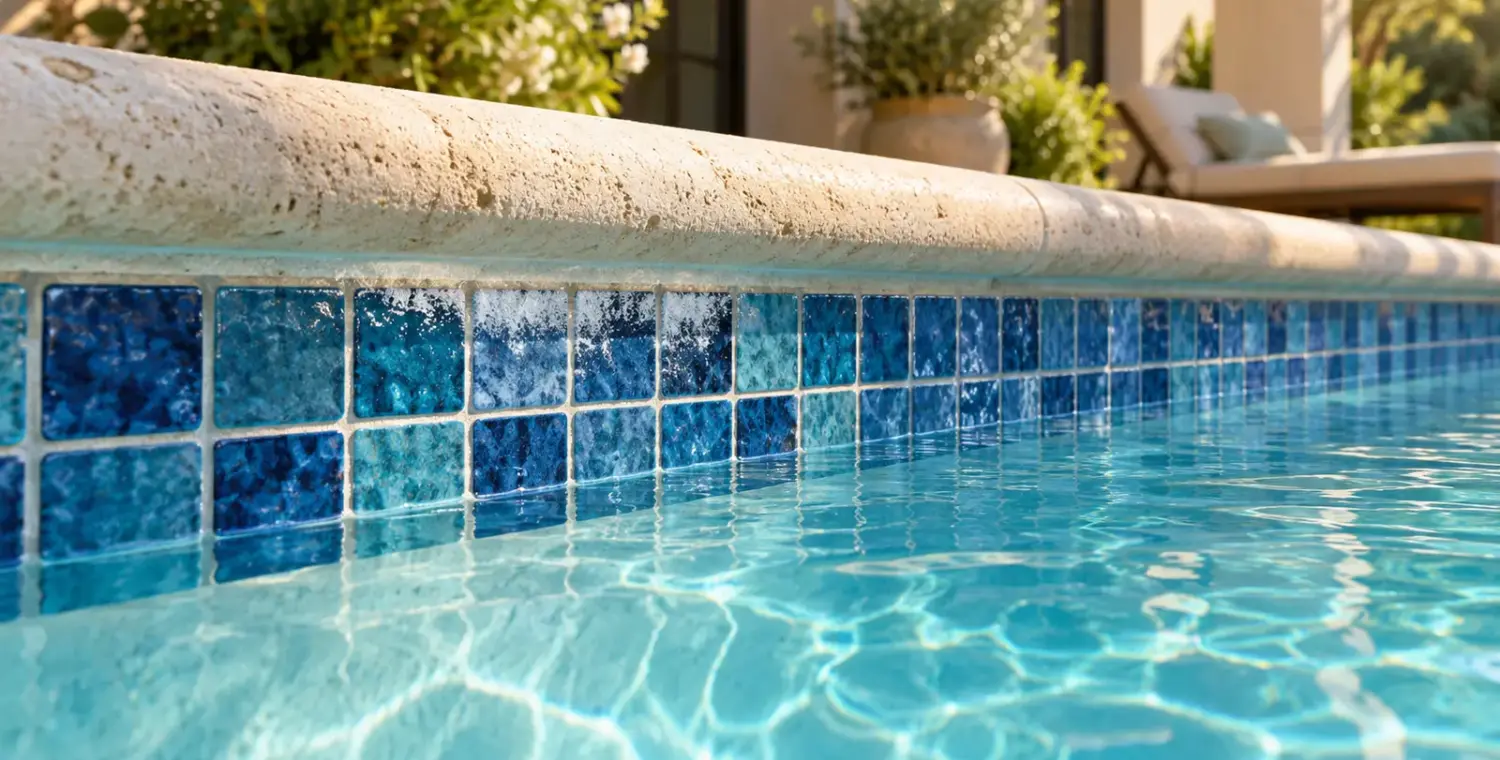
Have deposits identified before cleaning, then use a method approved for the finish and equipment. Do not deliberately make the whole pool aggressively acidic to dissolve scale. That approach can also attack cementitious material and metal equipment; removing a deposit is not worth creating another damage problem. For the tile line specifically, our guide to cleaning waterline tile without damaging the finish covers finish-safe methods.
Ask what a proposed treatment changes: the dissolved calcium concentration, the tendency to deposit scale, or an existing surface deposit. Those are different outcomes. A product name or a cleaner-looking tile does not establish that the underlying water balance has been corrected.
New finishes and changing seasons need extra care
A new or resurfaced pool should follow its own start-up procedure. For example, Pebble Technology International advises against softened water for the initial fill during curing, while distinguishing use after curing. This is brand-specific guidance, not a blanket prohibition on every future use of softened water in every pool.
Seasonal changes can also change the balance assessment even if CH appears unchanged. Heating and cooling alter carbonate saturation behaviour. Review the chemistry when operating conditions change, particularly around heater use or winter preparation, using the applicable equipment and finish instructions.
Keep a trend log rather than responding only when deposits become visible. Include refill-water results and any advice about conflicting limits. A recurring problem is easier to investigate when the record shows what changed before it returned.
Common calcium-hardness questions
Does clear water mean calcium hardness is fine?
No. Confirm the result and assess the full chemistry. Clarity cannot establish the dissolved calcium concentration or the suitability of water for a particular finish.
Will adding acid lower the CH result?
Changing pH changes carbonate balance; it is not the same as removing calcium. Use acid only for an appropriate, label-directed pH correction, not as a universal hardness-removal or descaling recipe.
Should I use a drinking-water hardness range?
No. Drinking-water classifications describe the supply, while pool requirements depend on materials, equipment and operating conditions. Confirm calcium-specific units and the applicable pool instructions before choosing a target.
What information should I give a professional?
Provide the test method and results, finish type and age, equipment models, refill-water source, recent treatments and any visible changes. Explain whether the problem is a number outside the instructions, an existing deposit or suspected damage. That distinction helps turn a vague hardness concern into a useful correction plan.
Research checked October 1, 2026. We only claim hands-on testing when we’ve actually tested the product ourselves. Featured image is an original illustration.
Sources and references
- U.S. Geological Survey: Hardness of Water
- NSW Health: Guidelines for Managing Water Quality in Public Swimming Pools and Spa Pools
- Taylor Technologies: Understanding and Managing Calcium Hardness in Pool and Spa Water
- Taylor Technologies: Water Testing Technical FAQs
- Pebble Technology International: Pool Care Instructions
- Pebble Technology International: Customer Support and FAQs
- Health Canada: Swimming pool and spa cleaning
- Pentair: Assessing your pool after a power outage