Most pools don’t need algaecide. Keep free chlorine at 2–4 ppm (the PHTA ideal for pools) and pH at 7.4–7.6, and run working filtration and weekly brushing. That routine kills algae before it shows. Algaecide is useful as backup in three cases: a pool that keeps growing algae, the final step after clearing a green pool, and winter closing.
If you use stabilizer (CYA), CDC’s floor is at least 2 ppm chlorine, so the 2–4 ppm target covers that too.
When algaecide earns its place
| Situation | Algaecide? | What to do first |
|---|---|---|
| Clear pool, chlorine holds 2–4 ppm | Not needed | Keep testing; brush weekly |
| Clear pool, algae returns every few weeks | Yes, weekly prevention dose | Find why chlorine drops (low chlorine checks) |
| Visible algae now | Only after shocking | Shock, brush, filter (green pool guide) |
| Yellow-brown “mustard” algae on shaded walls | Often, as a follow-up | Brush hard, shock, then treat |
| Closing for winter | Optional, per the label’s closing dose | Balance and shock before closing |
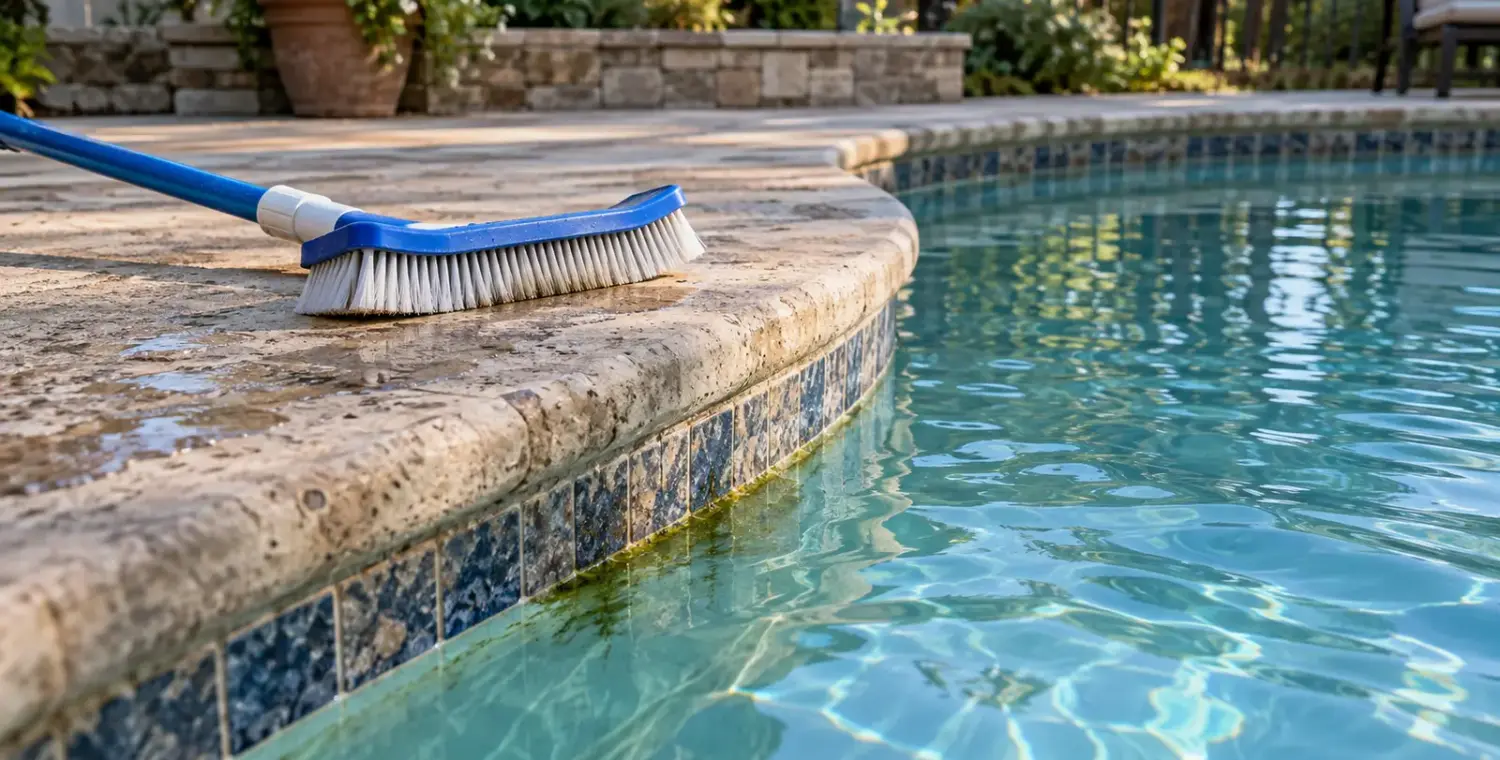
Mustard algae is the exception to “chlorine is enough”. One EPA-accepted algaecide label states that mustard algae can form even with proper sanitation and filtration. The same label notes that mustard algae usually grows in shade. Those are the manufacturer’s statements, and they explain why owners of shaded pools often keep a prevention dose going.
What the dose looks like
Doses are set by each product’s label, because strengths differ. As a worked reference, one 2018 EPA-accepted label (BioLab T-0041, a polyquat-plus-copper product) reads:
- Prevention: 8 fl oz per 10,000 gallons to start, then 1.5 fl oz per 10,000 gallons weekly.
- Visible algae: shock first and circulate 1 hour, then add 16 fl oz per 10,000 gallons. Circulate 24 hours and brush the next day.
- Swimming: do not enter the pool until chlorine is between 1 and 4 ppm.
Before applying, the same label requires working equipment, a clean filter, pH 7.2–7.6, and chlorine or bromine maintained at proper levels. In other words, algaecide works alongside chlorine and never replaces it. Your bottle’s numbers are the ones to use.
Pick the right type
- Check your sanitizer. The label above says not to use it in pools sanitized with biguanides or treated with hydrogen peroxide.
- Copper or no copper. Copper-based products add metal to the water. Polyquat-only products avoid that, which matters if you have stain-prone surfaces or source water with metals.
- Look for an EPA registration number. Any product that claims to prevent or control algae is a registered pesticide, so a real algaecide carries one.
Handle it safely
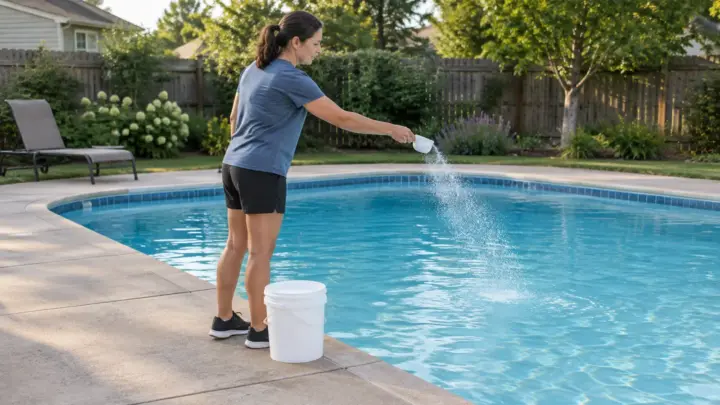
Wear protective eyewear (safety glasses or goggles) and rubber gloves, as the label requires. Add algaecide to the pool water with the pump running. Never mix pool chemicals: CDC warns they can injure people when mixed together. Add each product separately. If algae keeps coming back, test free chlorine and CYA before adding more algaecide; our pool shock guide covers raising chlorine quickly.
Sources
- Pool & Hot Tub Alliance (PHTA), published by Taylor Technologies: Recommended Water Chemistry Parameters
- CDC: Home Pool and Hot Tub Water Treatment and Testing
- US EPA (BioLab label): EPA-accepted algaecide label T-0041, September 2018
- US EPA: Use of the Term Shock in Swimming Pool, Hot Tubs, and Spa Products
- CDC: Pool Chemical Safety
Research checked 2026-10-08.