Inflate an above-ground pool air pillow only about half to three-quarters full, then tie it loosely so it floats in the center of the pool under the winter cover. Swim University puts the fill at 50% to 80% of capacity and The Pool Factory at about 60%. Both give the same reason: the pillow needs room to compress. A drum-tight pillow is more likely to pop during the winter.
What the air pillow actually does
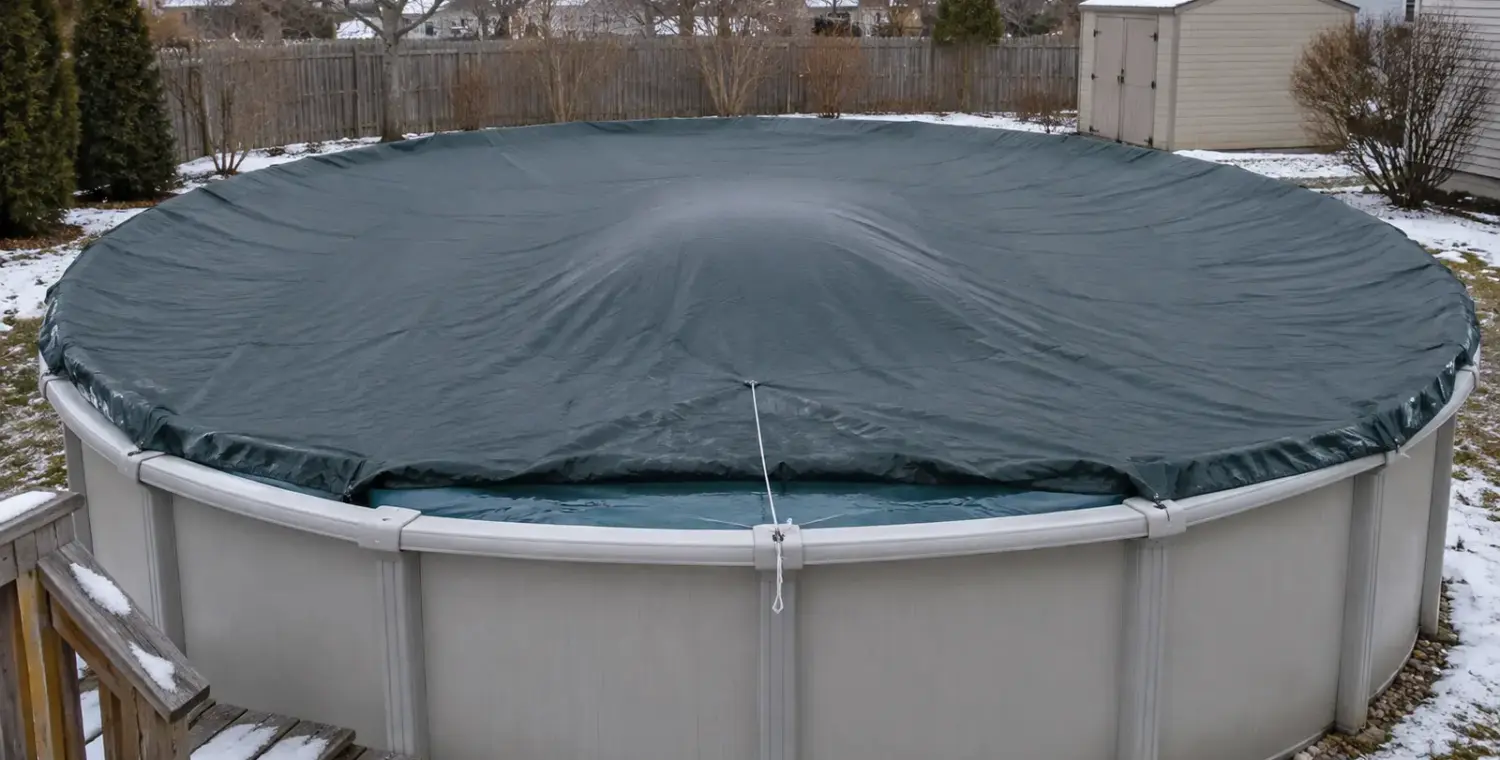
An above-ground pool’s water sits well below the top rail once you lower it for winter. Bestway says to put an inflatable item made of cold-resistant material, such as a pool pillow, on the water’s surface to fill the space between the water level and the top rails, so the cover is supported. Intex makes the same point about snow: objects containing air in the pool help relieve the pressure snow puts on the cover.
The Pool Factory describes the pillow as an ice compensator. Freezing water expands outward, and a soft pillow in the middle gives that expansion somewhere to go other than your wall, cover and liner. A hard, overinflated pillow can’t absorb anything, which is why fill level matters.
Not every source buys the ice claim. Swim University’s author says he is not convinced pillows protect against real ice damage, since they just float on top. He does agree they help with water pooling in the middle of the cover: the raised center pushes rain and snowmelt toward the edges, where you can pump it off. So the pillow’s most dependable job is to keep the cover from sagging in the middle. Treat any ice protection as a bonus.
How to set up the pillow, step by step
- Get the water ready first. Clean and balance the water, then lower it to the level shown in your pool’s manual. Bestway’s year-round pools each have their own required level, so use the number for your model. If ice has already formed, remove it carefully. Bestway warns that the sharp edges can break and damage the liner.
- Pick the right size. Use a proper pool air pillow. Swim University says inner tubes or exercise balls won’t work as well. Its table, based on diameter, recommends a 4 x 4 ft pillow for 12 to 16 ft round pools, 4 x 8 ft for 18 to 24 ft rounds, and 4 x 15 ft for 27 ft rounds and larger. The Pool Factory’s chart suggests a 4′ x 5′ pillow for 12′ and 15′ rounds, so the two retailers’ charts differ slightly at the small end. Check the cover fits too. Our guide on choosing the right pool cover size covers overlap for above-ground pools.
- Inflate to about half to three-quarters. Swim University and The Pool Factory both suggest an electric air pump, a hair dryer on the cool setting or a shop vac in reverse. Stop while the pillow is still soft enough to press in by hand.
- Seal the valve. Close it, then put two strips of duct tape over it so the pillow doesn’t slowly deflate over the winter.
- Tie it in the center. Thread string or thin rope through the grommets on opposite ends, float the pillow in the middle of the pool and tie the strings to the top ledges with a little slack. The Pool Factory warns that strings tied too tight can tear the grommets or snap and let the pillow drift. Swim University also mentions a centering tool that sticks the pillow to the underside of the cover as a rope-free alternative.
- Pull the cover over the top. Keep the cover above the pillow as you go, then secure it with the cable and winch, clips or water bags. If the pillow slides off-center, you can push it back with a pole under the cover. Make sure the pole has no sharp point, or it can puncture the pillow, the cover or both.
One limit from Intex is worth stating plainly: a winter cover is not a safety cover. It keeps debris out, but it won’t stop a child or pet falling in. Keep the pool’s barriers and gates in place all winter.
Worked example: sizing for an 18 ft round pool
Swim University’s table and The Pool Factory’s chart agree here: an 18 ft round pool takes a 4 x 8 ft pillow. If you only have a smaller 4 x 4 ft pillow from an old kit, it will sit lower in the middle and give the cover less of a peak, so buy the size the charts list.
When the rules change
- In-ground pools: Swim University says air pillows are really only for above-ground pools. The ground supports the walls, so ice pushing outward isn’t the same concern.
- Mild climates: if your water doesn’t freeze, the pillow is optional. It still helps shed water off the cover.
- Small Intex or Bestway pools: Intex lets you either take the pool down or winterize it assembled. If you leave it up, follow your model’s manual for water level and plugs before adding the pillow.
If the pillow pops or water still collects
A popped or deflated pillow isn’t an emergency. Swim University’s advice is to leave it alone and keep pumping water off the cover. Water still builds up on covers that have a pillow under them, and too much weight can stretch the cover or pull it into the pool. Keep a cover pump handy and clear standing water after heavy rain or a thaw.
In spring, pump the cover dry and clear leaves first so that debris doesn’t end up in the water. Then remove the cover, untie the pillow and let the air out. Rinse and dry it before storing if you plan to reuse it.
Next step
The pillow is one step in closing the pool. For the full sequence, from water prep and equipment to plugging the fittings and fitting the cover, work through our above-ground pool winterizing checklist.
Sources
- Swim University: How to Use a Pool Pillow With Your Winter Cover
- The Pool Factory: How to Winterize your Swimming Pool with an Air Pillow
- Bestway USA: How to Winterize a Year-Round Above Ground Pool
- Intex Support: Getting the pool ready for winter
Research checked 2026-10-20.