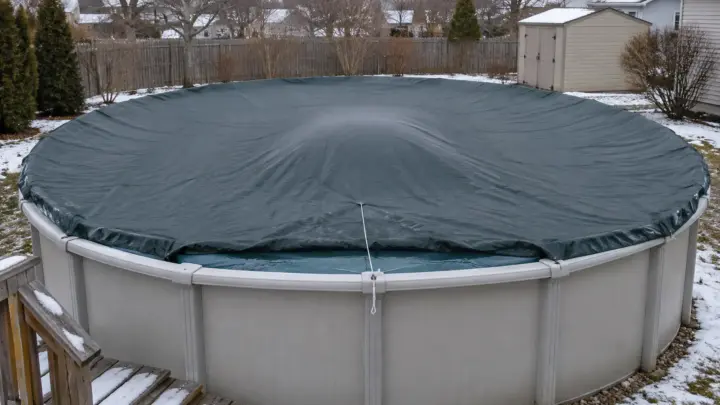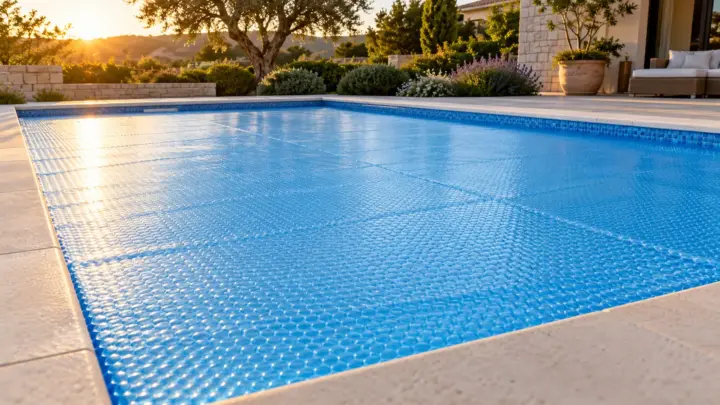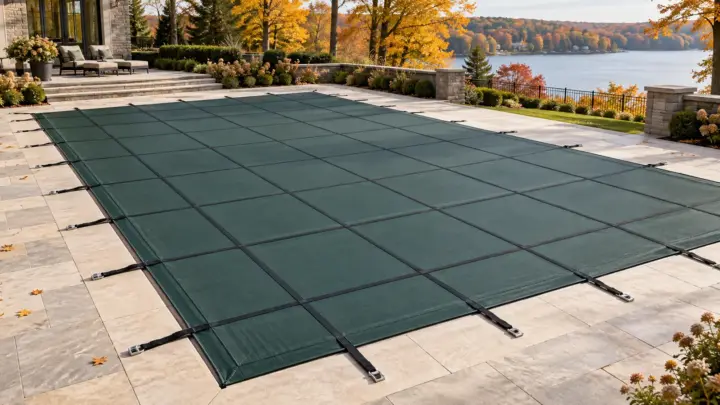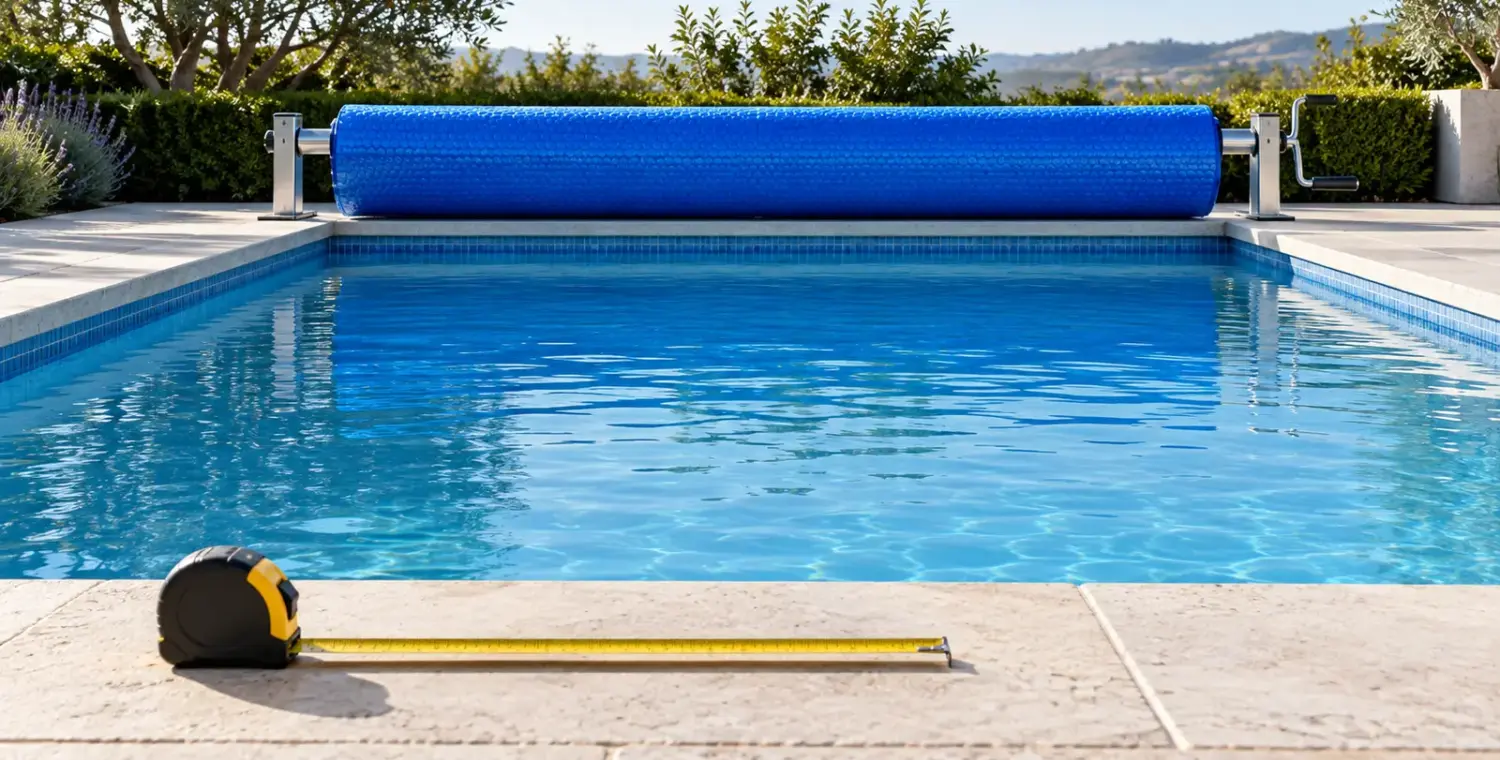
Choosing the right pool cover size starts with three things: the type of cover, the pool’s actual shape, and the sizing rules for that specific product. A floating solar blanket is fitted to the water opening. A winter cover may include a stated allowance beyond the nominal pool size. A safety cover needs a designed fit and attachment arrangement, often measured professionally.
Do not add the same number of feet to every order. Some listings describe the pool the cover fits, while others describe the actual material dimensions. Before buying, confirm which measurement the seller is using and whether steps, water-level changes or a reel require a different arrangement.
Decide what you are measuring for
Write the intended product type at the top of your measurement notes: floating blanket, ordinary winter cover, anchored safety cover or automatic system. This keeps a useful water-opening measurement from being mistaken for a complete safety-cover specification.
EPA distinguishes floating solar covers from seasonal and other cover types. Manufacturer instructions then add the fitting details. Pool dimensions alone may be enough to identify a standard shopping category, but they are not always enough to finalize the purchase.
| Cover | Measurements to start with | Confirm before ordering |
|---|---|---|
| Solar blanket | Water-opening length, width and shape | Actual sheet size, trimming permission and reel plan |
| Winter cover | Nominal pool size and shape | Included overlap, permitted water drop and attachments |
| Safety cover | Pool outline, deck and features | Manufacturer-designed fit and anchoring details |
| Automatic cover | Installer survey of pool and system | Tracks, leading edge, housing and replacement specification |
For replacement products, locate the original order, label or drawing. Use it as a reference, then confirm whether the pool or surrounding deck has changed. An old name or nominal dimension does not prove a new cover will fit the current installation.
Measure the pool opening and record the shape
Work from stable, dry deck positions and get help when needed. Do not stretch across the water, walk onto an installed cover or use an unstable chair to reach a measurement point. If you cannot measure safely, arrange professional measurement.
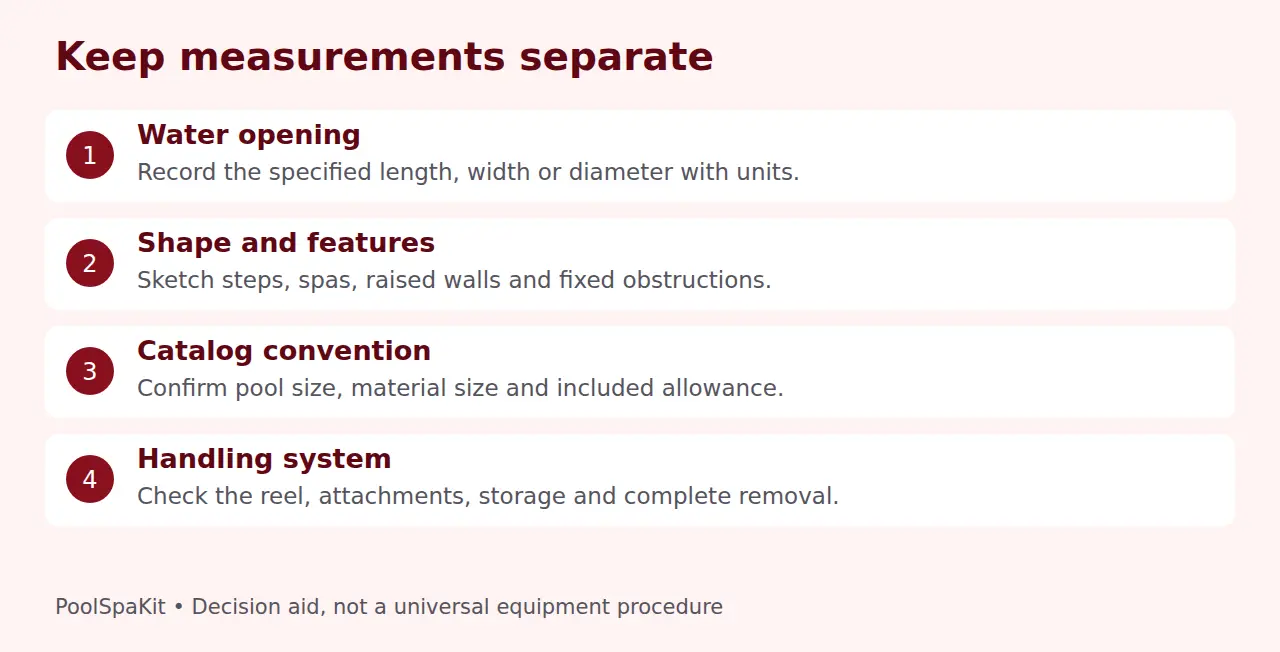
For a rectangular opening, record length and width between the boundaries the manufacturer specifies. Keep water-opening dimensions separate from outside coping or deck dimensions. Note whether a step section extends beyond the main rectangle rather than silently including or excluding it.
For a round pool, record the diameter across the opening and check more than one direction. For an oval, record the overall length and widest width. For a freeform pool, record maximum extents and make a labeled sketch; those numbers describe the bounding size, not every curve.
Add a separate note for attached spas, raised walls, waterfalls, non-removable rails and other interruptions. Photograph visible features from safe deck locations. Do not assume that a maximum-length-by-width rectangle is a sufficient custom-cover order.
Write units beside every dimension and repeat important measurements before sending them. A sketch with named ends, clearly labeled steps and consistent units is more useful than a collection of unlabeled numbers. Preserve the original measurements instead of replacing them with a rounded shopping size.
Understand pool size versus actual cover size
Ask the seller two direct questions: What pool dimensions is this product designed to fit, and what are its actual material dimensions? Then ask whether the stated overlap is total extra dimension or extra material on each side.
Blue Wave’s reviewed winter-cover instructions label their chart as total overlap, with different allowances for different shapes and cover types. That wording matters. A total diameter allowance is not the same as an allowance to add at both edges.
Illustrative arithmetic, not an order recommendation: suppose a round opening is 24 feet across and the selected product’s documented total allowance is 4 feet. The resulting material diameter is 24 + 4 = 28 feet. Centered across a flat opening, that leaves a nominal 2 feet at each edge before accounting for the cover’s intended contour and water drop.
That example only shows how the sizing math works. It doesn’t mean every 24-foot pool needs a 28-foot cover; the product’s own fit and installation instructions still decide the correct size. Confirm the nominal size and actual dimensions together before payment.
Fit a solar blanket without applying winter-cover rules
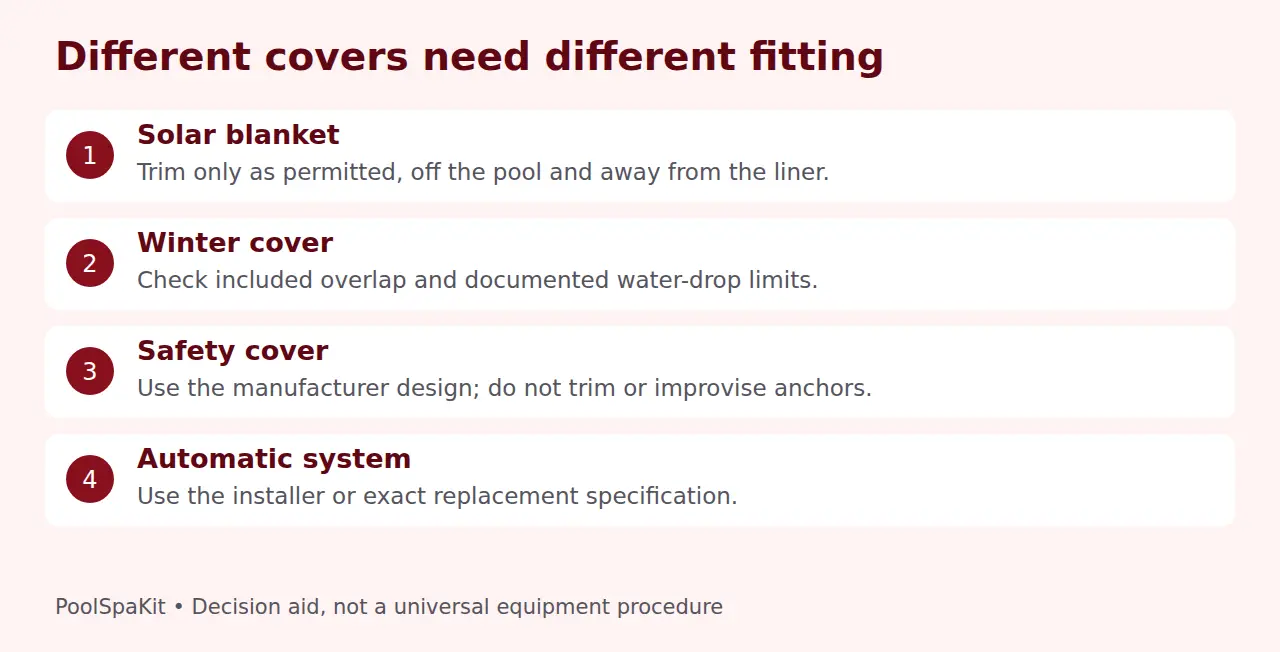
A floating blanket needs the intended water-surface coverage, not an improvised anchored overlap across the deck. Check the actual supplied sheet dimensions and whether the manufacturer permits trimming to your shape.
The reviewed Blue Wave solar-blanket instructions say to outline the pool walls, remove the material from the pool and trim away from the liner. They recommend leaving material for a later final trim rather than cutting too small at once. Follow your exact blanket’s process and orientation requirements.
Check the reel plan before cutting. Some irregular-pool arrangements need a fold or extra material at the attachment point. Removing that material too early can make the blanket incompatible with the chosen handling system.
Keep cutting tools away from the pool finish and liner. Do not use the water or liner as a cutting surface, and do not enter the pool while the blanket is partly in place. If a cover catches at the coping during retrieval, reassess fit and the approved reel arrangement instead of pulling harder.
Winter-cover fit includes the intended water level
An ordinary seasonal cover may need enough material to reach its supported position as well as the perimeter attachment. The Blue Wave winter instructions state water-drop limits and warn against stretching a cover that is too small. Those limits belong to the listed product, not every winter cover.
Confirm the expected winter water level with the pool and cover instructions together. Do not lower water to make a size calculation seem easier. If the winterization plan requires a different level from the cover’s permitted fit, resolve the conflict with the manufacturer or pool professional before installation.
Also confirm the approved cable, winch, water-tube or other attachment arrangement. Avoid substituting sharp blocks or improvised weights. Extra material is not permission to alter a structural or safety design.
Water on top is another model-specific issue. The reviewed ordinary winter-cover manual describes surface-water handling differently from safety-cover systems that require standing-water removal. Do not transfer its instructions to a safety cover, and maintain required access barriers and supervision. This is why identifying the actual cover matters before choosing either fit or care.
The above-ground winterization guide addresses the larger closing process. A correctly sized cover does not replace equipment freeze protection or an approved winter water-level plan.
Safety covers require more than a bigger rectangle
Do not trim a safety cover like a solar blanket. Fit, attachments, perimeter conditions and drainage are part of the system. CPSC’s barrier guidance references documented safety-cover performance and maintenance, while LOOP-LOC ties its products to professional measurement and correct installation.
LOOP-LOC’s dealer measuring form asks about rails, deck materials, spas, raised areas, obstructions and existing anchors. Those details explain why a pair of overall dimensions can miss important design requirements. They are not a complete homeowner installation procedure.
For a replacement, do not assume old anchor locations are compatible with any new brand or size. Ask the manufacturer or installer which records, measurements and inspection are required. A used cover that appears close may have a different strap layout or an unsuitable perimeter fit.
Keep local barrier requirements separate from the order. A product described as a safety cover does not automatically establish that the whole pool area complies with local rules. Get the appropriate installer and local-authority guidance rather than relying on a shopping-size calculation.
Check reel width, placement and storage
The reel must suit the cover and the location where it crosses the pool. Its tube span is not necessarily the same measurement as the maximum pool width on a sketch. Check the reel’s actual range, assembly limits and approved support arrangement.
Doheny’s reviewed inground reel instructions distinguish rectangular end placement from an irregular-pool arrangement that unwinds in two directions. They also specify tube overlap and a fold allowance. Those details are specific to the model; do not apply their dimensions to another reel.
Before finalizing a purchase, plan where the rolled blanket will rest and whether the complete pool can be uncovered. Allow safe walking and equipment access around the stored system. Do not assume a compatible width means the unit fits the household’s deck layout.
Send a clear order checklist
- Cover type and exact product or proposed system.
- Pool construction, shape and labeled opening dimensions.
- Separate step, spa and obstruction information.
- Whether the catalog size means pool size or material size.
- Included overlap and any model-specific water-level requirements.
- Reel plan, approved attachments and storage space.
- Manufacturer confirmation for any uncertain fit.
Keep the written confirmation with the receipt and instructions. Use the spring opening checklist when removing a seasonal cover, and continue the regular pool maintenance routine during the swimming season.
Research checked October 1, 2026. We only claim hands-on testing when we’ve actually tested the product ourselves.
Sources and references
- CPSC: Safety Barrier Guidelines for Residential Pools
- EPA: WaterSense at Work, Section 5.3: Commercial Pool and Spa Equipment
- LOOP-LOC: Safety Cover FAQs
- Blue Wave: 12 Mil Solar Blanket: Installation and Use Instructions
- Blue Wave: In-Ground & Above-Ground Pool Winter Covers, V1:0322
- Doheny: Deluxe In-ground Solar Reel System, Items7551/7552
- LOOP-LOC: Image-Loc Photo Measuring Form, LIT-3222026