If your hot tub’s GFCI trips again after one normal, manual-approved reset, leave it off and arrange qualified service. A faulty spa component, damaged wiring or the protective device itself belongs in the investigation. Your safe job is to record what happened and look for obvious external damage—not to isolate electrical parts.
Keep everyone out of the tub until the fault is resolved. If someone feels tingling or appears to be receiving a shock, treat it as an emergency: cut power from a safe location and call 911. Avoid entering the water to rescue them while it could be energized. The CPSC electrical-safety guide explains the risk to rescuers.
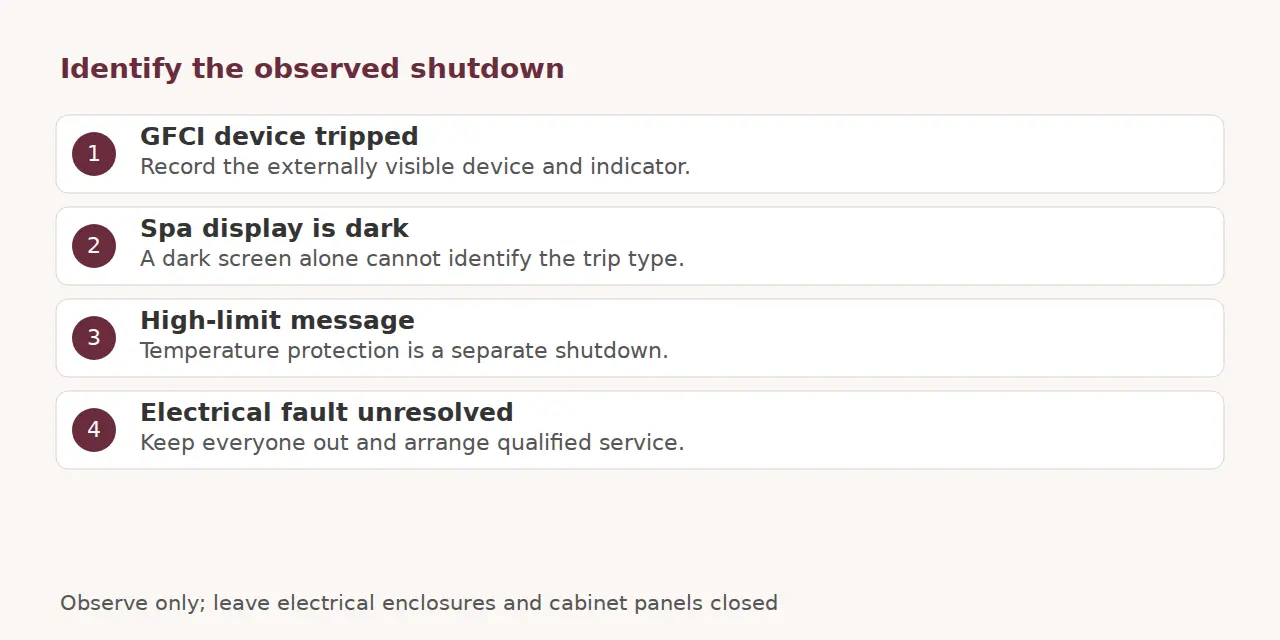
Identify what actually tripped
A GFCI detects a difference between current leaving and returning through the circuit. That difference can indicate current taking an unintended path. The CPSC fact sheet distinguishes GFCI breaker protection from ordinary overload protection; a breaker incorporating GFCI protection provides both.
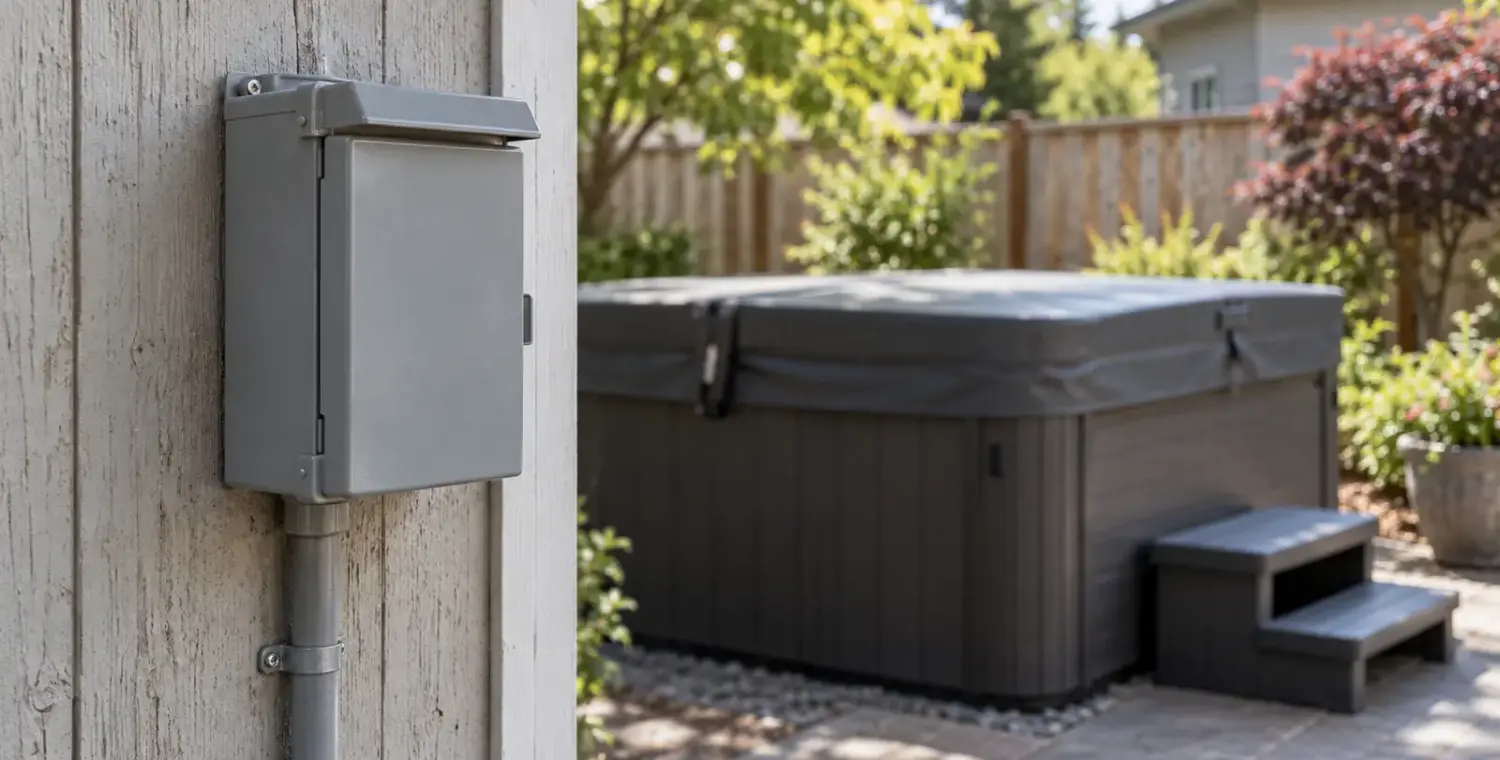
Record the externally visible device and any indicator described in its instructions. A dark spa display alone does not tell you which protection operated. Leave panel covers and cabinet panels in place.
A spa’s high-limit temperature shutdown is a separate problem. The Highlife troubleshooting chart treats high-limit and GFCI trips separately. Use our hot tub heating guide for non-electrical settings or flow symptoms only after the electrical question is resolved.
What the cause could be
The fault can be inside the spa or in its electrical supply. The Getaway manual lists component faults, breaker faults, power fluctuations and wiring problems. A heater failure is one documented possibility; the symptom alone cannot prove that you need a new heater.
For a newly installed spa that trips immediately, tell the installer before arranging replacement parts. Supply and installation problems need an electrician’s assessment. If a previously working tub begins tripping, report when the change started, any recent service and whether it followed rain, a leak or a power disturbance.
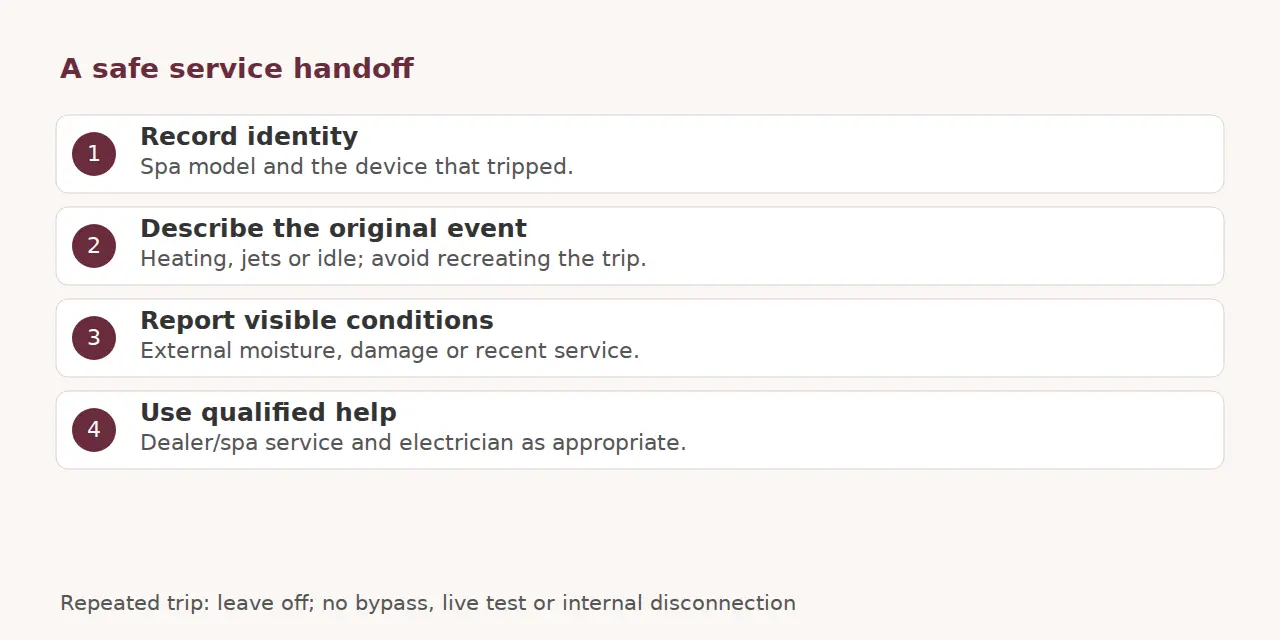
Timing is a useful observation, not an invitation to recreate the fault. Mention whether the original trip happened during heating, jets or an idle period. Avoid cycling equipment repeatedly to discover a pattern.
The safe owner checklist
- Read the exact owner’s manual. Find its GFCI instructions and service contact.
- Observe from outside. Look for visible cable damage, scorching, water around an enclosure or an obvious leak. Keep clear of wet or damaged electrical equipment; no opening or touching suspect parts.
- Decide whether a reset is safe. Only use the normal accessible control described by the manual, from a dry position with no visible damage or moisture hazard. If it already trips repeatedly, skip another reset.
- Stop if it trips again or will not reset. Leave it off and contact the dealer or a qualified spa technician; supply or installation faults require an appropriately qualified electrician.
Give the technician a useful record
Send the spa model, the device that tripped, any display message, the original operating state and photographs taken safely from outside. Note visible moisture or damage and recent work. Ask who will assess the supply and who will service the spa components.
No homeowner step requires opening a control box, disconnecting a heater or pump, bypassing the GFCI, defeating grounding or probing voltage. Protection must remain in place. The OSHA GFCI explanation helps explain the electrical mechanism; its construction rules are not installation instructions for your home.
In freezing weather, call promptly and ask for the model’s safe outage/winterization plan. Do not restore suspect power to preserve heat. Our winter spa guide and jet troubleshooting guide cover related care once electrical safety is established.
Research checked 2026-10-04.