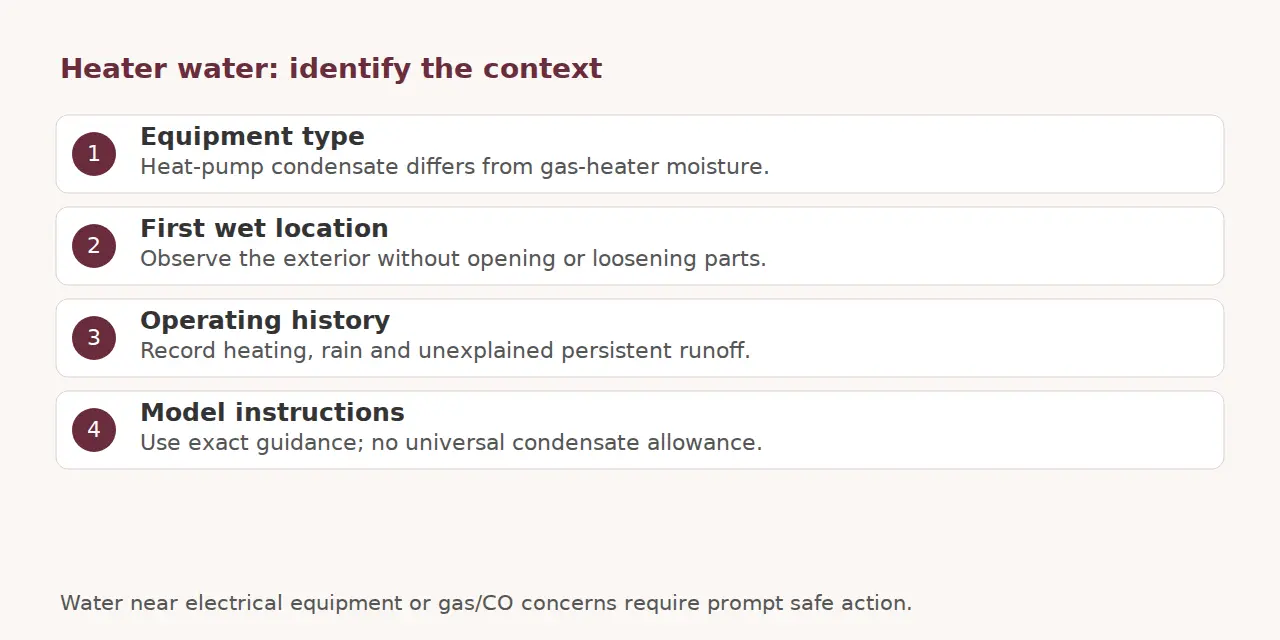
Identify the heater type and the first visible wet location before treating water under the cabinet as a plumbing leak. A heat pump produces condensate during normal operation, while dripping from a pool-water connection or unexplained water inside a cabinet needs service. Keep your checks external and use the model manual to decide whether operation is safe.
Stop for hazards before looking for the source
Keep away from water reaching electrical equipment, damaged wiring or flooded controls. Use only safely accessible external shutdown controls from a dry position. If you smell gas, suspect a gas leak or have a carbon-monoxide alarm, leave the area and contact emergency assistance or the gas supplier; don’t operate switches or investigate the heater.
Pool electrical-safety guidance calls for knowing emergency power controls and using qualified pool/spa electrical personnel. Repeated breaker trips, wet controls and submersion require assessment rather than another trial run.
Heat pump or gas heater?
Use the nameplate and owner documentation without removing panels. Our heater-type guide explains the equipment differences.
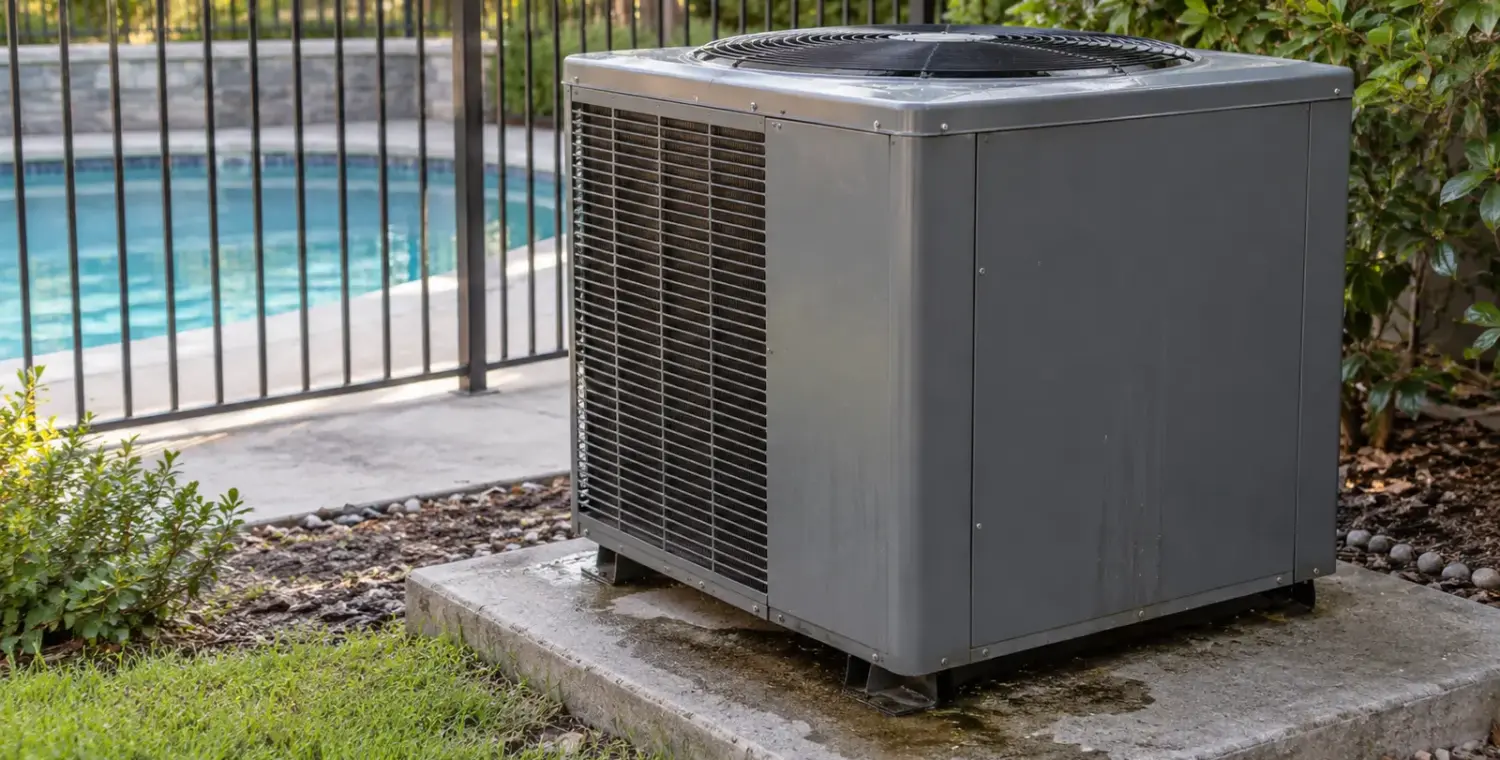
Heat-pump condensate has an operating pattern
The UltraTemp manual describes water forming at the evaporator coil and draining through the base, with humidity influencing the amount. It also directs qualified investigation of excessive or persistent runoff outside its model-specific normal pattern. Observe the drainage route, recent rain and operating history; don’t adopt a universal gallons-per-hour allowance.
Report ongoing unexplained wetness when heating has stopped, along with any obvious drip from a water connection. Avoid deliberately restarting a suspect unit or changing valves to perform a leak test. One puddle or a chlorine reading cannot certify the whole heater as sound.
Gas-heater moisture needs its own assessment
Don’t carry the heat-pump explanation over to a gas heater. The MasterTemp guide warns about harmful condensation during certain cold-water operation. A technician needs the model, water temperature and operating history to distinguish that from a water-system leak. Leave burners, venting and gas connections untouched.
Record the earliest wet location
| Visible clue | Useful next step |
|---|---|
| Water starts at an external pool-water union or pipe | Photograph the joint from a safe position; request plumbing assessment. |
| Wetness near a visible drain fitting after seasonal service | Give the technician the service history; leave the fitting in place. |
| Water exits beneath the cabinet with no clear source | Note timing and operating conditions; arrange qualified inspection. |
| Rain or sprinkler runoff reaches the pad | Record the route and ask about drainage; don’t assume it explains all wetness. |
The table is an observation guide, not proof of a failed part. No tightening live unions, removing drain plugs or opening the cabinet while equipment is operating. Improvised sealant and stop-leak products also risk masking the source.
Include freeze and corrosion history
Tell service about freezing weather, incomplete winterization, recent draining and deteriorated fittings. The MasterTemp manual identifies trapped-water freeze damage to its exchanger or headers and discusses chemistry-related corrosion. Those are documented possibilities to investigate, rather than a diagnosis from exterior rust alone.
A crack, substantial leak, abnormal operation or unexplained water near controls calls for prompt service and a safe shutdown plan. In freezing conditions, request immediate protection advice; leaving water-filled equipment off indefinitely adds a separate concern.
Check the model for current safety notices
As of the research date, CPSC’s September 17, 2026 notice covers Hayward HDFS400 Universal-HC heaters. Affected owners must stop use and contact the manufacturer for the qualified remedy. The notice concerns carbon monoxide; it is included as a model-specific safety check, not an explanation for a water leak.
Make the service visit productive
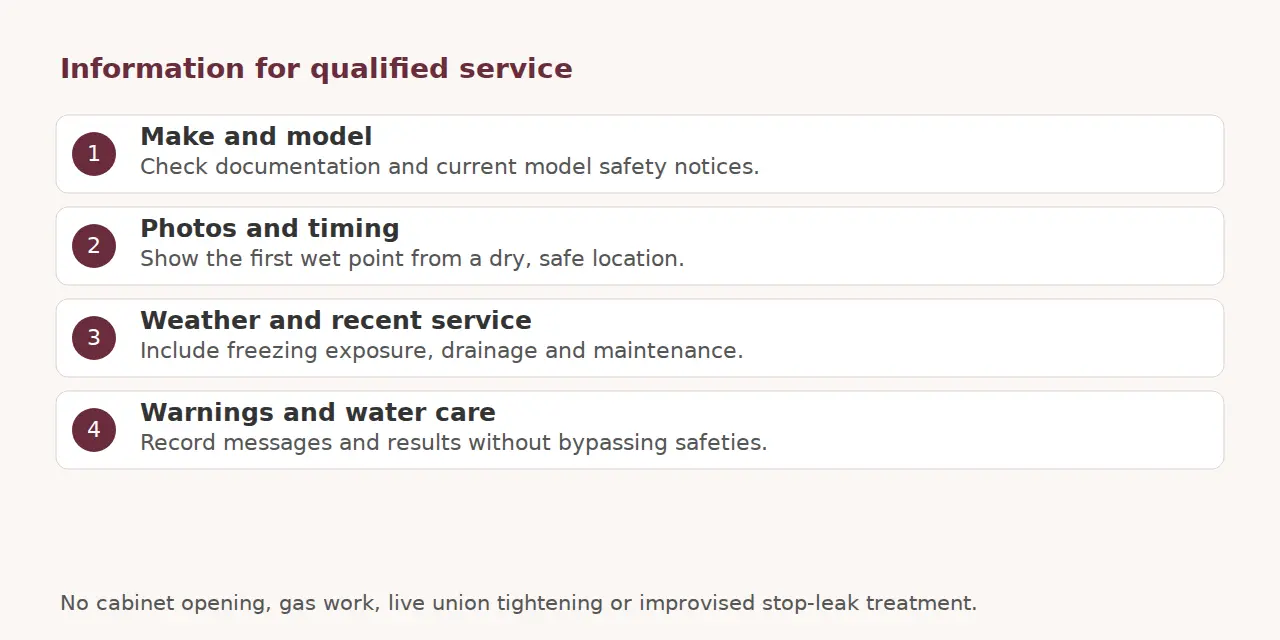
- Send the exact make/model, first-wet-point photos and operating timeline.
- Include rainfall, freeze exposure, recent service and water-care history.
- Record visible warnings without bypassing interlocks or repeatedly resetting equipment.
For accompanying shutdown symptoms, see heater troubleshooting. If the whole pool level is falling, use the water-loss guide to frame that additional concern. Water-efficiency guidance identifies leaks as a loss route, but finding water by the heater doesn’t establish every source. Verify normal operation and a resolved leak after qualified repairs before returning to routine use.
Research checked 2026-10-05.