Choose a gas pool heater when faster, occasional heating matters most; consider a heat pump for regularly maintaining warmth in suitable weather; and consider solar heating when you have a good collector location and can work around the available sunshine. Your swimming schedule, climate and installation costs usually tell you more than a headline efficiency rating.
For example, warming a pool for a Saturday gathering is a different job from keeping it comfortable through a long swim season. Start with when you want to swim and how much advance planning you’re willing to do. Then have an installer assess the pool and compare systems against that same goal.
Compare the three pool heater types
| Type | Where the heat comes from | Useful fit | Main trade-off |
|---|---|---|---|
| Gas heater | Natural gas or propane combustion | Faster warm-up and intermittent use | Fuel costs, supply and combustion requirements |
| Electric heat pump | Heat moved from outdoor air into water | Maintaining warmth during a suitable swim season | Weather-dependent output and longer warm-up |
| Solar thermal | Sun-warmed collectors through which water circulates | Seasonal heating with suitable collector space | Sun exposure, collector layout and variable heat availability |
This is a starting point for choosing technology, not a promise about a particular model. Pool size, heat loss and the installed system still determine whether it can meet your expectations. Our guide to how many BTUs a pool heater needs covers that sizing step.
Gas heaters: useful when you want heat on demand
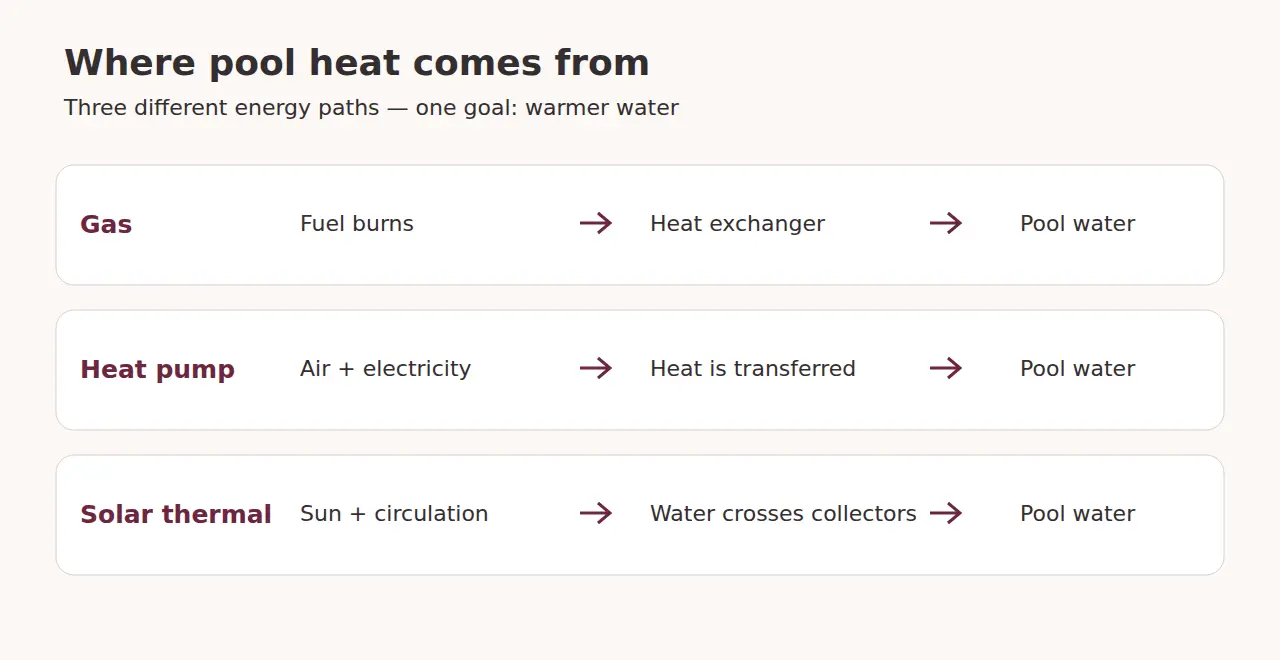
A gas heater burns its specified fuel and transfers heat to pool water through a heat exchanger. Natural gas and propane models need the correct supply and installation. You can’t select a unit just because a fuel connection happens to be nearby.
Gas is worth considering when you heat occasionally, want a faster warm-up, or swim during cooler periods. Pentair’s overview of heating options describes that speed advantage over heat pumps. It doesn’t give your pool a guaranteed time to reach its target temperature.
The ownership trade-off is purchased fuel each time it runs. Ask for an estimate based on your fuel price, intended season and actual swimming pattern. A lower equipment price can be outweighed by installation work or frequent fuel use; a larger heater is not automatically the better purchase.
Installation needs a qualified assessment of supply capacity, clearances, exhaust arrangements and local requirements. The MasterTemp installation guide illustrates how much of that work belongs to trained installers rather than owners.
Heat pumps: a good candidate for steady seasonal warmth
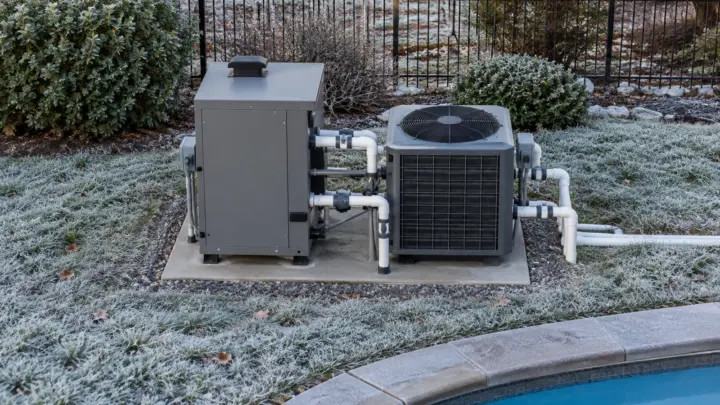
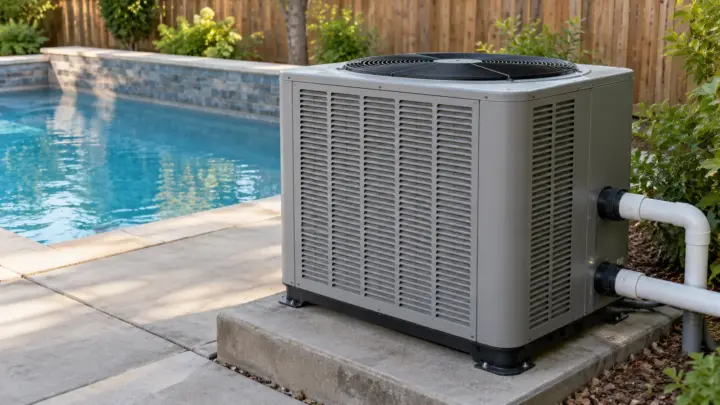
An electric pool heat pump moves heat from the surrounding air to the water through a refrigeration circuit. Electricity runs the equipment, but the outdoor air is its heat source. That makes it different from electric resistance heating, which directly converts electrical energy into heat.
This approach suits an owner who uses the pool regularly and can allow time for heating. If you mostly swim in weather that supports the unit’s performance, maintaining an established temperature may be a better match than starting with cold water shortly before guests arrive.
Cooler conditions affect both output and efficiency. Humidity and water temperature matter too. Ask for performance information at the conditions near the beginning and end of your swim season, not only during the warmest part of summer.
The AHRI heat-pump certification program lists heating capacity and coefficient of performance, or COP, under different air-temperature and humidity conditions. Compare like-for-like ratings. An attractive warm-weather COP is not an annual household saving or a guarantee of cold-weather heating.
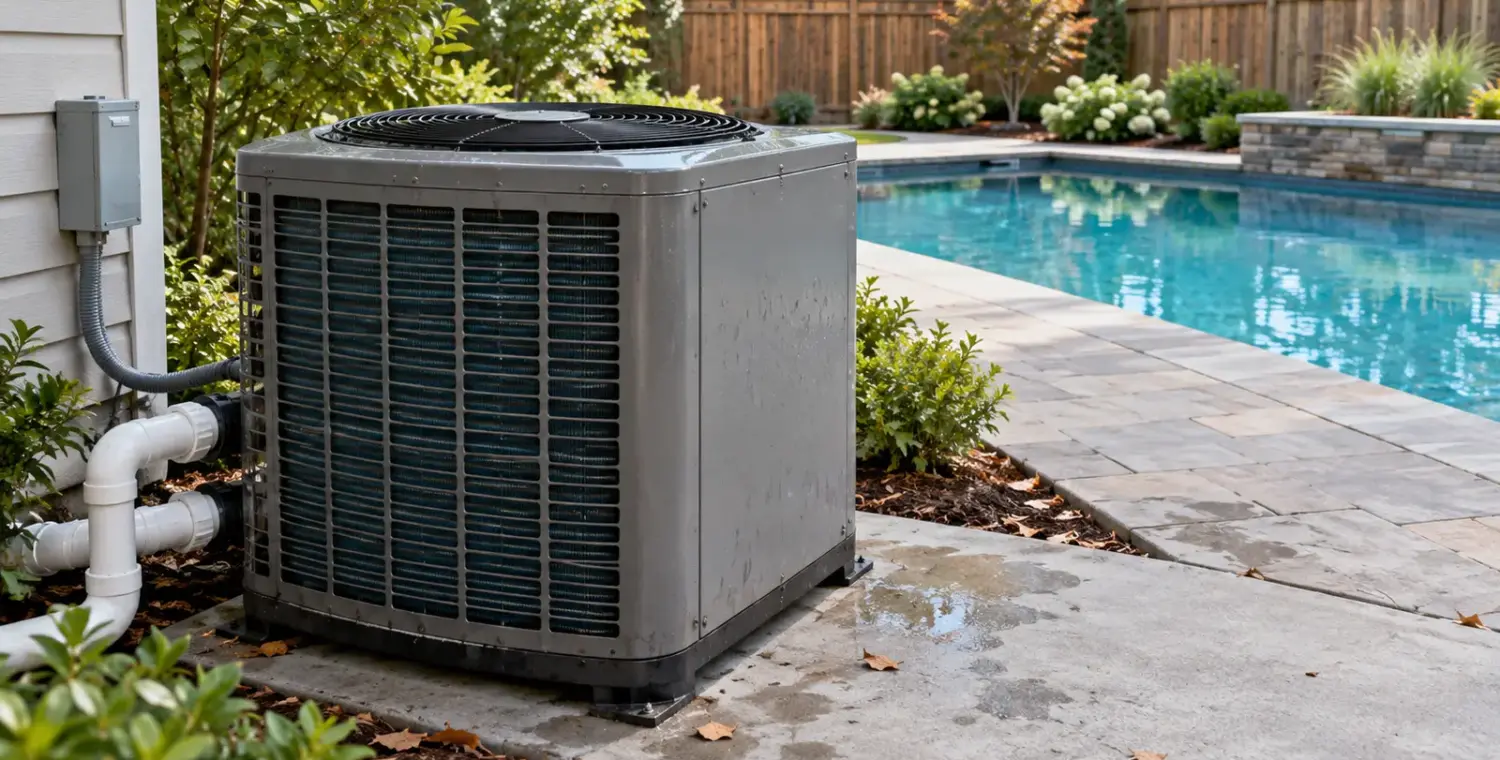
The UltraTemp owner’s guide also emphasizes airflow, drainage and access around its equipment. A tidy-looking enclosure can still be unsuitable if it restricts the air the unit needs. Have the installer confirm electrical capacity and the exact model’s permitted operating conditions.
Solar heating: sunlight, collector space and patience
Solar thermal pool heating sends water through collectors that absorb heat from the sun, then returns the warmed water to the pool. These are water-heating collectors, not photovoltaic panels that generate electricity. A floating solar blanket is different again: it mainly helps manage evaporation and heat retention.
Solar is worth evaluating if you have suitable unshaded space and your heating goal fits the available sunshine. Ask about the useful season and the expected result on less favorable days. It is a harder match for a promise of a particular temperature at a particular time regardless of weather.
A collector layout needs more than a rough count of roof panels. Available area, orientation, shading, mounting, piping and circulation all need to work together. The Heliocol residential manual shows those site and flow considerations, including controls that route water through collectors when conditions are useful for heating.
Solar doesn’t buy burner fuel for the heat it collects, but circulating water still uses electricity. Ask whether the proposed loop changes pump operation or requires additional equipment. Include that in the ownership comparison rather than calling the whole system free to run.
Discuss freeze protection before choosing the installation. Water left to freeze inside some collectors and piping can cause damage. The appropriate drain-down and winterization arrangement depends on the actual system; roof access and unfamiliar valves are jobs to leave to qualified installers.
Compare costs using the same swimming goal
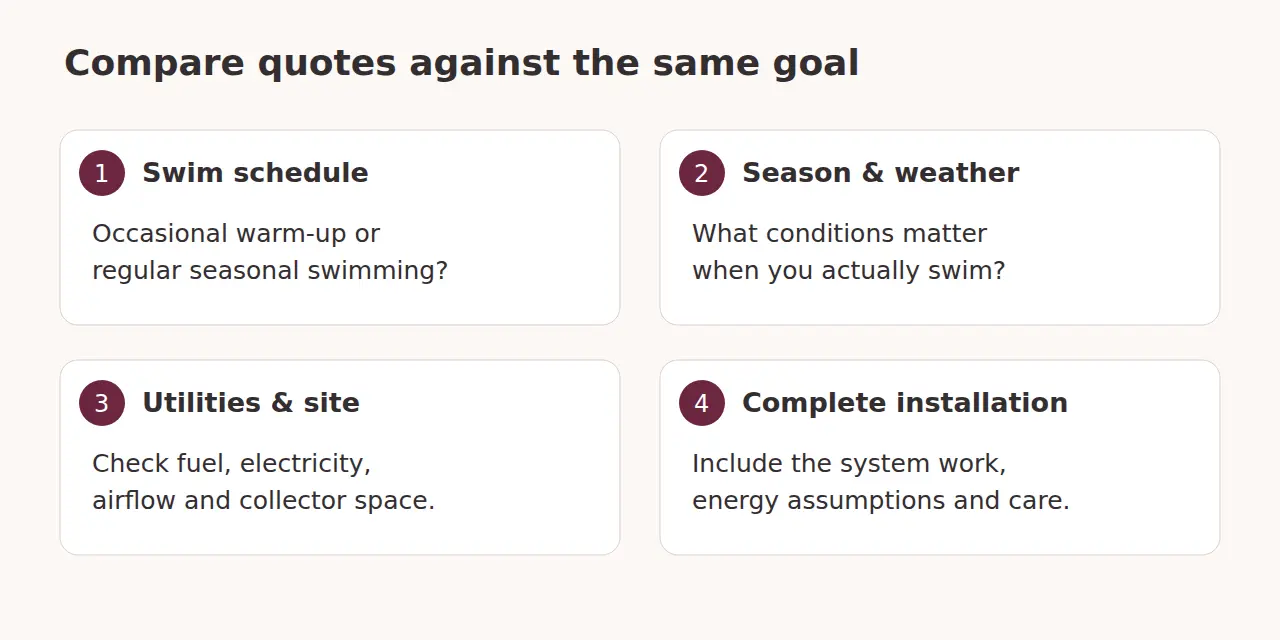
There is no universal cheapest heater. A meaningful quote includes the equipment, installation, expected energy use and ongoing care. Ask each contractor to use the same intended season, water-temperature goal and use pattern so the estimates describe the same service.
- Gas: check the local fuel rate and any required supply work.
- Heat pump: check electricity pricing, weather-specific output and electrical installation needs.
- Solar: check collector installation, circulation requirements and how much useful heating the site can provide.
Efficiency also needs context. The EPA’s pool efficiency guide identifies COP as a heat-pump comparison measure. It should help you ask better questions, rather than substitute for an estimate tied to local conditions. Fuel price, runtime and the heat the pool loses all affect the bill.
Heat retention belongs in the plan
A heater supplies warmth; a suitable cover can help keep it in the water. EPA identifies evaporation control and reduced heating demand as benefits of covering. Our guide to evaporation and pool water loss explains why weather and the exposed water surface matter.
Choose a cover you can use consistently and safely. A floating solar blanket is not a safety barrier and must be removed for swimming. Avoid treating published savings ranges as your own guaranteed result: coverage, weather and use differ between pools.
Installation and maintenance can change the decision
Before comparing model numbers, have the installer check the whole circulation system. A heater needs its specified flow, and adding a solar loop or changing heating equipment may change what the installation needs. Our pool pump sizing and flow guide explains the difference between an equipment rating and a suitable system.
For ongoing care, request the exact owner’s manual and a clear division between owner tasks and professional service. Gas equipment needs appropriate combustion and exhaust attention; heat pumps need unobstructed airflow and drainage; solar installations need sound collectors, mounts and seasonal protection. Follow the model’s maintenance instructions rather than borrowing another heater’s interval.
Keep gas, refrigerant, internal electrical and pressure-system servicing with qualified professionals. Never bypass GFCI protection, flow switches or other safety devices to get more heat. For an existing fault, use the safe heater troubleshooting guide to gather exterior observations for service.
Fuel-burning equipment also needs proper carbon-monoxide precautions. CO is odorless. If a CO alarm sounds or exposure is suspected, move to fresh air and seek emergency help; don’t investigate the source yourself. The CPSC’s CO guidance explains the response. If you smell gas, leave the affected area and contact your gas supplier or emergency services from a safe location, without operating switches there.
Take these questions to the installer
- Can this system meet my intended swimming schedule in the weather when I actually use the pool?
- What assumptions support the heat-up and operating-cost estimate?
- What supply, electrical, collector, airflow or circulation work is included?
- How will the heater and cover work with my existing controls and pool equipment?
- What owner maintenance, professional service and winter protection will I need?
If faster occasional heating is the priority, start the discussion with gas. For regular swimming in suitable weather, evaluate a heat pump. For a good solar site and flexible seasonal expectations, compare solar thermal. Ask what would make that first choice unsuitable before committing to it.
Sources and references
- Pentair: Pool Heater Options
- AHRI: Heat Pump Pool Heater Ratings
- Pentair: UltraTemp Owner’s Guide
- Pentair: MasterTemp Owner’s Guide
- Magen eco-Energy: Heliocol Residential Manual
- US EPA: Jump Into Pool Water Efficiency
- CPSC: Carbon Monoxide Fact Sheet
- Australian Government: Outdoor Living Energy Guide