Pool heating time is best planned from the temperature rise you need and the heat your installed system delivers in the current weather. Start with a measured water temperature, allow a realistic heating window, and check progress rather than relying on a universal “hours per pool” rule. A heat pump maintaining an already-warm pool has a different job from warming cold water for a party.
Start with the temperature gap
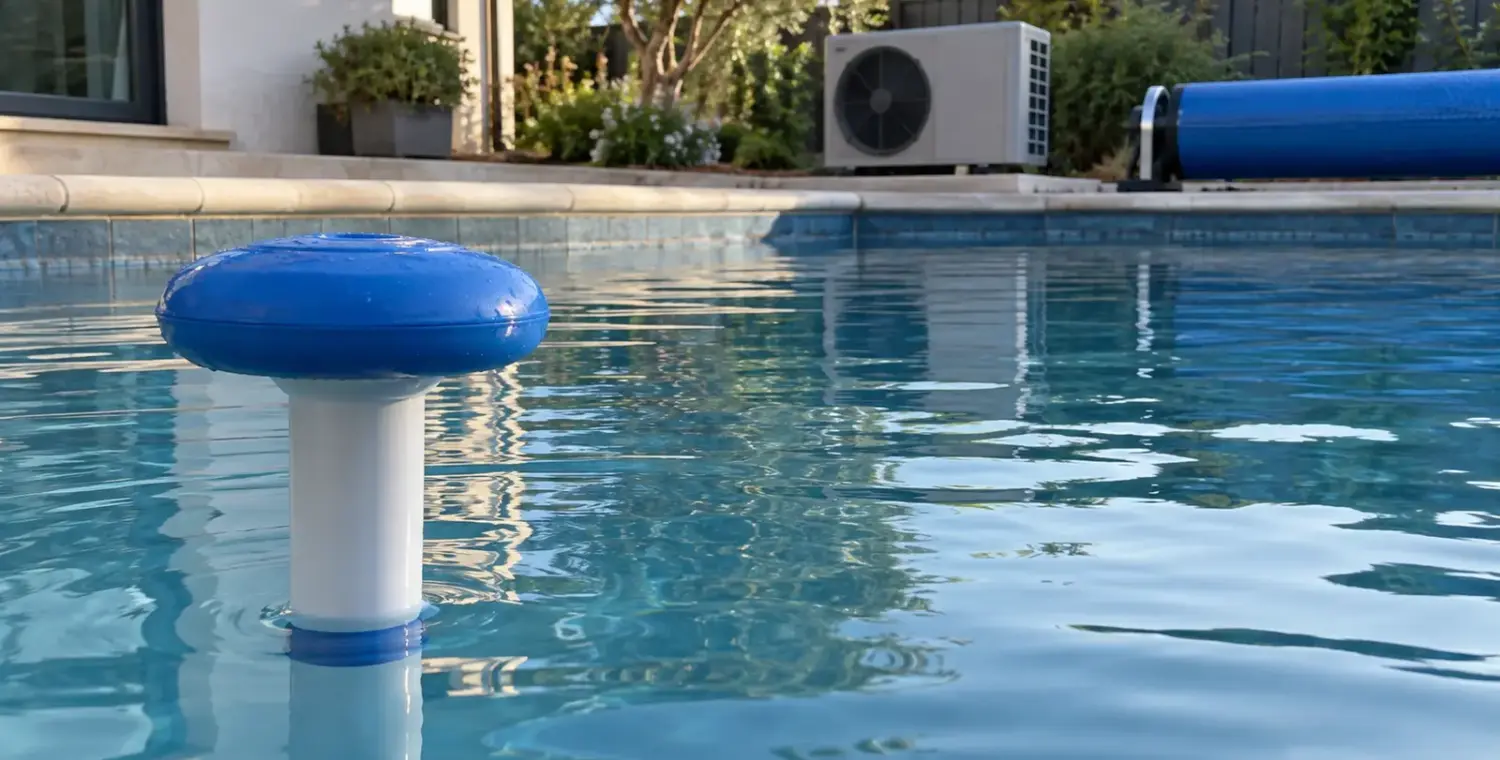
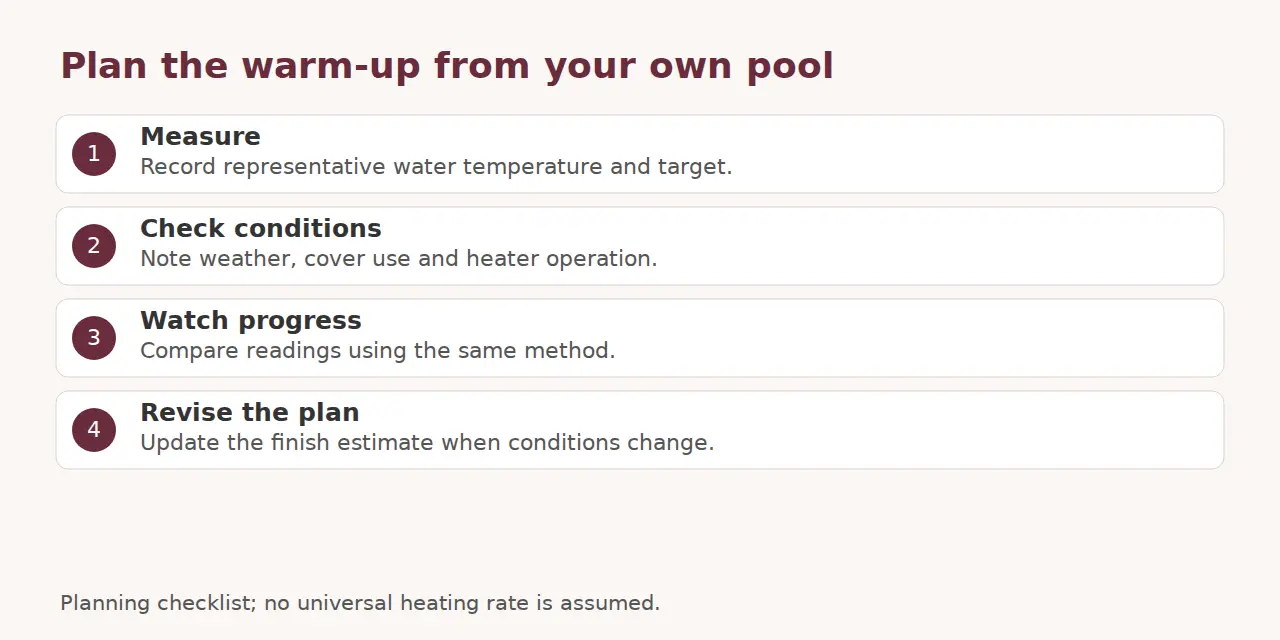
Write down the current water temperature and your intended swimming temperature in the same units. The gap is the rise you need. Use a suitable pool thermometer in a representative location; a warm return stream is a poor place to judge the whole pool. Compare later readings using the same method.
Pool volume also belongs in the estimate. Heating a larger amount of water takes more energy for the same temperature rise. If your volume is only a guess, use the pool volume calculator to improve the starting information. Depth measurements and pool shape affect that estimate.
For a newly installed heater, ask for a warm-up estimate that states the starting temperature, target, pool volume and expected weather. A useful handover tells you what the equipment should achieve at your site, not just its largest brochure rating.
Why the same heater takes longer on some days
Your pool gains heat from the heater and loses heat to its surroundings at the same time. Wind, evaporation and the water-to-air temperature difference change that balance. A steady heater output therefore produces different temperature progress across different conditions. The EPA pool-efficiency guide explains the connection between evaporation, water temperature and heating demand.
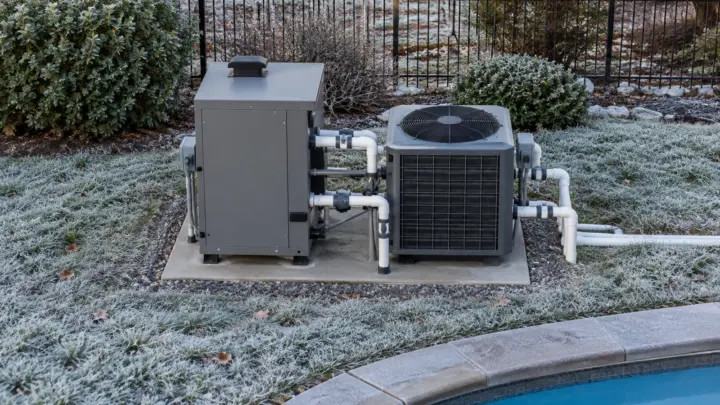
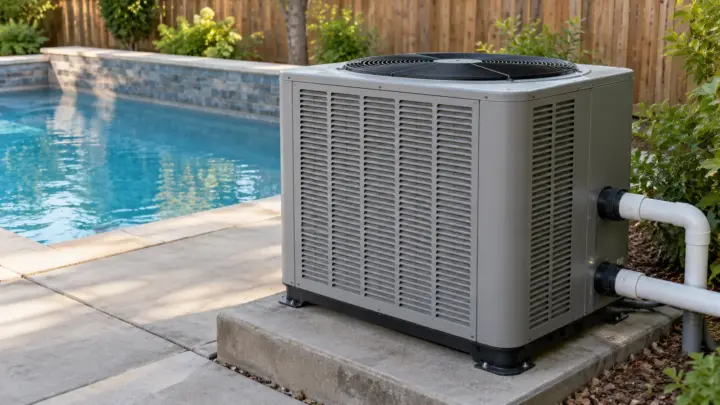
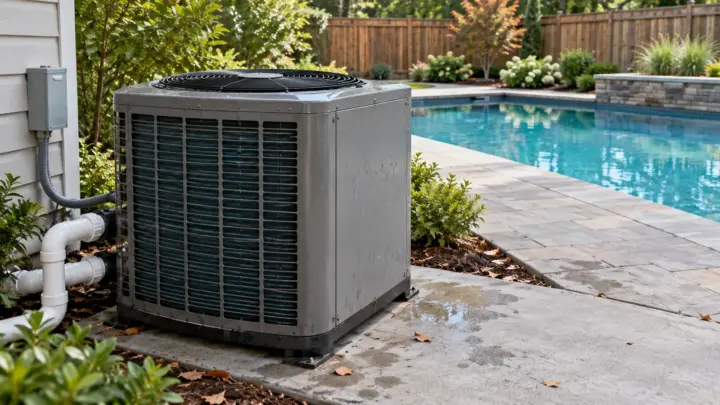
Heat pumps also draw heat from outdoor air. Their published heating capacity has specified test conditions. Compare capacity at relevant air temperature and humidity using the AHRI rating categories; COP describes efficiency, whereas heating capacity describes heat delivery. A high COP alone doesn’t tell you how quickly your pool warms.
Gas heaters generally provide a faster response than heat pumps, while solar thermal heating follows useful collector conditions. For choosing between technologies, see pool heater types explained. Here, the task is scheduling the equipment you already have. If you are still choosing a heater, pool heater sizing explains how the BTU output a pool needs is estimated.
Count actual heating time
A pump schedule, thermostat setting and active heating request need to work together. A unit enabled for a long period can spend part of it waiting, satisfying its setpoint or following protective delays. Record when heating actually operates. Use ordinary owner controls; have the installer resolve unfamiliar automation settings.
Use observed progress for a provisional estimate
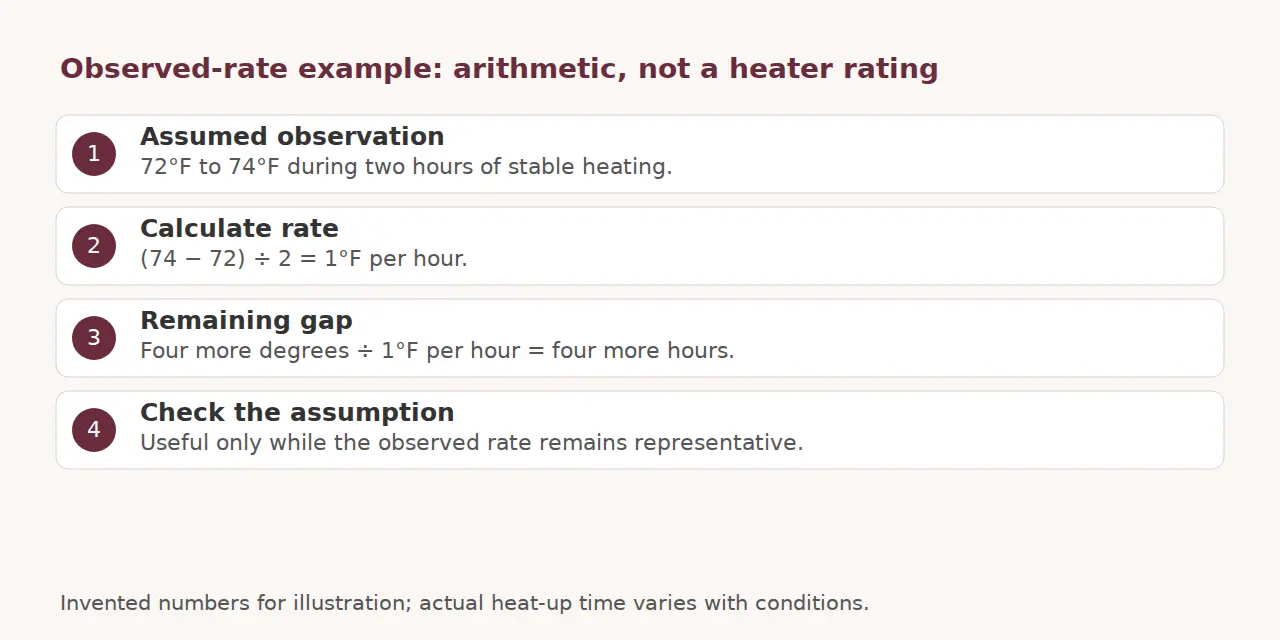
Once the system is operating normally, compare representative water readings over a known period. Divide the measured temperature rise by the elapsed time, then divide the remaining gap by that rate. This gives a planning estimate for conditions similar to the observation period.
Illustrative arithmetic only: suppose a hypothetical pool rises from 72°F to 74°F during two hours of stable heating. That observed rate is 1°F per hour. A further 4°F rise would take about four additional hours if that rate held. These are invented measurements for explaining the calculation, not a promise about any heater.
Recheck as the afternoon becomes evening or the weather changes. A rate measured with mild air and a cover in place doesn’t transfer unchanged to a windy, uncovered evening. If readings barely move, collect more information instead of dividing by a tiny rate and treating the result as a dependable deadline.
Keep the heat you have already added
A suitable cover helps control evaporation when the pool is unused. Choose one you can use safely and consistently; see our solar-cover heat-retention guide. Remove a floating blanket completely before swimming, keep children away from covered water and use the required barriers. A floating blanket is not a safety cover.
For regular swimming, maintaining warmth with an appropriately configured heat pump often fits better than repeatedly letting the water cool and demanding a last-minute warm-up. AHRI’s homeowner explanation describes that intended use. For occasional heating, compare the extra running period against your actual swimming plans rather than assuming continuous heating is always cheaper.
Make a plan for the next swim
- Record current temperature, target and when you want to swim.
- Check the heater’s owner settings and circulation schedule.
- Note weather, cover use and actual heating periods.
- Measure progress consistently and revise the estimated finish time.
- Keep the log for the next occasion with comparable conditions.
If your usual system now makes little progress, shows a fault or repeatedly stops, use the safe heater troubleshooting guide and arrange qualified assessment. Leave gas, refrigerant, internal electrical work and pressure-system repairs to qualified professionals. Never bypass a flow switch or other protection to force faster heating. At the end of the season, winterizing the heater protects it from freeze damage.
Research checked 2026-10-02.