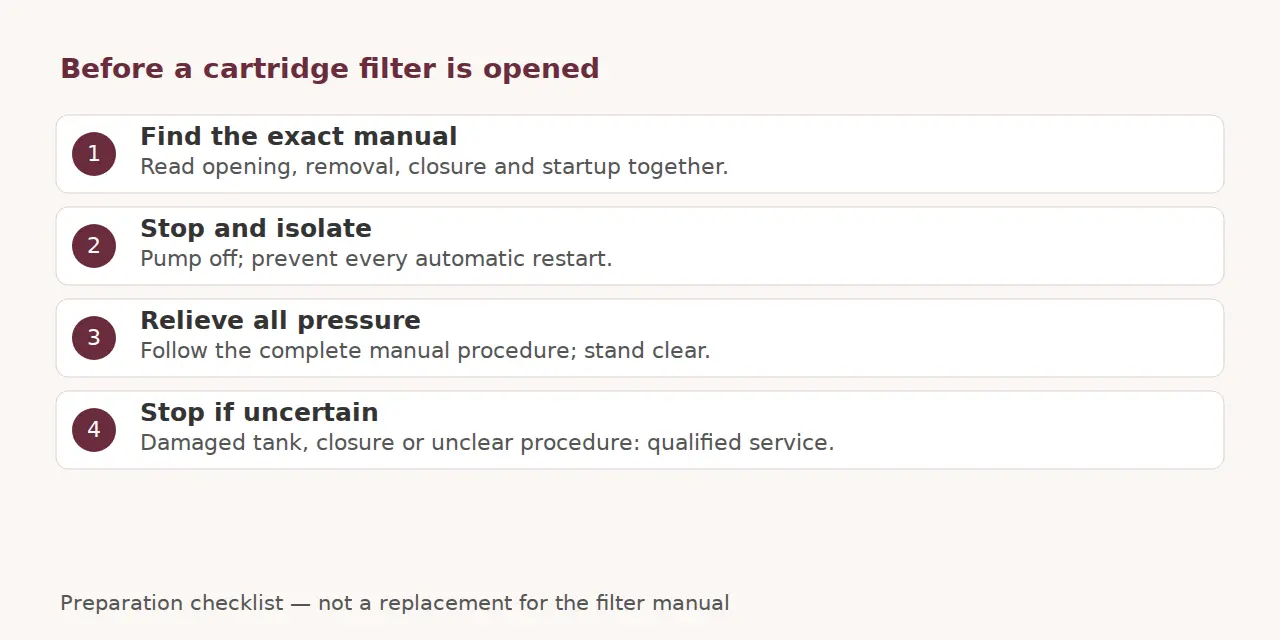
Clean a reusable cartridge pool filter by rinsing debris from the pleats with a garden hose, using only the cleaning products approved for that element. Protecting the pleats matters more than making them look brand-new. Start with the exact housing manual: the pump must be off, automatic restart prevented and all pressure relieved before the filter is opened.
A clean cartridge is only part of the job. Safe removal, checking for damage and correct reassembly determine whether the filter is ready to return to service.
Prepare before you start
Find the filter model and matching instructions. Read the opening, element-removal, closure and startup sections together. Set up a stable rinsing area with a permitted drainage destination, enough room to turn the cartridge and the garden hose ready. Keep removed parts organized so nothing is omitted during reassembly.
Confirm the task is within the owner’s permitted maintenance. If the clamp is unfamiliar, the pressure gauge is damaged or the tank has a crack, arrange qualified service. A cleaning appointment is a good time to have the technician demonstrate the safe routine for your installed filter.
Make the housing safe to open
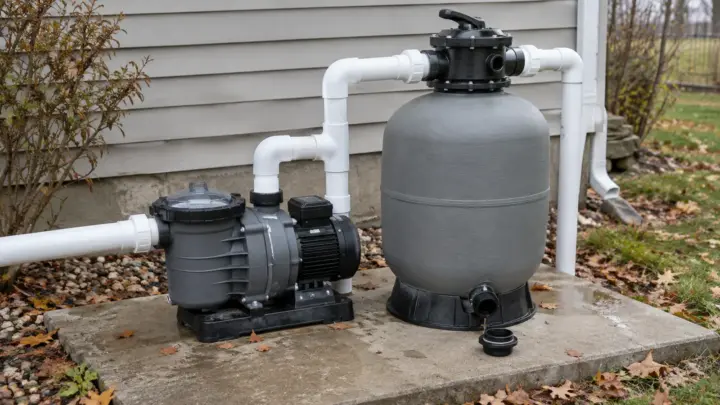
Never loosen a filter lid, clamp, gauge or fitting under pressure. Trapped air can cause the lid to separate violently. Follow the complete shutdown and pressure-release procedure, including power isolation and preventing automation from restarting the pump. Stand clear as directed.
The manufacturer’s filter-service safety guidance explains why stopping the pump alone is insufficient. If pressure does not release normally or the safe access sequence is uncertain, stop and call for service. Use the matching manual for removal; single-element and multi-element housings have different assemblies.
Rinse gently and work between the pleats
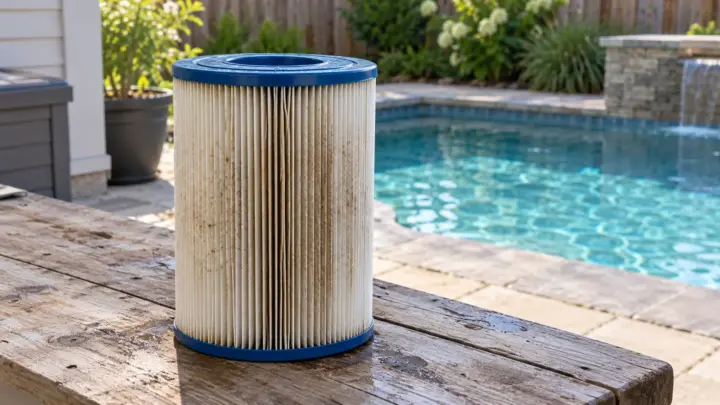
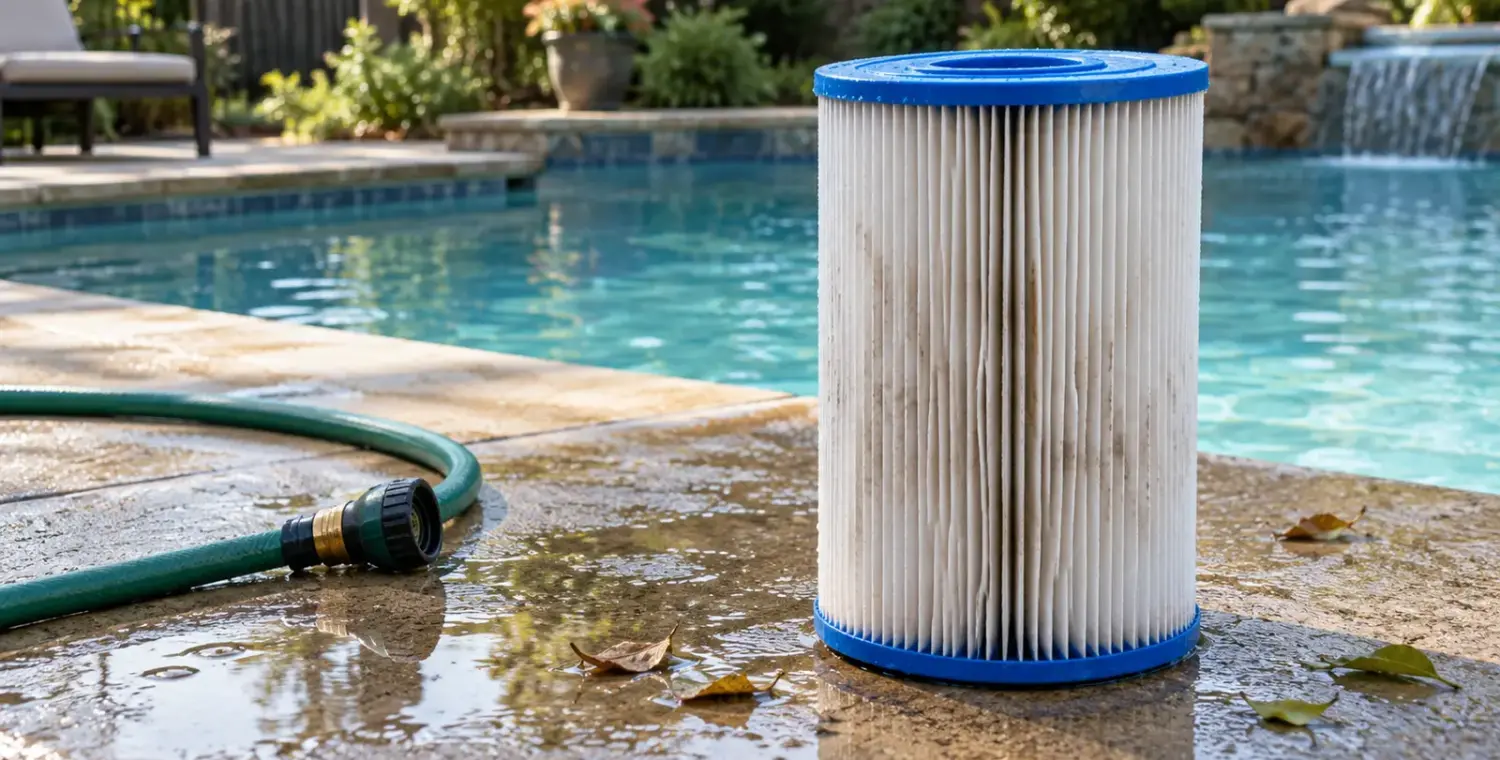
Use the permitted hose nozzle and rinse method. Work systematically around the element instead of concentrating a forceful jet on one patch. Pay attention to the spaces between pleats, where visible debris collects.
The Clean & Clear Plus guide describes a top-to-bottom hose rinse for its cartridges. Hayward’s SwimClear guidance explicitly excludes a pressure cleaner. For routine homeowner cleaning, leave the powered pressure washer out of the process; forceful cleaning is a poor shortcut for delicate filter material.
Turn the element carefully to reach the remaining surfaces. Avoid pulling pleats apart or using improvised sharp tools to dig out debris. Check the manufacturer’s instructions before using a brush or cleaning attachment. Keep the element supported while handling it.
When a rinse leaves deposits behind
Oily buildup and mineral deposits need different decisions. Identify an approved cleaner and follow both its label and the element manufacturer’s compatibility instructions. More concentrated cleaner or a longer improvised soak introduces a new risk without establishing a better result.
The Pentair guide warns that oil and cleaning-solution residue must be removed before its specified acid treatment. This article leaves acid treatment to qualified advice rather than supplying a general recipe. Never mix cleaning products or pool chemicals. If rinsing fails to restore acceptable performance, describe the deposit and prior products to the service provider.
Inspect before reinstalling
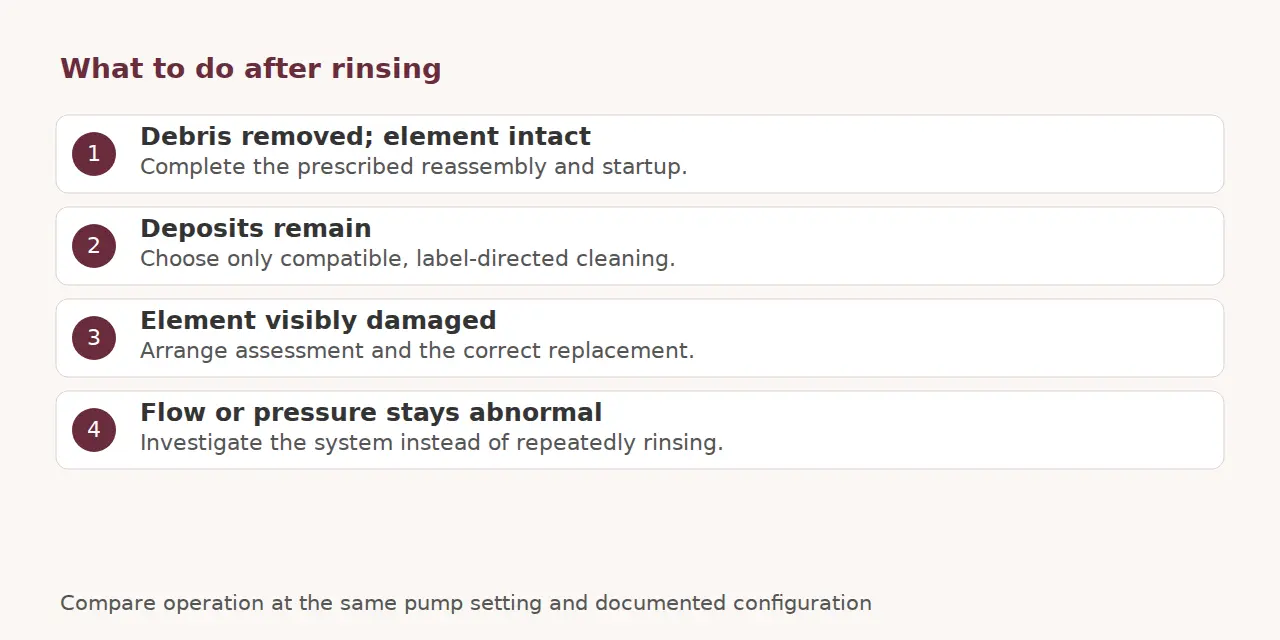
Look for tears, damaged ends and obvious distortion. A damaged element needs assessment and the correct replacement, rather than another aggressive rinse. Cleaning cannot repair broken filter material. Note the exact part number before buying an element that merely looks similar.
Reassemble and restart through the complete manual procedure, including seals, closure checks and air release. Stop promptly for a closure leak or abnormal startup. Never tighten a leaking clamp while the system runs.
Check whether cleaning solved the problem
Compare operation with the recorded clean-filter baseline at the same pump setting. If flow remains weak or pressure remains abnormal, use the filter-pressure troubleshooting guide rather than repeatedly washing an element that might not be the cause.
Cartridges avoid backwashing, as EPA’s pool-efficiency guide explains, but rinsing still consumes water. Let the documented service criteria and observed condition determine the next cleaning; skip an invented universal weekly schedule.
Continue regular water testing. CDC’s homeowner guidance keeps chlorine and pH checks central to pool care. Clearer water after a rinse does not establish adequate sanitation.
Research checked 2026-10-03.