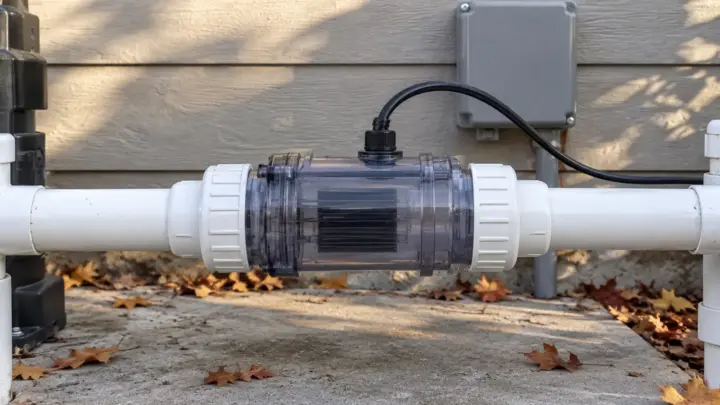
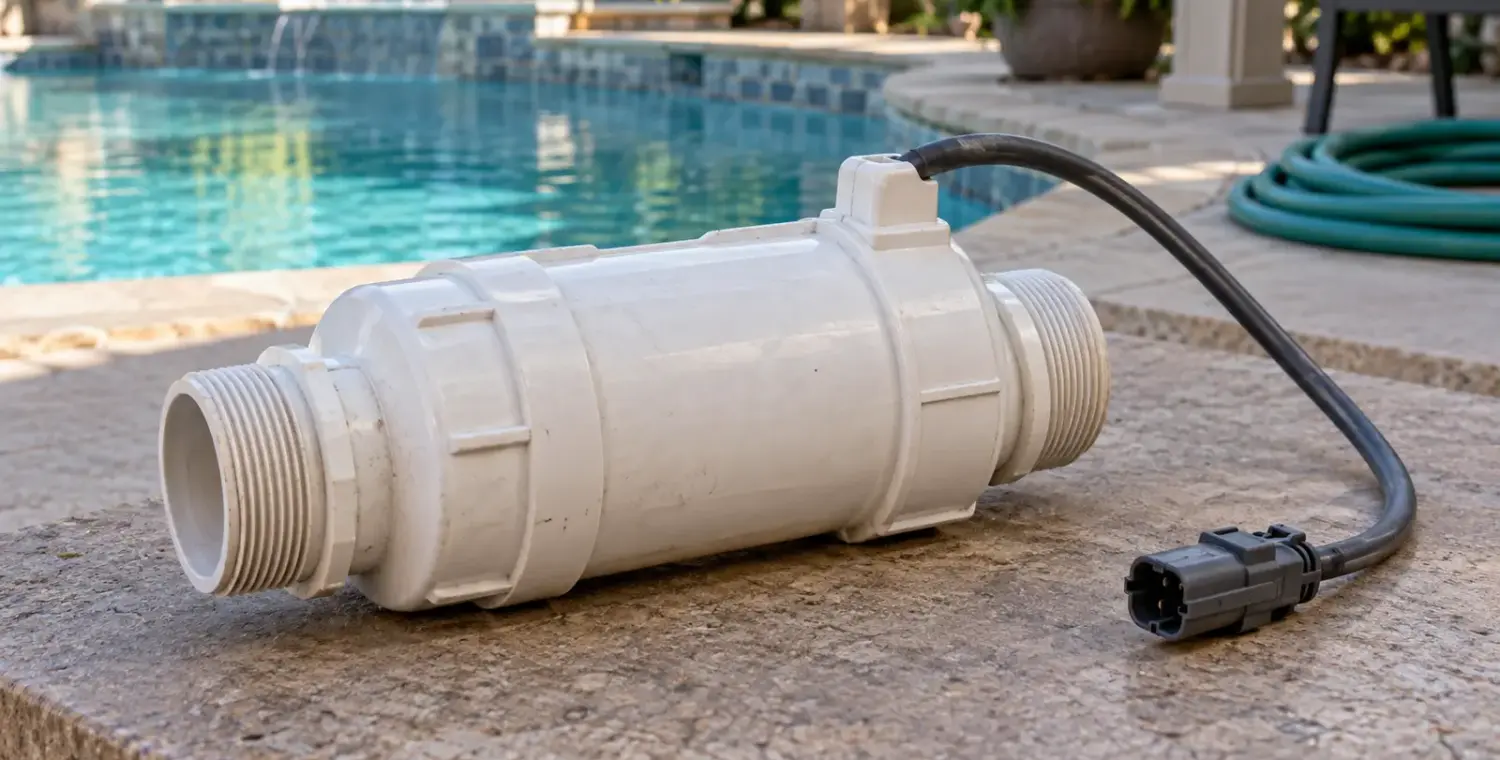
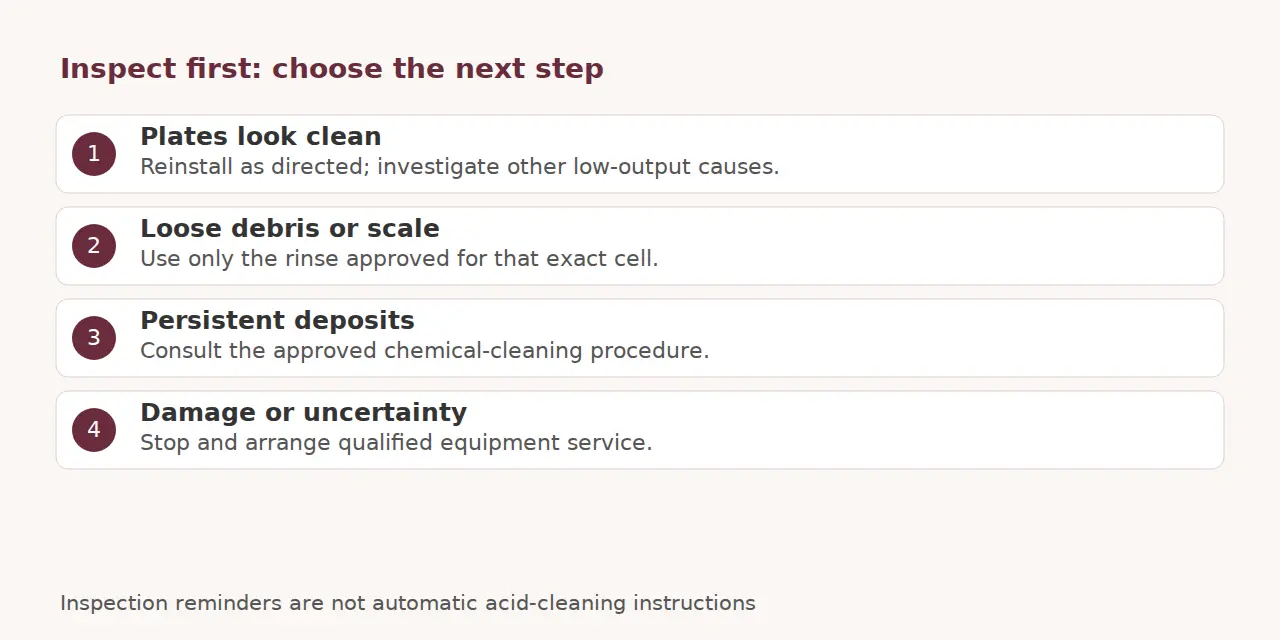
Inspect a salt cell before cleaning it. If its plates are free of deposits, reinstall it according to the manual. For visible buildup, begin with the cleaning method approved for that exact cell; acid washing belongs only where the manufacturer calls for it after simpler cleaning fails.
The useful routine is inspection, observation and a recorded result—not an automatic acid bath every time a reminder appears. A clean cell with low chlorine needs a broader diagnosis, not stronger cleaning solution.
How often should you check it?
Use your model’s inspection schedule. The IntelliChlor Plus/LT guide specifies at least every two months, while the AquaRite Pro AQR9 manual specifies every three months or after filter cleaning. Those are inspection examples, not universal acid-cleaning intervals. Before a seasonal shutdown, see how to winterize a salt cell.
Write the inspection date and what you found in a maintenance log. A reminder tells you to look; the condition of the plates determines the next step. Keep the model number with that log so a replacement cell’s instructions don’t get confused with the old one’s.
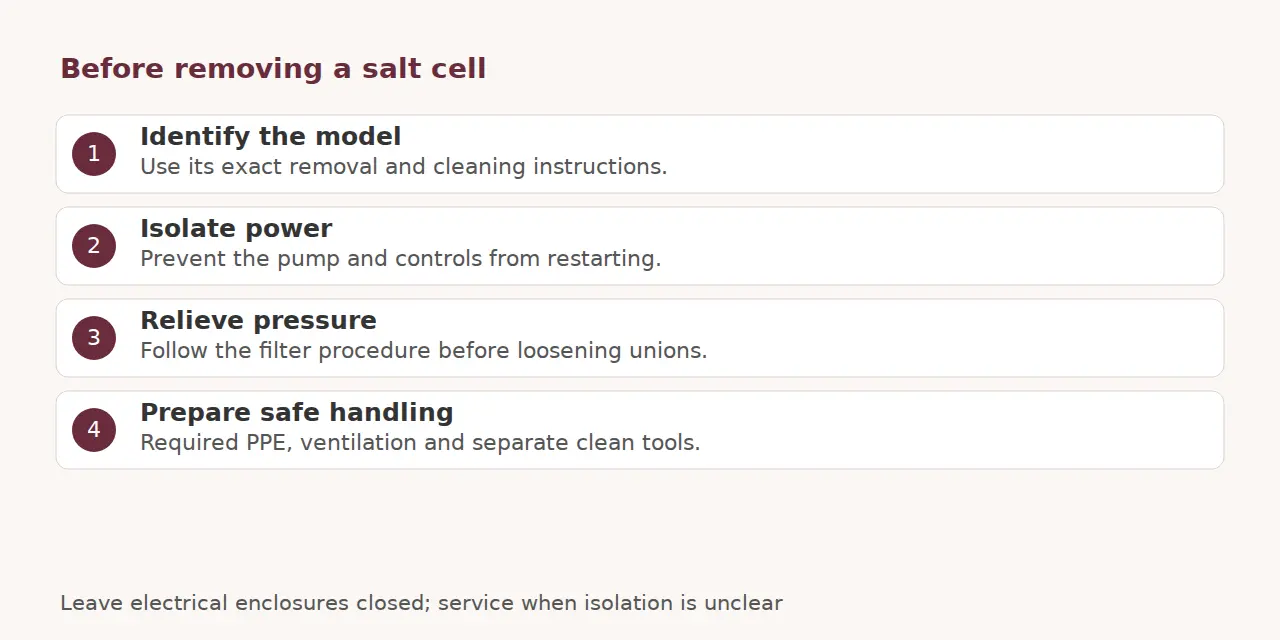
Make removal safe before loosening anything
Read the removal procedure first. Isolate power to the pump, generator and automatic controls as specified, prevent automatic restart, and fully relieve system pressure through the filter’s approved procedure. Stand clear of the relief discharge. Follow the documented plumbing-isolation steps for your installation.
If you cannot identify the correct isolation points or confirm pressure is relieved, have a pool professional handle removal. Keep swimmers out while equipment is being serviced. Leave electrical enclosures closed; a cell-cleaning job is not an invitation to troubleshoot wiring.
Choose the least aggressive approved cleaning
- No visible deposits: reassemble as directed and investigate other causes of low output.
- Loose debris or removable scale: use the manual-approved rinse, then inspect again.
- Persistent scale: check whether the exact manual authorizes chemical cleaning and whether you can follow it safely.
- Damage or uncertain plate condition: stop and arrange service rather than scraping harder.
Tool instructions genuinely differ. The Pentair guide prohibits mechanical tools and pressure washers on its blades; the cited Hayward manual permits certain plastic or wood tools for its cell. Avoid transferring that permission between designs. A screwdriver or improvised scraper can damage a coating even when the deposit looks stubborn.
Acid cleaning needs the full procedure
Use the specified cleaning stand, product strength, solution, contact time and rinse procedure from the exact manual. We aren’t providing a generic acid recipe: the cell construction and approved setup matter. The Pentair guide warns that excessive acid washing damages its blades.
Both cited manuals require protective gloves and eye protection; Pentair also calls for good ventilation. Where the approved procedure requires dilution, add acid to water, never water to acid. Keep acid away from chlorine products, with separate uncontaminated tools. The EPA chemical-safety alert explains the hazards of incompatible residues and mixed wastes.
Arrange disposal through the product guidance and local hazardous-waste rules. Never improvise neutralization by adding another pool chemical. For anyone unfamiliar with the required chemical handling or cell disassembly, professional cleaning is the safer choice.
After cleaning, verify the result
Reassemble and restart only through the manual’s sequence, then check externally for leaks and normal controller status. Record whether deposits were actually removed. Continue measuring free chlorine and pH; home-pool health guidance relies on water tests, not a controller’s indicator alone.
If scale returns quickly, review calcium hardness and pH with your full balance results. Repeated acid washing treats the symptom while risking the cell. For the wider system, see saltwater pool basics; for a clean cell and a falling residual, follow the low-chlorine checks.
Research checked 2026-10-04.