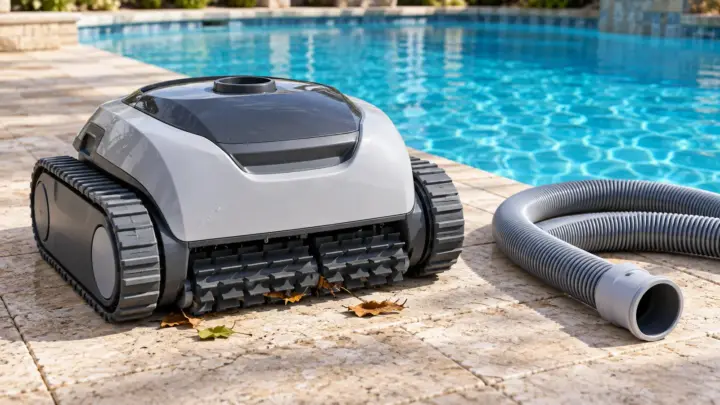
To store a robotic pool cleaner for winter, make sure no water is left in it, clean and refit the filter, roll up the cable with no kinks, disconnect it, and keep it dry and out of sun, rain and frost at 41–113°F (5–45°C). Hayward’s R110 manual and Maytronics’ Dolphin storage guide give the same range.
Why winter storage matters
Most off-season damage comes from trapped water, a kinked cable, or a robot left in a shed that freezes. A robot spends the season underwater, so its weak points in storage are moisture and cold. Water left inside the housing or filter can grow mold and mildew. If it freezes, it expands. A cable coiled tight in October can come out of storage in April kinked and tangling. Maytronics also points out that a caddy keeps rodents and insects from moving into the cleaner, which matters if it sits in a garage or shed for months.
Step by step: storing the cleaner
- Unplug the power supply first. Hayward’s warning is “Unplug the power supply before servicing.” Do this before you open the filter cover or touch anything on the robot.
- Lift it out by the handle. Pull the robot to the wall with the floating cable, then lift it by its handle. Polaris says to never lift the cleaner out of the pool by its floating cable, and notes the robot is heavier when it is full of water. Lift slowly and let water pour out as it comes up.
- Drain it. Set it on the pool edge and let the water run out, as Hayward describes. Hayward’s off-season list starts with “Make sure that no water is left in the Pool Cleaner.” Some models have a drain plug or valve, so check your manual for how to drain yours (Maytronics gives the same advice).
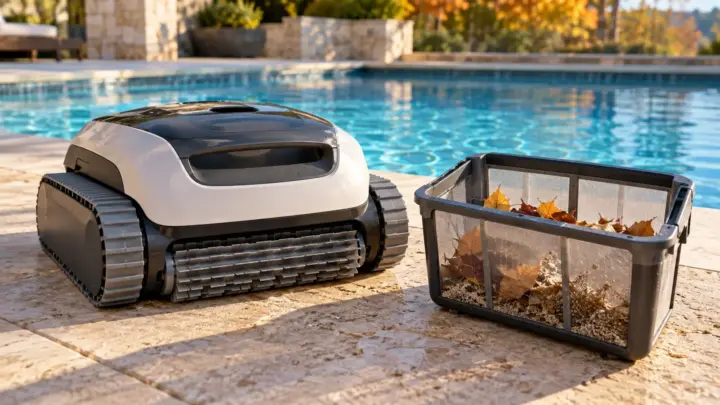
- Clean the filter while it’s still wet. Hayward says not to let the filter basket dry out before cleaning, because debris sets hard. Hose out the basket, panels or canister thoroughly, then put them back in place for storage.
- Wash the body. Polaris says to use slightly soapy clean water, rinse well, and not to use solvents. Don’t leave it to dry in direct sun beside the pool.
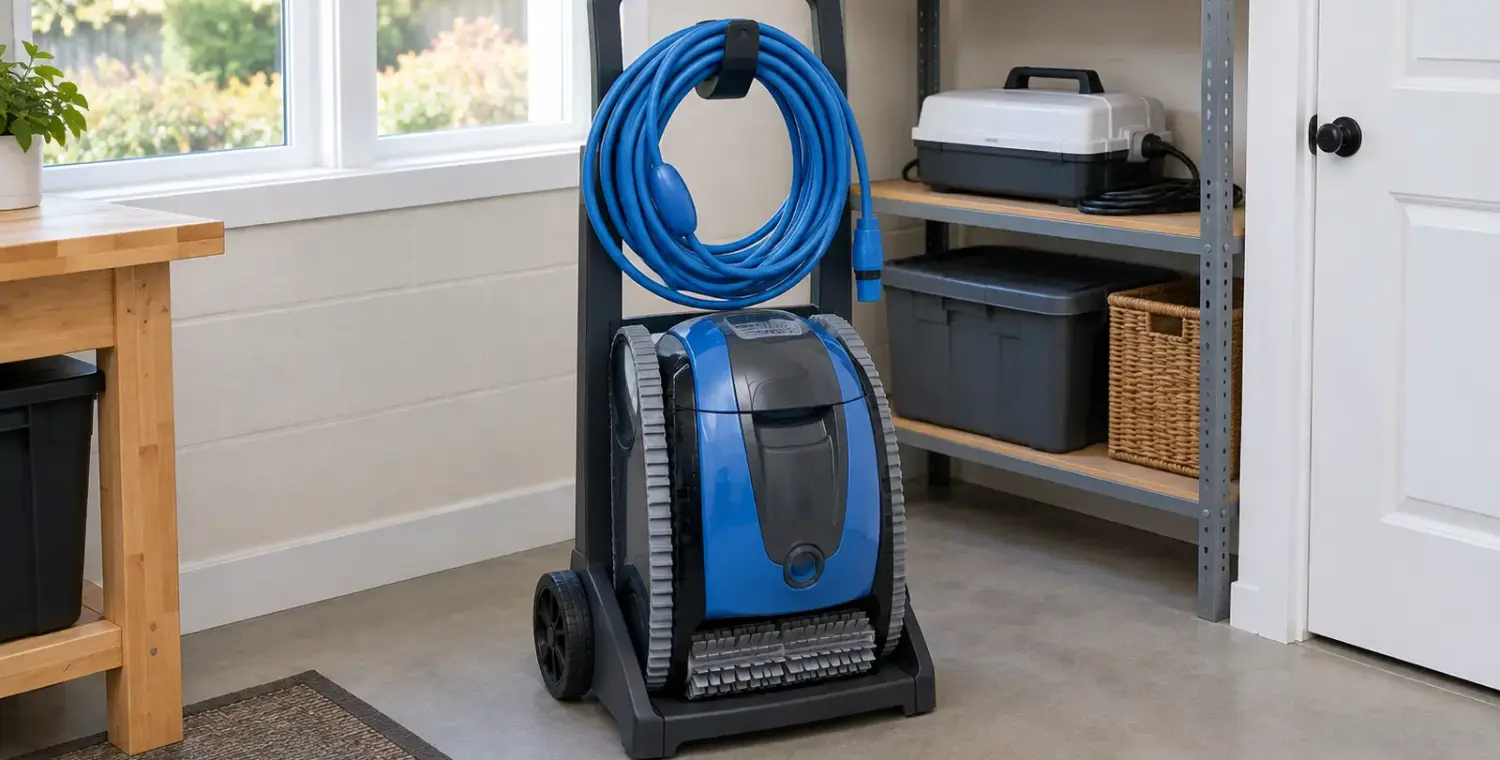
- Untangle and coil the cable. Polaris says to start at the cleaner head and remove all coils and tangles, then loosely coil the cable from the cleaner toward the control-box end. Hayward says to roll it up with no kinks. Loose loops are better than a tight wrap.
- Disconnect the control box. Unplug the floating cable from the control box and refit the protective cap over the socket, as Polaris directs. Maytronics’ last step is to make sure the cleaner is off and disconnected before storing.
- Stand it on its caddy. Polaris says to store the cleaner on its caddy so it dries quickly. Maytronics says upright caddy storage is easier on the parts and keeps pests out.
- Put it somewhere dry at 41–113°F. Keep the robot and the control box out of direct sun, rain and frost. Polaris says the control box is water-resistant, not waterproof, so don’t leave it outside.
Choosing the storage spot
The number to work to is the manufacturers’ range of 41–113°F. Maytronics also says to keep the storage area dry and at a consistent temperature, and to check on it if the robot sits in a shed or outdoor building.
This is our reasoning, not a manufacturer statement: in a region where winters freeze, an unheated shed or detached garage can easily drop below 41°F overnight. A heated garage, basement or utility room is the safer choice. A sunny spot by a window or a hot attic in a warm climate can push the other way, toward the 113°F upper limit.
| Storage spot | Fits the 41–113°F range? |
|---|---|
| Basement or utility room | Usually, and it stays dry and steady |
| Attached, heated garage | Usually; keep it off a damp floor |
| Unheated shed in a freezing climate | Often not; drops below 41°F |
| Poolside or under a patio cover | No; exposed to rain, sun and frost |
Battery (cordless) robots
Battery storage care varies by model, so this is where your own manual controls the details. Maytronics notes that a battery robot left unused for 21 days or more may go into sleep mode. Connecting the charger wakes it. Maytronics also says to charge it fully before you use it again.
Example: a typical closing day
Say you’re closing an inground pool in late October and live where winters freeze. Run the robot one last time, unplug it, lift it out by the handle and stand it on the deck until the water stops running. Hose out the filter while it’s still wet, refit it, rinse the body and let it drip-dry on its caddy in the garage. Uncoil the cable from the robot end, re-coil it in loose loops, cap the control box, then carry the whole caddy into the basement for the winter.
When your manual says something different
The 41–113°F range comes from Hayward and Maytronics. Polaris’ manual says only to store the unit out of direct sunlight and bad weather, without giving a number. If your manual gives its own range or a specific drain method, follow your manual for that model. If the cable comes out of storage kinked anyway, Hayward’s fix is to stretch it out completely and leave it in the sun for at least a day.
Next steps
Once the robot is put away, finish the rest of the closing. Use our guide to winterizing the pool pump and filter or the above-ground pool winterizing checklist. In spring, Maytronics says to clean the filters, inspect the moving parts and make any repairs before the first run. Our spring opening checklist covers the rest of the pool, and how often to run a robotic cleaner helps you set a schedule again. If it won’t drive after storage, see what to check when a pool cleaner isn’t moving.
Sources
- Hayward: PoolCleaner Robotic R110 User Instructions
- Maytronics: Robotic Pool Cleaner Storage During Winter
- Polaris (Zodiac): Polaris ALPHA/VRX iQ Owner’s Manual
Research checked 2026-10-21.