If your pool water level keeps dropping, first separate ordinary losses from an unexplained loss. Evaporation, swimming, cleaning and leaks can all lower the level. A controlled bucket test helps compare the pool with water exposed to the same weather; a single low tile line cannot tell you which route is responsible.
Start with a written record, check visible loss routes, then decide whether a controlled test is suitable. If loss is rapid, equipment is exposed to air, wet ground is spreading or the pool structure looks damaged, arrange help promptly instead of waiting for a test.
Protect the pool and equipment first
Keep water within the operating range specified for your pool and skimmer. Pentair Australia uses the midpoint of the skimmer opening as general guidance; your installation instructions determine the appropriate range. If the level is too low for normal circulation, stop operating equipment that cannot safely receive water and contact your service provider. Do not keep the pump running simply to complete a diagnostic exercise. Low water is also a common reason a pump loses prime.
Do not drain the pool to find a crack or wait for the water to fall to the suspected leak. Pentair warns that emptying can damage liners and fiberglass structures and that high groundwater can lift a pool shell. A falling level is a reason to seek advice, not a safe draining plan.
Keep access barriers working throughout the investigation. Check equipment from a safe position; do not open a filter, remove drain covers, enter electrical compartments or try unfamiliar valve combinations. If freezing weather makes a shutdown unsafe, postpone the bucket test and have a professional choose a suitable method.
How much evaporation is normal?
There is no single daily allowance that diagnoses every pool. EPA identifies temperature, humidity and wind as influences on evaporation. A comparison with your own recent conditions is more useful than treating an online inches-per-day figure as a guarantee.
Write down whether the period was windy, whether the pool was heated, whether a cover was used and whether people swam. Compare similar periods. A quiet covered day and a busy uncovered day answer different questions. If your records contain no comparable period, write “unknown” rather than inventing a baseline.
A high bill can draw attention to a problem, but the bill also includes household and garden use. Similarly, needing to refill more often is an observation, not proof of a shell leak. Keep the water-level log and the supply-water log separate until you have evidence connecting them.
Separate deliberate water losses from unexplained ones
| What happened? | What to record | Useful next check |
|---|---|---|
| Swimming or vigorous play | Usage period and visible splash-out | Compare with a quiet no-swimming period |
| Backwashing or vacuuming to waste | Start and finish times and level change | Confirm the system returned to its intended operating mode |
| Rain or refilling | When water entered | Do not treat the net change as evaporation alone |
| Automatic filling | Whether it was enabled and how often it ran | Check the fill system without defeating required protection |
| No known water use or removal | Same reference point and measurement method | Consider a controlled bucket test |
This is a recordkeeping table, not a ranking of likely faults. Tick more than one row when needed. For example, a refill after backwashing may hide that loss in the final level reading; it does not make the backwash unexplained.
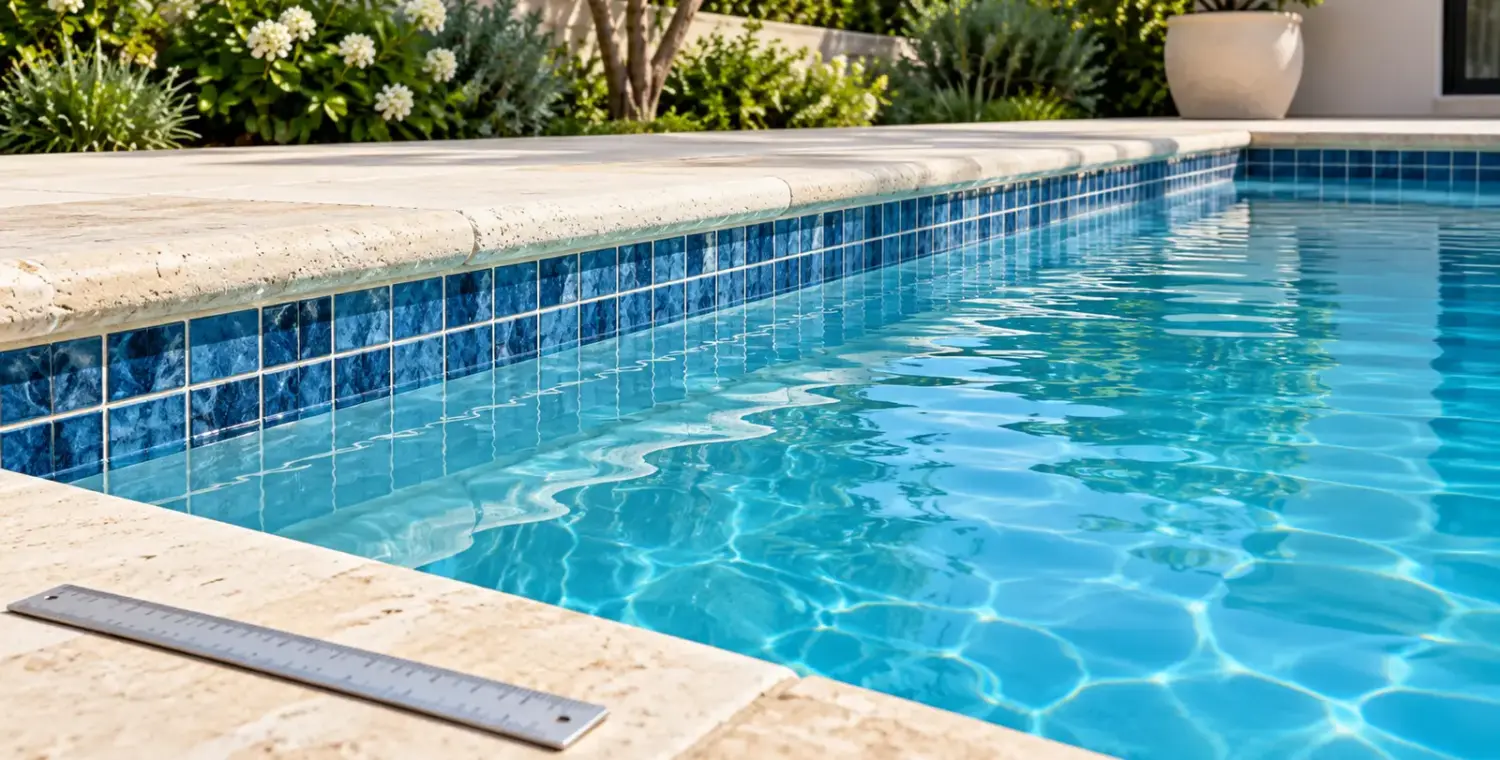
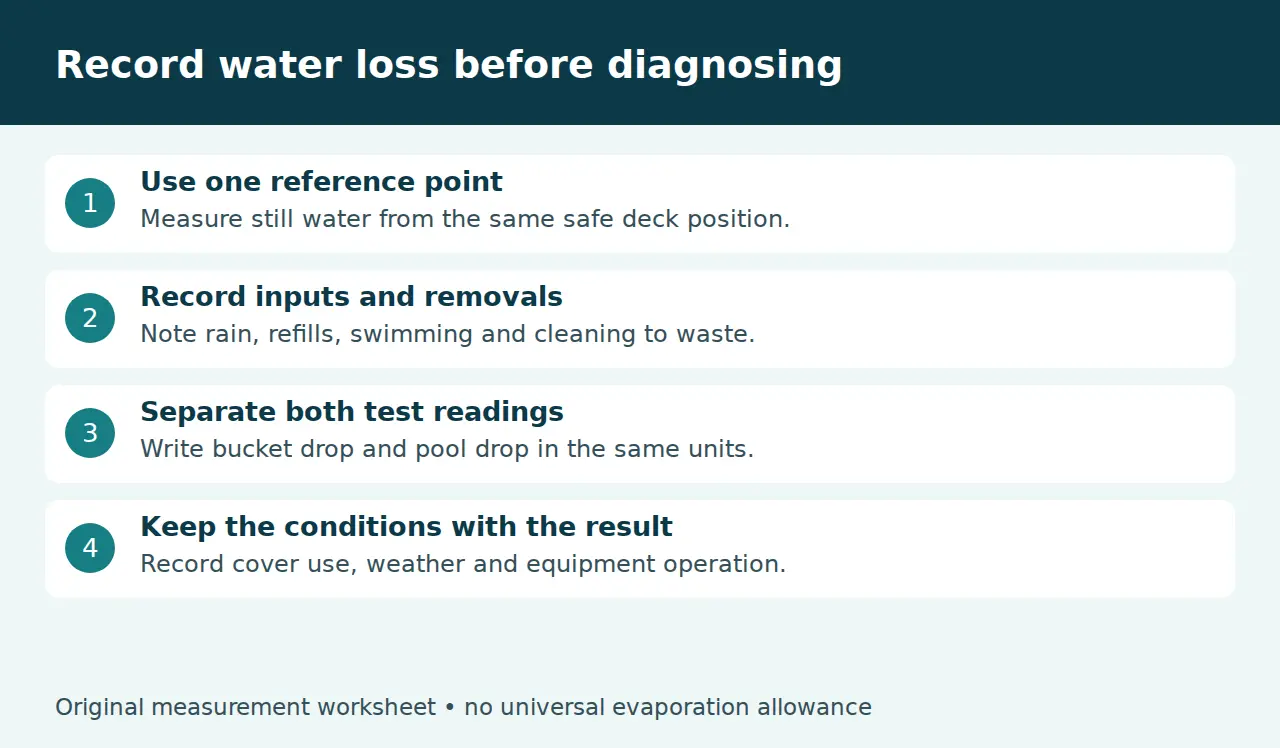
Choose a fixed reference point that you can reach safely from the deck. Measure vertically to still water and use the same point again. Photograph the location so another household member does not choose a different tile or coping edge. Record the units beside every reading.
How to do a controlled bucket test
EPA’s residential guide describes a 24-hour comparison with pool systems shut down, no swimming, and no rain or heavy wind. Use this method only when your equipment instructions and conditions allow that shutdown. An operating-pump comparison is a different test condition; do not combine its readings with this procedure.
- Select a stable pool step or bench that can support a sound, watertight bucket. EPA specifies a 2.5–5 US gallon bucket.
- Fill it to about an inch below its rim and position it with at least two-thirds submerged. Keep the water inside a little higher than the pool water. The bucket must remain upright.
- Mark or measure both starting levels independently: one inside the bucket, one in the still pool. Record the time, units and reference points.
- Disable automatic filling and the other pool systems only through their approved controls. Keep swimmers out. If a required safety function cannot remain protected, stop and seek advice.
- After 24 hours, repeat both measurements at the same points. Record any rain, disturbance, refill or equipment operation that occurred.
Do not step onto a slippery surface or lean into an inaccessible corner to obtain a perfect reading. If the bucket cannot be placed safely, a leak professional can offer another approach. A useful test needs a stable setup, not an improvised balancing arrangement.
Use depth changes rather than comparing how much water remains. Record “bucket drop” and “pool drop” on separate lines. If you measured distance down from an upper reference, a larger final distance means the water has fallen; make that convention explicit in the worksheet.
What the result means
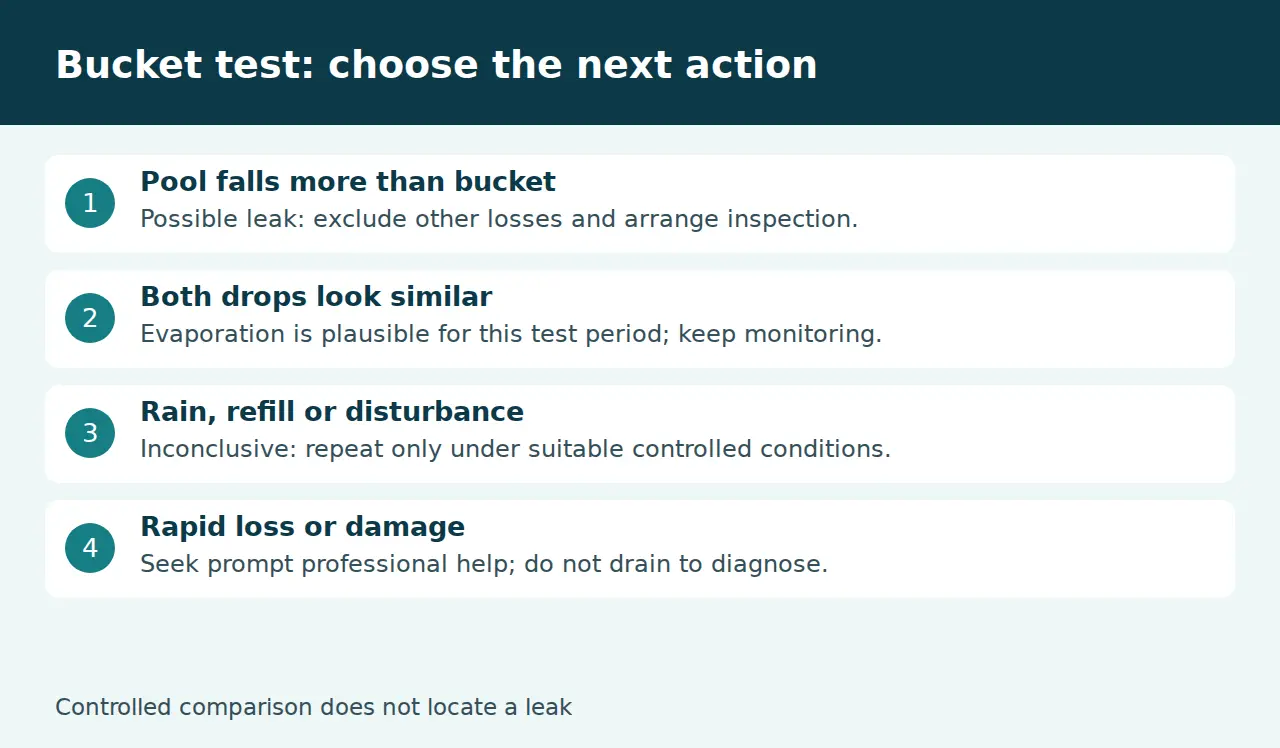
The pool falls more than the bucket: EPA says the pool may have a leak. Check the record for other water removals, then arrange inspection if the unexplained difference persists. The test does not identify a pipe, fitting or liner defect.
The drops are similar: evaporation is a plausible explanation for that particular period. Keep monitoring. This observation is not a certificate that every component is leak-free under every operating condition.
The comparison was disturbed: label it inconclusive. Rain, a moving bucket, an unnoticed refill, swimmers or a change in operation can prevent a trustworthy comparison. Repeat only when a suitable controlled period is available; retain the failed test notes so you do not accidentally compare incompatible conditions.
For tiny apparent differences, note the precision of your marks and ruler. If you cannot reliably distinguish the two changes, do not report a precise leak rate. The decision can be “measurement unclear; repeat or refer” rather than an invented number.
Inspect visible clues without dismantling anything
Water Corporation recommends visual checks for equipment drips, unexplained wet areas and water flowing to drains. Walk the accessible deck and equipment area, photograph what you see, and note whether it appears during operation or while equipment is stopped. Keep away from damaged electrical equipment or unstable ground.
Pentair’s water-level guidance lists saturated soil, cracks, loose tiles and return bubbles as possible warning signs. They are clues for inspection, not permission to assign a cause from a photograph. Record a symptom in plain language: “wet patch beside the return pipe” is more useful than “underground pipe definitely broken.”
Observe the accessible waste outlet and controls without changing unidentified valves. If you suspect a filter or valve problem, the filter-pressure troubleshooting guide helps organize pressure and flow observations. Repairs and internal inspections still require the equipment’s safe service procedure.
Can an automatic fill hide a problem?
A steady level does not tell you how much replacement water entered. Record fill activity and use approved controls when a test requires it off. If the fill will not stop at its intended level, have the fill mechanism checked. Do not plug an overflow or defeat protective controls as a generic diagnostic shortcut.
Water Corporation’s meter check looks for registered water use while taps and water-using appliances are off. That can help investigate the supply side, but it is not a pool-shell test. With automatic fill disabled, water already in the pool can leave without appearing as new meter consumption. Conversely, meter movement may belong to another household use.
When to call a leak professional
Call promptly for rapid loss, visible damage, spreading wet ground, unsafe equipment operation or a repeatable unexplained pool-versus-bucket difference. Send your measurements before the visit and ask what operating conditions the technician wants preserved. Do not attempt a pressure test with household improvised fittings.
Prepare a short handoff: pool type, recent repairs or storms, equipment models, starting level, test conditions, both level changes and photographs. Include whether refilling or backwashing occurred. If the loss began after winter, our spring opening checklist can help reconstruct the sequence of restored equipment.
Reduce losses after the cause is understood
EPA recommends appropriate, consistent cover use to reduce evaporation. Choose a cover compatible with your pool and follow its handling instructions. An evaporation cover is not automatically a safety cover; keep required barriers and supervision in place.
Continue the same measurement record after a repair or routine change. Describe what changed and what remained comparable. If the level still drops unexpectedly, return to the evidence rather than repeatedly buying sealant. The practical outcome is a documented explanation and a safe next action, even when that next action is professional testing.
Research checked September 30, 2026. We only claim hands-on testing when we’ve actually tested the product ourselves. Featured image is an original illustration.