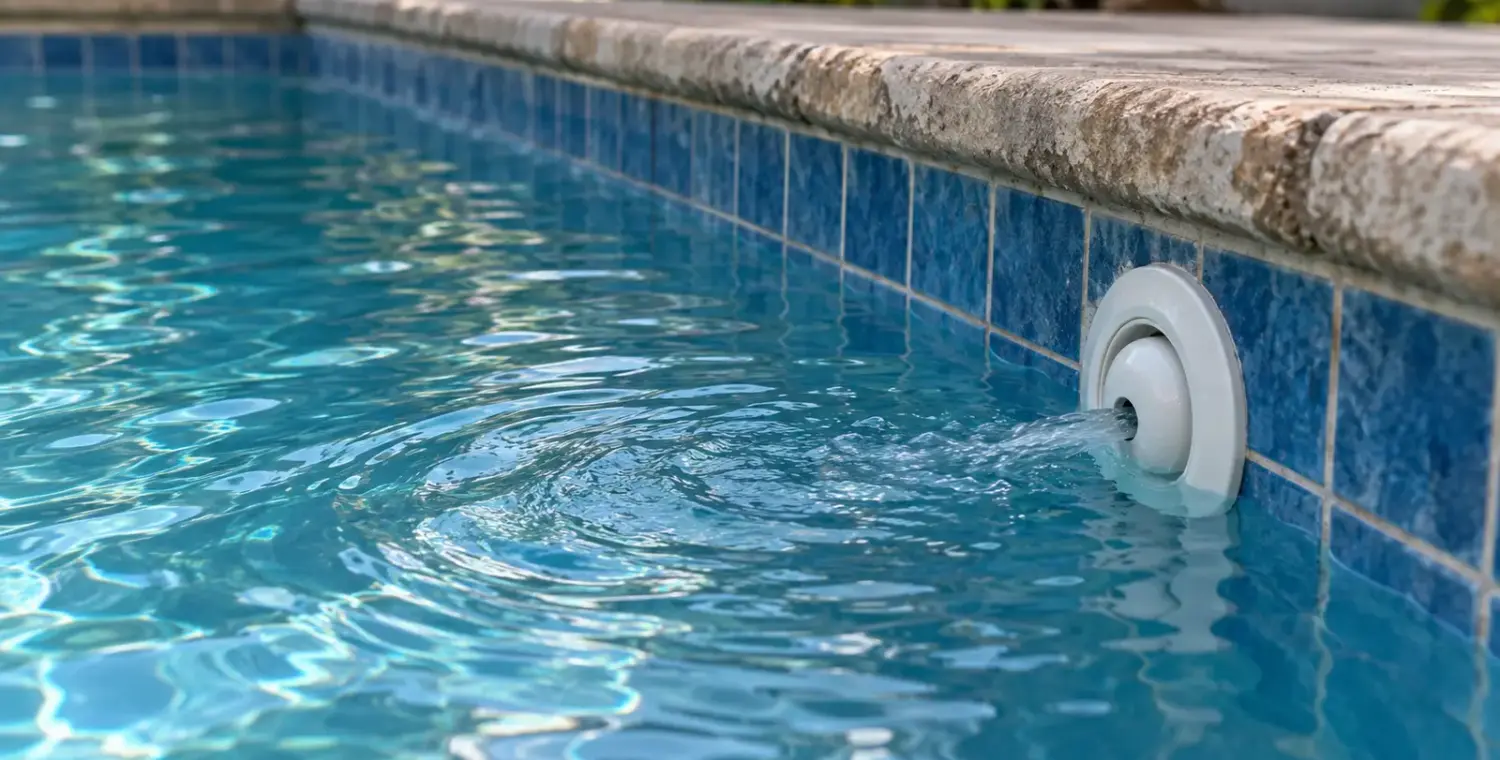
Point adjustable pool return jets to create useful movement for your pool: surface flow that helps debris reach a skimmer, circulation into a neglected area, or flow that lets a suction cleaner travel properly. There isn’t one correct angle for every installation. Start with the established setup, change one permitted fitting at a time and watch what improves.
Check the fitting’s instructions before touching it. Stop the pump and prevent an automatic restart for an approved owner adjustment. Leave fixed fittings, unfamiliar openings and suction outlets alone.
Choose the problem you’re trying to solve
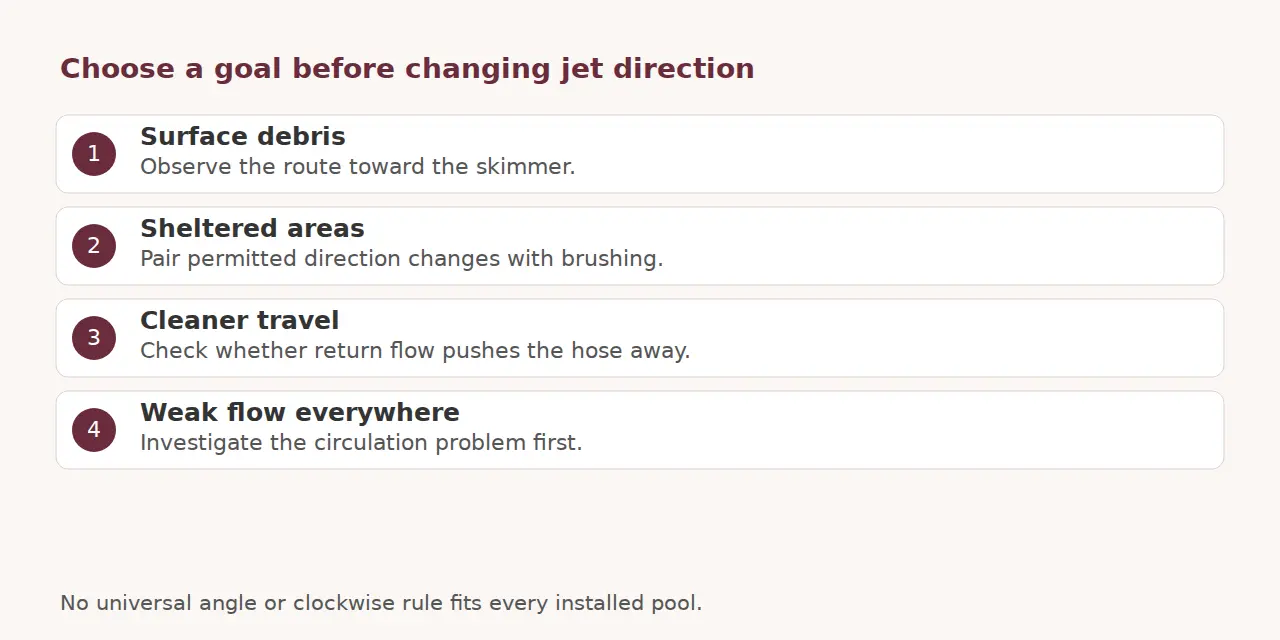
If floating leaves linger away from the skimmer, examine their route. Wind, pool shape and several returns combine to move them; a jet aimed straight across the pool might send debris past the intake. A coordinated direction along the perimeter is one option to evaluate, not a rule that every pool must run clockwise.
If surface skimming is already good but dirt settles in a sheltered corner, stronger surface ripples alone don’t answer that problem. Some adjustable returns allow downward or sideways direction. Use the permitted range to explore the neglected area, alongside brushing and normal cleaning.
The Bermuda skimmer troubleshooting table treats return direction as a circulation adjustment, but also identifies basket and water-level issues. Deal with those basics first; our skimmer basket guide covers routine care.
Identify what is actually adjustable
A common directional fitting has a movable ball held by a retaining ring. Other returns are fixed or form part of an engineered cleaning system. Fitting shape, pool finish and connection type affect which parts belong there. Confirm the model instead of trying to turn every round wall fitting.
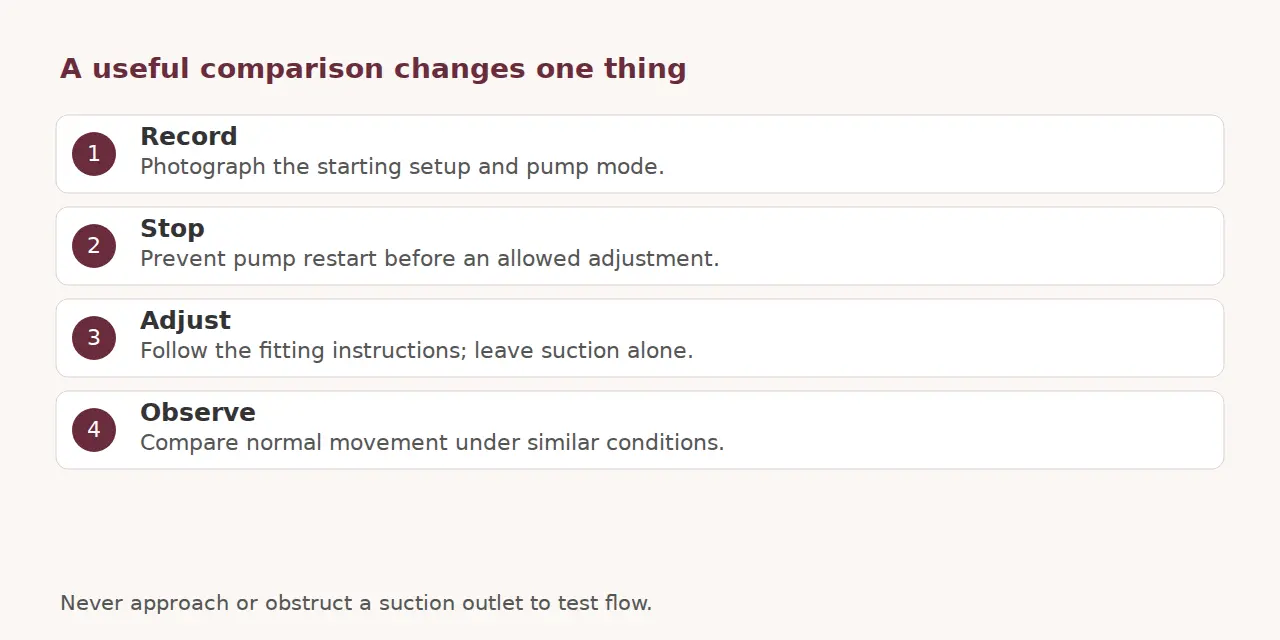
Photograph the original direction. Follow the maker’s adjustment method with the pump stopped and automated starts prevented. Avoid loosening the wall body, forcing a stuck ring or reaching into an opening. If the instructions require tools or disassembly beyond routine owner adjustment, arrange service.
Never repurpose a return fitting as a suction component. Pool wall openings have different jobs; size or appearance alone isn’t reliable identification.
Make one change and compare
- Choose a specific goal, such as improving the route of naturally arriving leaves toward the skimmer.
- Record the starting directions and pump operating mode.
- Stop the pump and make one allowed adjustment using the fitting instructions.
- Restore the normal operating mode and observe from a safe location.
- Compare debris movement and cleaning results over similar conditions; keep or reverse the adjustment based on the evidence.
Hold the pump mode steady during a comparison. A speed change or gusty day makes it harder to tell what the fitting adjustment did. Observe existing floating debris; don’t add loose markers or objects that could lodge in the circulation system.
Good local movement is useful evidence, but water testing remains the check on sanitizer and pH. Continue your normal water-testing routine.
Watch how returns affect a suction cleaner
A return stream can push a cleaner hose away from one area or keep the cleaner in a limited section. The REBEL cleaner guide offers several diverter directions to try for that model, including along the wall and downward. That is a useful example of adjusting for an observed problem rather than choosing an angle by habit.
Use the instructions for your own cleaner and any supplied diverter. Check hose length, flow setup and obstructions too. Changing return direction won’t fix an unsuitable hose configuration or a clogged cleaner.
Weak returns need a different investigation
If all returns have become weaker or air bubbles appear unexpectedly, note when the change started. Check the visible water level and scheduled pump mode, and use the pump circulation troubleshooting guide. A changed filter pressure reading is another clue to record.
Leave unexplained loss of prime, leaks and recurring flow problems to qualified service. Keep people away from suction outlets. Close the pool for a loose, broken or missing drain cover and get it corrected; better surface movement never makes a damaged suction system safe.
Research checked 2026-10-02.