Start with a water-level log that accounts for bathing, splash-out and cover use, then inspect the outside for unexplained wetness. A drop after a long uncovered soak has a different history from repeated loss during quiet, covered periods. Persistent unexplained loss or visible leakage deserves dealer assessment.
There is no dependable universal “normal inches per day” allowance for every hot tub.
Protect normal operation before measuring
Check the fill range in the exact spa manual. Low water threatens normal circulation; the 2025 Hot Spot guide connects low level with weak or surging jets. Its particular fill-height instruction belongs to those models, rather than every spa.
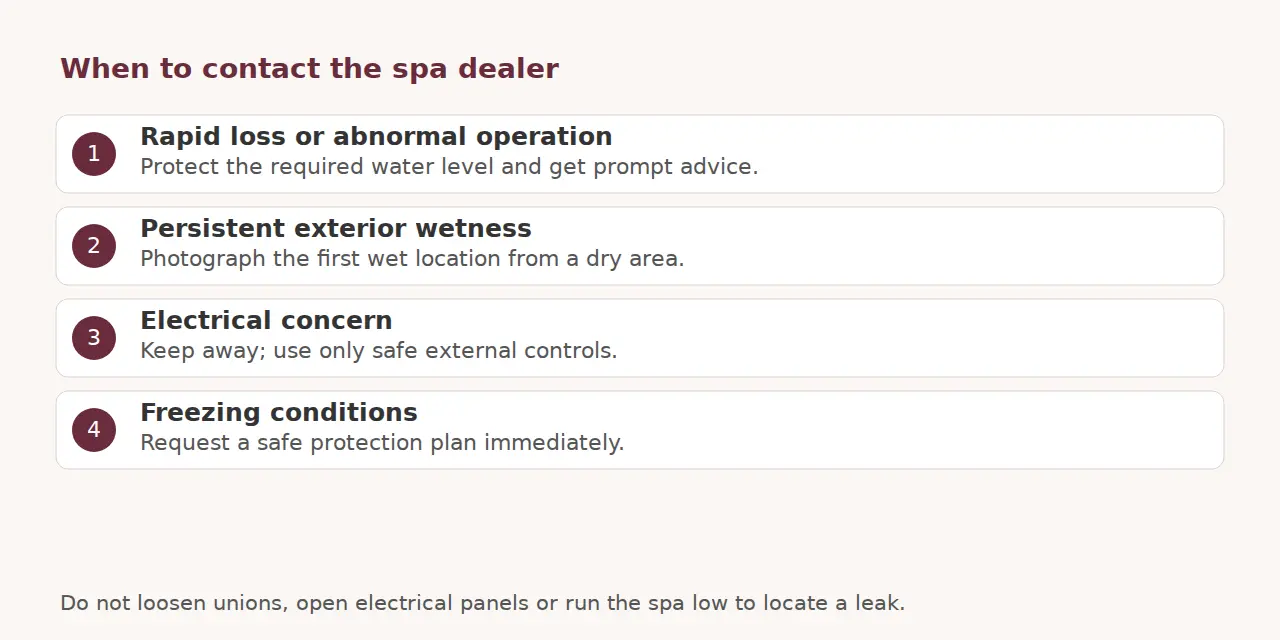
If water is dropping rapidly, equipment is running abnormally, or water approaches electrical equipment, keep people away and contact qualified service promptly. Use safe external shutdown controls only when accessible without a hazard. Never let the spa run low to see where the loss stops.
In freezing weather, get a safe protection plan immediately. Simply switching off a water-filled spa for a long leak test introduces another risk. The winter-care guide helps frame that discussion with the dealer.
Use comparable observations, not a borrowed pool test
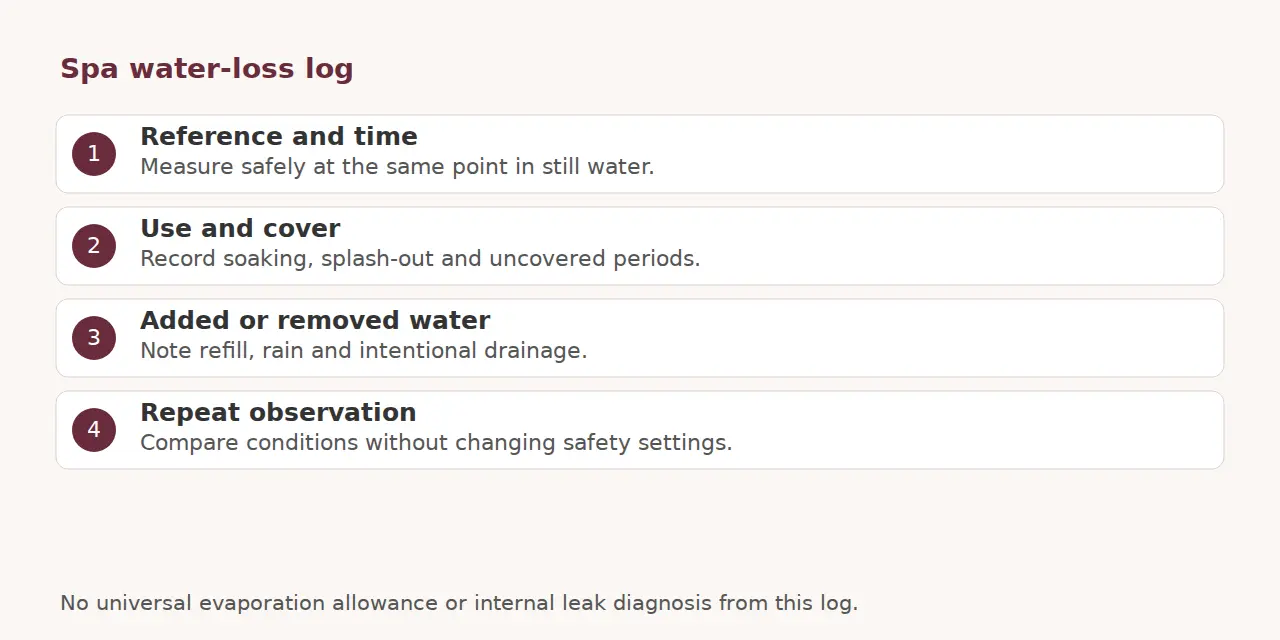
- Choose a repeatable reference point reachable safely from outside the spa. Record the level at rest, time and units.
- Write down bathing, splash-out, cover-off time, top-ups, rain and any intentional drainage.
- Compare a period of normal covered, unused operation with your own recent records, retaining required circulation and safety settings.
- Check the same reference under comparable conditions. Report unexplained changes to the dealer.
This is an observation log, not a standardized leak-rate test. No-use periods reduce one known influence without proving that all loss is evaporation or locating a leak. Avoid deliberately changing pump or valve modes to isolate hidden plumbing yourself.
EPA identifies weather and cover use as relevant to evaporation in pools. A spa’s smaller, heated water body and cover routine require their own assessment; don’t transfer a pool’s submerged-bucket setup or an online evaporation figure.
Check the cover and the recent use pattern
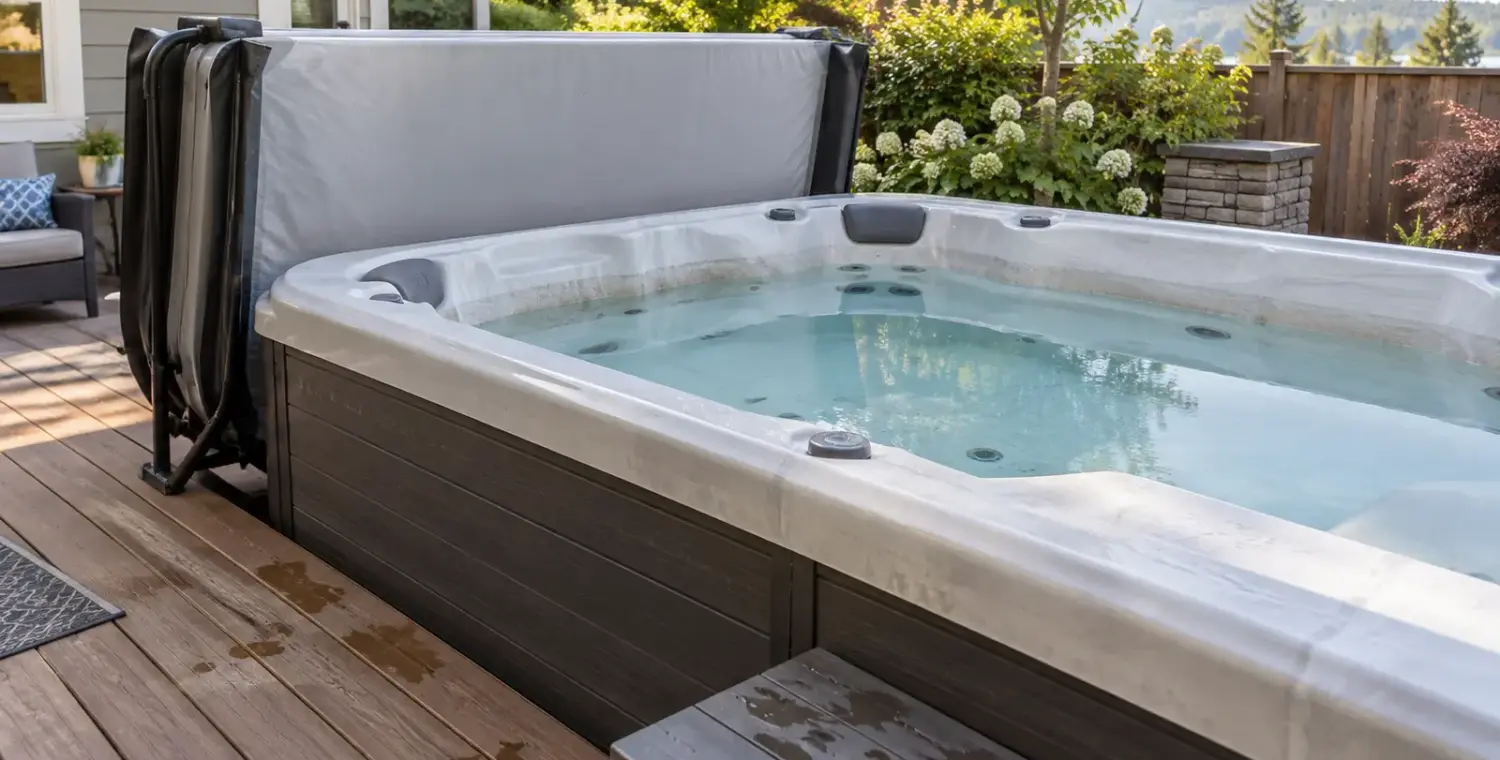
Keep the cover in place when appropriate under the spa instructions, with latches and handling used correctly. Manufacturer cover guidance emphasizes fit and condition. Note a displaced edge, damaged seal or a long recent uncovered period.
An unusually heavy or sagging cover deserves its own assessment. Our waterlogged-cover guide addresses that problem. Cover condition provides context for loss; it doesn’t establish that the plumbing is sound.
Look for the first wet location
Observe accessible outer surfaces and the ground from a dry, safe position. Note rain, spilled water during a refill, or water shed when the cover was moved. Photograph persistent drips or wet areas before cleaning away the evidence.
Don’t remove energized equipment panels, reach into the cabinet or loosen a union. If a drain outlet is externally visible, record wetness there without dismantling it. Unclear fittings, shell damage and hidden plumbing belong to service.
A historical Jacuzzi troubleshooting manual lists suction/discharge connections among leak possibilities and separately identifies pump-seal leakage requiring qualified repair. Those examples help describe a service problem; they don’t identify the failed part in another model.
What to send the dealer
- Make/model, loss history and comparable level readings.
- Cover condition, use pattern and any recent refill or service.
- Photos showing the earliest wet area, without unsafe access.
- Any flow warning, weak jets, electrical trip or visible damage.
Seek urgent help for rapid loss or electrical concerns; arrange assessment for recurring unexplained decline even when no puddle is visible. Water under the cabinet needs inspection rather than an assumption that the shell itself is leaking.
After a permitted top-up or repair
Use the model’s approved refill/startup method and record the added water. Continue spa water testing under homeowner public-health guidance. A restored level and a dry deck are useful outcomes, alongside verified sanitation and normal equipment operation.
Research checked 2026-10-05.