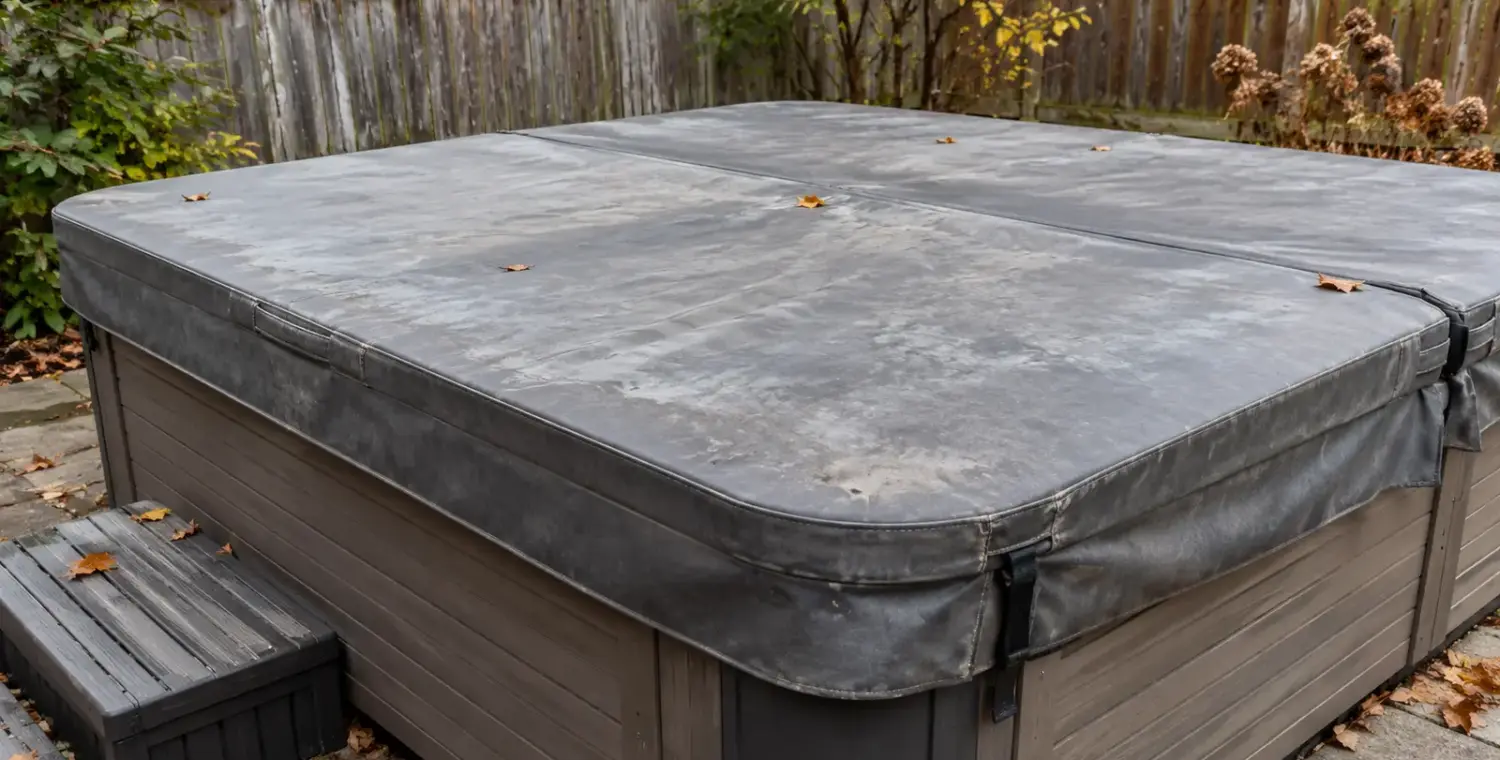
A hot tub cover that becomes noticeably heavier, sags or develops damaged seams needs inspection for waterlogging and structural damage. In foam-core covers, a failed vapor barrier lets moisture enter the insulation. Arrange a compatible replacement when the core or structure is compromised; ask about an approved repair only if it can restore the cover’s intended condition.
Use the change from your cover’s normal handling as the clue. There is no useful universal weight cutoff for every size and construction. Stop trying to lift a cover that has become unsafe to handle.
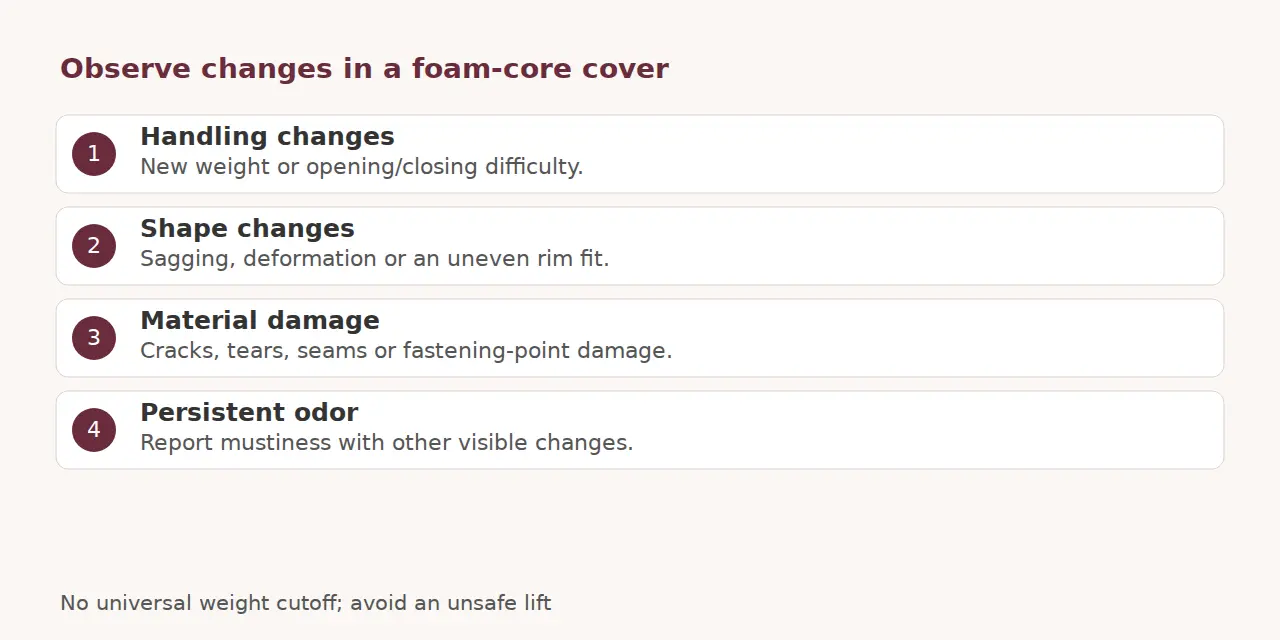
Look for a combination of signs
- New weight or difficult handling: opening and closing take more effort than they used to.
- Changed shape: the center sags, a panel deforms or the cover no longer sits evenly.
- Visible deterioration: tears, cracks, brittle material, separated seams or damaged fastening points.
- Persistent musty odor: especially alongside weight or material changes.
Weight alone needs interpretation. Snow, standing surface water and a stiff lifter also affect the handling situation. Manage surface accumulation only by the cover’s instructions; avoid a hazardous lift just to prove where the moisture is.
Odor is a reason to investigate, not proof of a particular organism. Hot Spring’s replacement guide identifies mustiness as a possible sign of growth in damp foam. Describe the full set of changes to the dealer.
How moisture gets into the core
A foam-core cover has more than an outer skin. Its internal vapor barrier protects the insulation from moisture. The Master Spas cover-care instructions emphasize keeping that barrier intact and the inserts dry; broken inserts can absorb water and become heavy.
Punctures, damaged seams and rough handling deserve attention. Chemical exposure also matters: that care document specifies ventilation after treatment to protect its cover material. Follow your chemical label and exact spa/cover instructions rather than a universal cover-open timer.
Keep sharp objects, people and stored items off the cover.
Decide whether repair can restore the whole cover
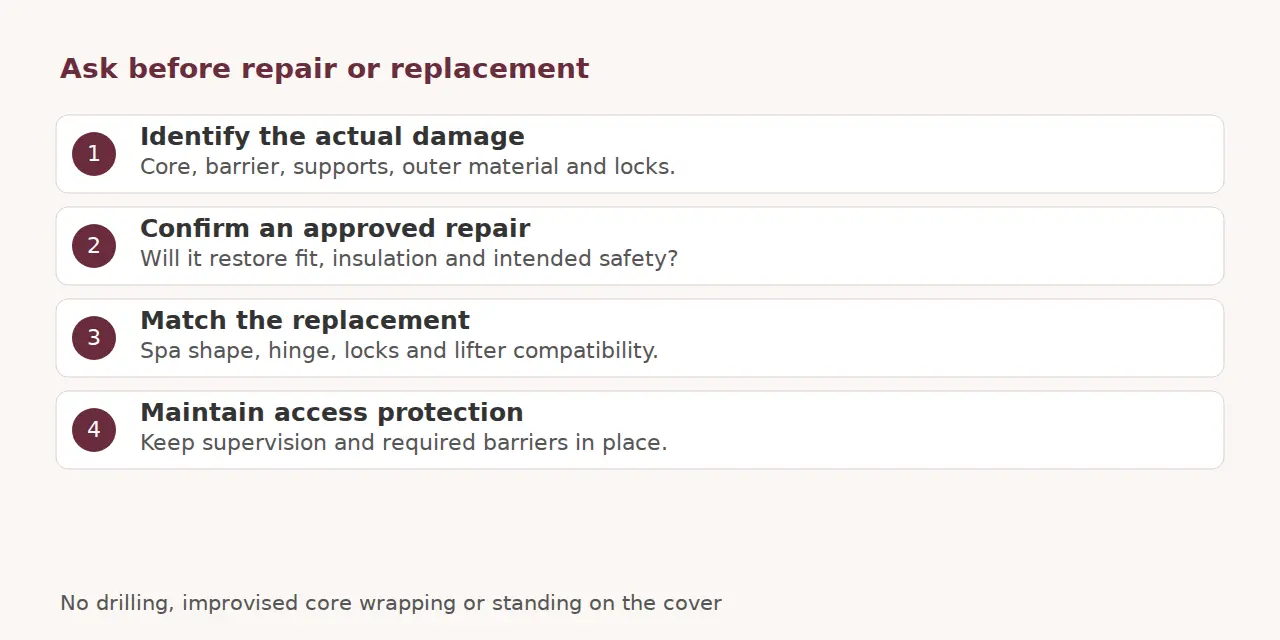
Ask the dealer to assess the core, barrier, outer material, supports, hinge and fastening system together. Replacing one sound-but-worn component and replacing a damaged insulated assembly are different jobs. Obtain written confirmation that any proposed repair is permitted for the actual cover and preserves fit and safety.
Drying the outer surface leaves the failed barrier unresolved. Avoid drilling drain holes, cutting into the core or wrapping inserts in improvised plastic as a substitute for an approved restoration.
The Hot Spring replacement guidance lists waterlogging, sagging and deteriorated material as replacement signs. Severe core or structural damage, unreliable closure or handling that you cannot manage safely makes replacement the practical question to address now. A cosmetic patch is insufficient for those faults.
Confirm fit and safety before ordering
Give the supplier the spa model and the measurements its ordering process requires. Confirm corner shape, hinge orientation, skirt, locks and lifter compatibility. Match the actual installation; a similar-looking rectangle can still fit poorly.
Maintain child-access protection while the damaged cover is being assessed or replaced. The CPSC barrier guide treats barriers as layers of protection, with supervision still essential. Follow local requirements and the cover’s fastening instructions; never assume an arbitrary tarp supplies equivalent insulation or access protection.
A sound, fitted cover helps retain heat and limit evaporation. EPA’s pool-efficiency guide explains that mechanism for pools; its savings figures do not predict your spa bill. Our heating troubleshooting guide helps distinguish cover concerns from settings, circulation and equipment faults.
Protect the replacement
Handle it with the designed lifter and permitted grip points, without dragging it across rough ground. Keep locks and seams in good condition. Use only care products approved for the cover material; vinyl and fabric coverings need their own instructions.
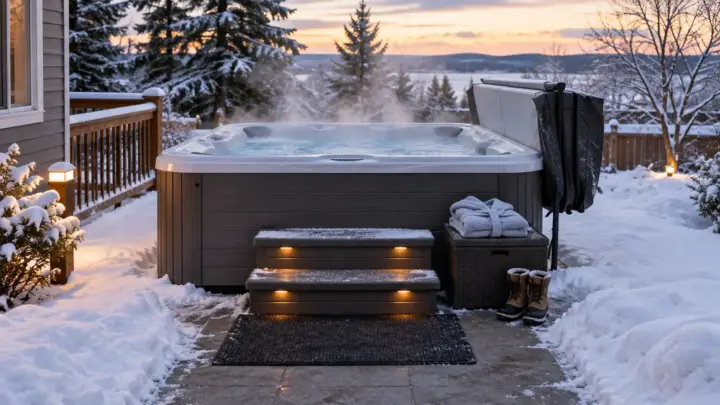
After significant weather, check fit and accumulation when access is safe. For an operating winter spa, follow the winter-care plan. Keep a note of normal handling and shape so a future change is easier to spot.
Research checked 2026-10-04.