Yes, cold weather does not automatically rule out a hot tub soak, but winter use calls for extra care. Keep the water at or below 104°F (40°C), watch for overheating, and make sure the route to and from the tub is free of ice. Jacuzzi recommends limiting soaks to 15–20 minutes when the outdoor temperature is below 20°F, or 10–15 minutes during active snowfall. These are manufacturer recommendations, not a guarantee of safety for everyone. Follow local extreme-cold and severe-weather alerts, and skip a soak when conditions make getting in, getting out or operating the spa unsafe.
Why cold air changes the risk
The water-temperature ceiling stays the same. Do not raise the spa above 104°F (40°C) just because the air is cold. Check the water temperature before entering; your comfort setting may need to be lower based on your health and the time you plan to soak. For more detail, see what temperature a hot tub should be.
Cold air does not remove the risk of overheating. Bullfrog’s owner manual lists dizziness, drowsiness and fainting among the signs of hyperthermia. It also warns that overheating can impair your ability to recognize danger or leave the spa. Keep soaks brief, and get out if you feel dizzy, faint, sleepy or unwell. Do not rely on how comfortable the water feels as your only safety check.
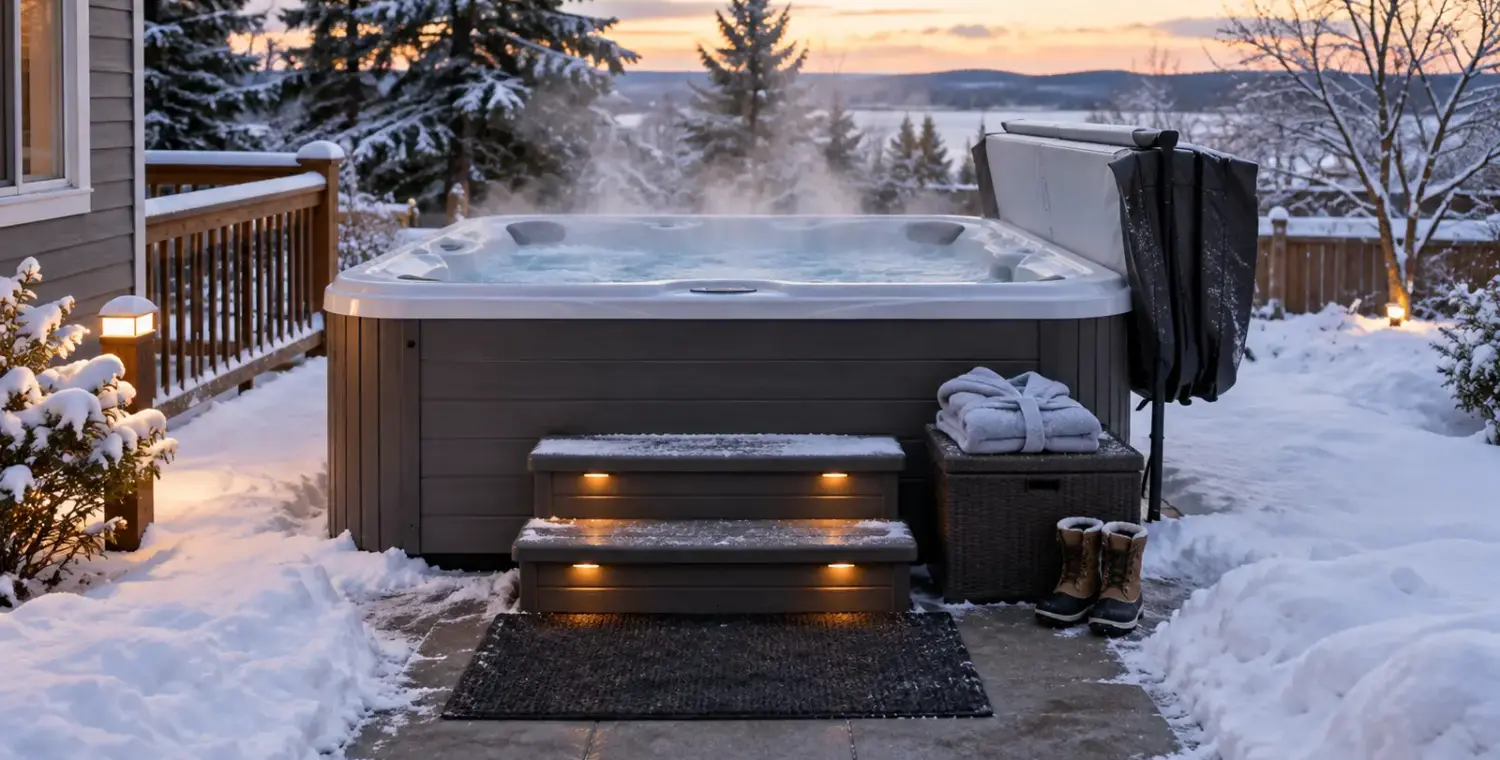
Take extra care getting out. Jacuzzi warns that moving from warm water into extreme cold can cause rapid heat loss and disorientation. An icy deck adds a slip hazard. Keep the path well lit and clear, with a warm robe and slip-resistant footwear close to the steps.
Before you get in
- Clear and light the path. Jacuzzi suggests a weatherproof rug at the step and enough light to see your way back to the door. Bullfrog’s manual warns you to take care getting in and out of the spa.
- Stage your gear. Keep towels, an insulated robe and slip-resistant footwear within reach of the steps, so you never cross ice to fetch them.
- Set a timer for the soak lengths given at the top of this article.
- Skip alcohol. CDC advises against drinking before or during hot tub use.
- Drink water. Jacuzzi recommends staying hydrated during winter soaks.
- Check water quality. Test sanitizer and pH before use and follow your spa’s care instructions. CDC recommends checking disinfectant and pH to reduce exposure to germs.
Keeping the tub safe through winter
Keep a winter-operated spa maintained during normal operation. Jacuzzi recommends maintaining circulation and adequate water level rather than draining a spa that is being used through winter. Freeze protection depends on working power and equipment, but electrical faults take priority over freeze protection. One control system described in Bullfrog’s 2018 owner manual activates pumps when the temperature within the heater drops to 44°F; that is a model-specific example, not a setting for every spa. Check your own manual. If water level keeps falling, see how to distinguish evaporation from a leak. If power or heating fails in freezing weather, contact a qualified spa technician promptly to protect the equipment.
Keep the cover on between soaks. CPSC recommends a locked cover whenever the spa isn’t in use. It protects children and holds in heat. Jacuzzi suggests checking the cover weekly in winter for snow buildup, tears or seal damage, and clearing snow off it with a soft brush, never a shovel.
Treat an unexpected GFCI trip as an electrical safety warning. Bullfrog’s 2018 manual distinguishes the deliberate GFCI trip during its startup test from a later, unexpected trip. After a subsequent trip, the manual says power to the spa must remain off until a qualified service provider corrects the problem. Do not repeatedly reset the breaker or open the electrical equipment yourself. Contact a qualified spa technician or electrician promptly, especially in freezing conditions. See our GFCI troubleshooting overview for context, not a reason to restore power before a fault is repaired.
A typical cold evening
Imagine a clear path to the tub, light snow, and a water setting of 102°F. Before getting in, check local weather alerts, the water temperature and sanitizer, and keep a towel, robe and footwear within reach. If conditions are suitable and you choose to soak, keep it brief and leave sooner if you feel unwell. Afterward, secure the cover and verify that the spa is operating normally. If conditions are unsafe, skip the soak.
When to skip it
- Do not use the tub during electrical storms or other severe weather. Bullfrog’s manual warns against it.
- Extreme-cold warnings: postpone use when a local extreme-cold warning is in effect. Do not treat one outdoor temperature, such as -10°F, as the universal threshold for an official weather alert.
- Health conditions and medication: Bullfrog’s manual advises consulting a physician before spa use if you are pregnant, have obesity, heart disease, high or low blood pressure, circulatory problems or diabetes, or take medication that can affect alertness, heart rate or circulation. Older adults and anyone unsure how heat affects their health should seek individual medical guidance.
- Young children: CDC advises keeping children under 5 out of hot tubs.
Next step
The cover stays shut for long stretches in winter, so keeping the water in shape makes cold-weather soaking easier. Our guide to hot tub water care in winter covers testing and sanitizer. If you have a soft-sided tub, the limits are different. See using an inflatable hot tub in winter.
Sources
- U.S. Consumer Product Safety Commission: Spas, Hot Tubs, and Whirlpools
- CDC: What You Can Do to Stay Healthy in Hot Tubs
- Jacuzzi: Complete Jacuzzi Guide to Protect Your Investment Through Cold Weather
- Bullfrog Spas: Bullfrog Spas Owners Manual
- National Weather Service: Extreme Cold Warning definition
Research checked 2026-10-22.