A hot tub heats up a few degrees an hour. Jacuzzi’s rule of thumb is that most hot tubs heat up at a rate of 3 to 6 degrees per hour, so topping up the heat in a tub kept warm takes a couple of hours, and heating a fresh fill takes most of a day.
From a cold fill, Jacuzzi’s setup guide says initial heating to 102°F takes 6-12 hours. Hot Spring says its spas reach 100°F (38°C) and will normally do so within 18 to 24 hours. The gap between those figures comes from the tub, the heater and the weather, so your owner’s manual’s own figure is the best guide.
Manufacturer heating figures
| Source | What it says |
|---|---|
| Jacuzzi (general) | 3–6°F per hour for most hot tubs |
| Jacuzzi (240 V tubs) | 2–5°F per hour, depending on tub size |
| Jacuzzi (120 V tubs) | 24 hours or longer to heat up |
| Jacuzzi (first fill) | 6–12 hours to 102°F; temperature rising about 2–4°F per hour |
| Hot Spring (first fill) | 100°F within 18 to 24 hours |
| Bestway Lay-Z-Spa AirJet (inflatable) | 2–3°F per hour (1–1.5°C per hour) |
| Jacuzzi (inflatables in general) | 12 to 48 hours to reach maximum temperature |
Bullfrog sums it up the same way: hot tubs increase a few degrees per hour, and normally, you can plan on using your hot tub by the next day, if not sooner.
Work out your own wait
Take the temperature rise you need and divide it by your tub’s heating rate.
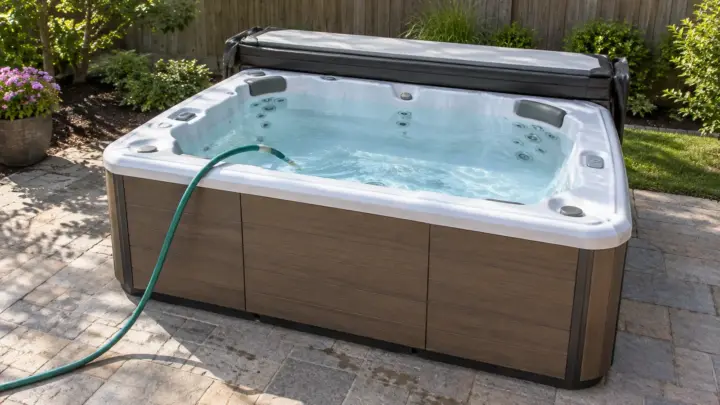
- After a refill. Say the hose water comes in at 55°F (an example figure; colder water takes longer) and you want 102°F. That is a 47°F rise. At 3°F per hour it takes about 16 hours; at 5°F per hour, about 9 hours.
- Reheating a tub kept warm. From 95°F to 102°F is a 7°F rise, about 2 to 3 hours at 3°F per hour. As Jacuzzi puts it, starting from a higher base temperature will dramatically reduce the wait time.
What makes it faster or slower
- Heater power. 240 V tubs heat faster than 120 V plug-in tubs, which Jacuzzi says can take a day or more.
- The cover. Jacuzzi says a properly fitted cover can reduce heating time by 25-50%. Keep it closed and strapped while heating.
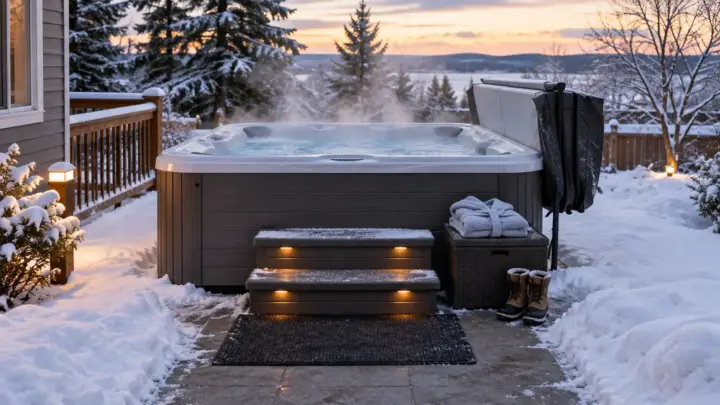
- Weather. During colder months, expect longer heating times as your system works against heat loss to the environment. Wind makes it worse.
- Starting temperature and size. Colder fill water and more gallons both mean more heat to add.
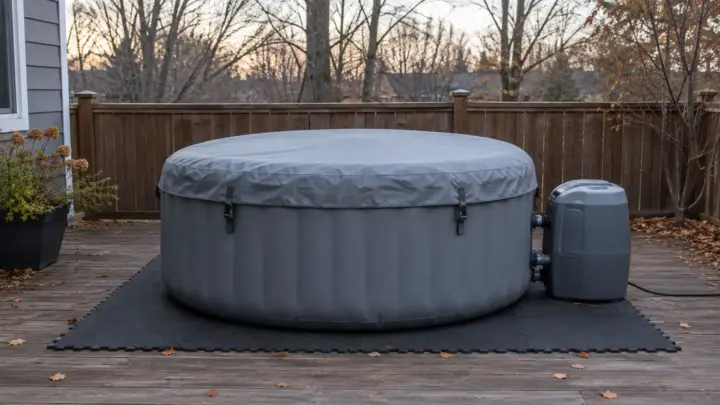
- Tub type. Inflatables are slower than insulated hard-shell tubs, as the table shows.
Refilling in winter
A winter refill takes longest, and some makers advise against it. Hot Spring’s manual says it is not recommended to refill your spa when the ambient temperature goes below 50° F (10° C). If you need to change the water, plan it for a milder day; the steps are in how to drain and refill a hot tub.
Much slower than this?
Jacuzzi notes that slower heating may indicate air locks, dirty filters, or electrical issues. If the temperature barely moves over several hours with the cover on, work through hot tub won’t heat.
Once it is warm, set it within the safe range in what temperature a hot tub should be, and see the hot tub and spa care guide for the rest of the routine.
Sources
- Jacuzzi: Hot in a Hurry
- Jacuzzi: Is a 120 or 240 hot tub better?
- Jacuzzi: Complete Beginner’s Guide to Setting Up Your Jacuzzi
- Jacuzzi: What is an inflatable hot tub and is it worth it?
- Hot Spring Spas: Highlife Collection 2025 Owner’s Manual
- Bestway: Lay-Z-Spa AirJet Owner’s Manual (Miami, Cancun, Bahamas, St. Moritz, Helsinki; 2020)
- Bullfrog Spas: Filling Your Bullfrog Spa and Initial Startup Instructions
Research checked 2026-10-14.