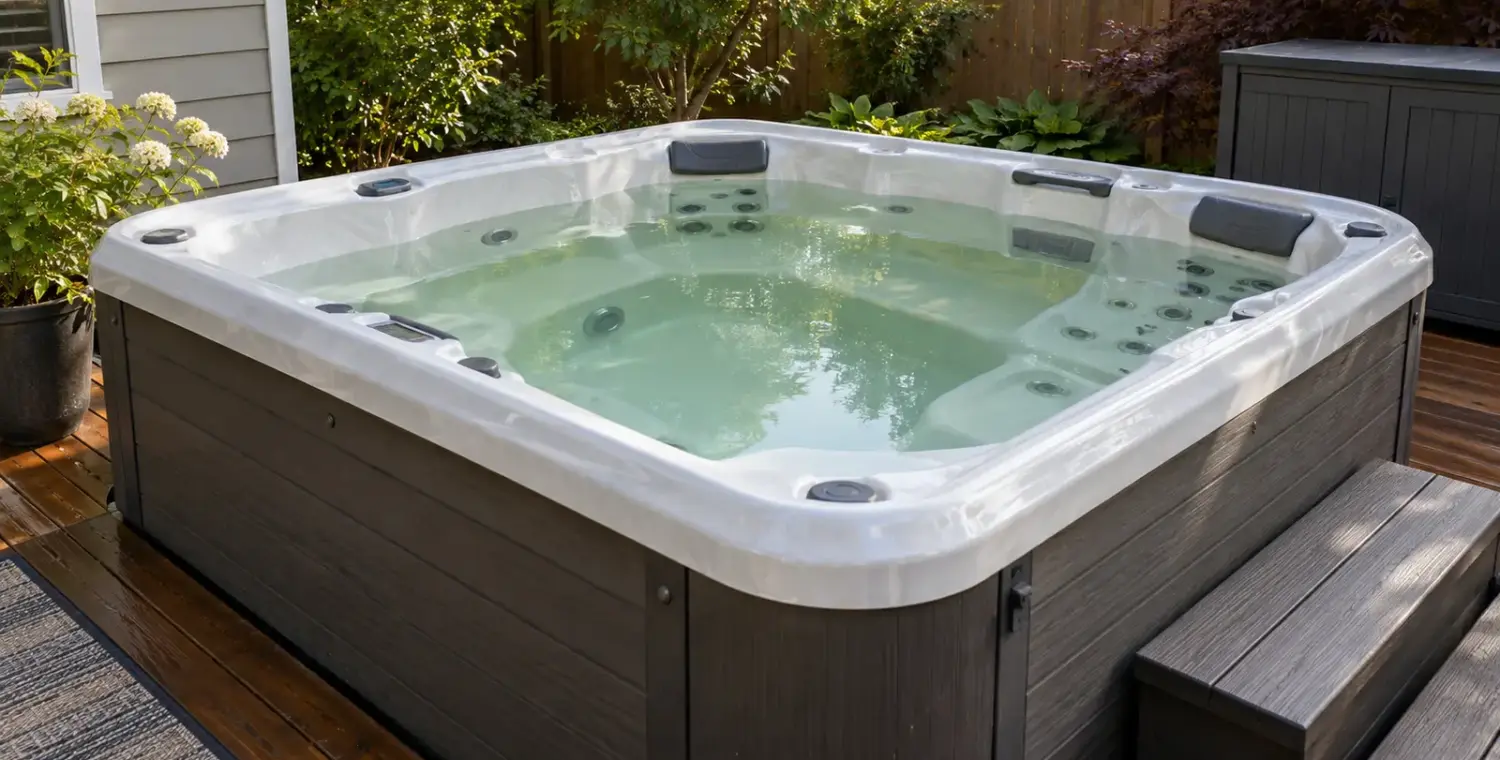
Test sanitizer and pH first, then use clarity and recent refill history to decide which follow-up checks are needed. Green hot tub water deserves investigation before another soak. Low sanitizer is one possible problem; mineral contamination deserves consideration too, especially after a refill or when colored staining appears.
Keep bathing paused until the cause is addressed and the water meets the applicable sanitation and equipment requirements. A return to blue-looking water alone doesn’t establish that.
Get useful measurements before adding products
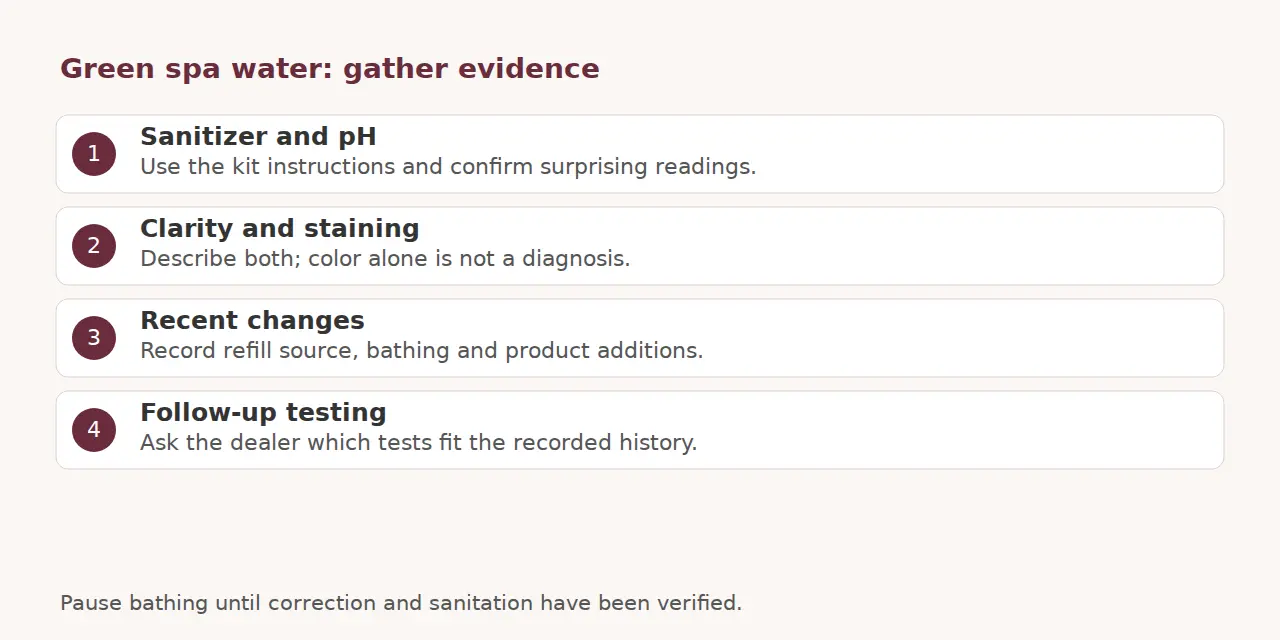
Record the sanitizer your spa actually uses, its measured result, pH, the testing method and any recent chemical additions. Use the hot tub testing guide alongside CDC homeowner testing guidance. Follow the test kit’s sampling and reading instructions.
An unexpected result deserves confirmation. Very high chlorine interferes with some DPD testing and produces misleading low readings. Avoid repeated dosing based on an unexplained result; take a sample for qualified testing instead.
Save a short history
- Was the color present immediately after filling or after a product addition?
- Is the water transparent or cloudy? Are surfaces stained?
- Has bathing increased, circulation changed or filter care been missed?
- Was the water source different from usual?
These observations guide the next test. They don’t identify an organism or a metal on their own.
If the water is clear but tinted
Ask for water testing that includes relevant metals, and describe the refill source and any stains. The 2025 Hot Spot manual associates iron and copper with green or brown staining. That provides a reason to investigate minerals rather than immediately treating every green appearance as algae.
Keep the distinction between staining and water color clear when describing the problem. A test result and the equipment history are stronger evidence than a photograph’s exact shade. If corrosion or equipment deterioration is suspected, let service investigate the source.
If the water is green and cloudy
Prioritize the measured sanitizer/pH results, circulation warnings and filter condition. Spa manufacturer guidance includes inadequate sanitizer in its green-water discussion. It supports checking that route; it doesn’t prove all green spas have the same contamination.
Review the low-chlorine troubleshooting path when the confirmed result warrants it. For broader haze, see cloudy spa water. Both problems need evidence-based correction rather than a succession of clarifier, shock and algaecide guesses.
Inspect only what the owner manual permits. Use the filter-cleaning guide for preparation, with the exact model’s shutdown and pressure-relief instructions controlling service. Leave internal electrical or plumbing faults to qualified personnel.
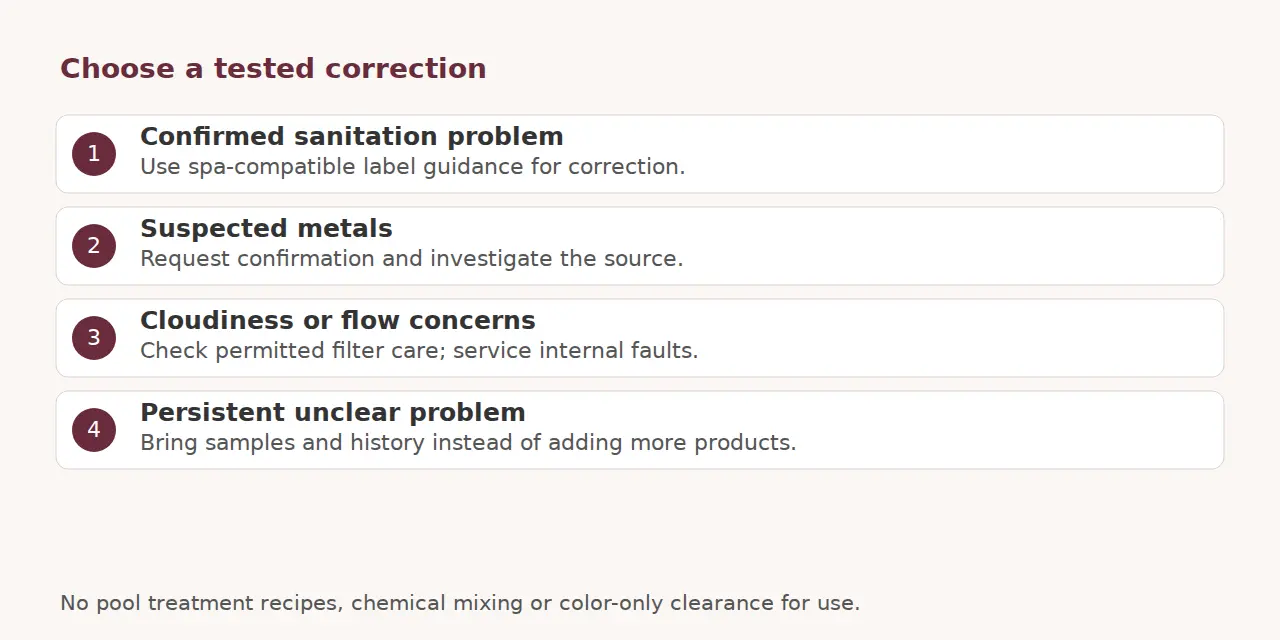
Choose the correction after confirming the problem
Use spa-compatible, label-approved products for the verified condition. Bring the sample results and recent product list to the dealer if the route remains unclear. Don’t transfer a swimming-pool treatment recipe to a hot tub or mix chemicals.
Persistent contamination or badly compromised water calls for a dealer-guided decision about draining, cleaning and refilling under the spa instructions. Refill is a process with startup and sanitation requirements, rather than permission to use the spa immediately.
Make recurrence easier to trace
Log test results, source-water changes and additions. Showering before bathing helps reduce introduced contamination. Maintain the circulation and filter routine specified for your spa; manufacturer cloudy-water guidance explains why these checks belong alongside chemistry. If green color returns despite verified water care, request a diagnosis instead of increasing treatment blindly.
Research checked 2026-10-05.