If hot tub chlorine is too low, pause bathing, confirm the test, and check sanitizer supply, recent use and circulation before choosing a correction. Low residual can mean chlorine has been consumed, insufficient sanitizer is being supplied, or the measurement is misleading. Those possibilities need different responses.
Do not keep adding product to an unexplained zero reading. Use the spa’s approved water-care program, the exact chemical label and a suitable test method, then retest before deciding the tub is ready.
What a low chlorine result actually tells you
A chlorine residual is the sanitizer remaining in the water after demand has been met. The relevant result for a chlorine-treated spa is normally free available chlorine, measured with an appropriate method. A total-chlorine result is not interchangeable with a free-chlorine result.
CDC residential guidance recommends at least 3 ppm chlorine in hot tubs and pH 7.0–7.8. These are public-health operating references, not amounts of product to add or a universal treatment target. Your approved product, equipment and local requirements may impose further conditions. The hot tub dose calculator can show the arithmetic for one increase from a verified reading; treat it as an estimate and follow the product label.
Write down the actual reading and its method before acting. Record “below the test range” or “unreadable color” when appropriate rather than inventing a precise number. If your spa uses bromine, use the corresponding program and test; our bromine versus chlorine guide explains that distinction.
First, confirm that the reading is trustworthy
Check free versus total chlorine
Taylor distinguishes OT tests, which measure total chlorine, from DPD methods that can measure free and total chlorine. Identify what your kit reports. A colored result in the wrong test does not answer the free-chlorine question.
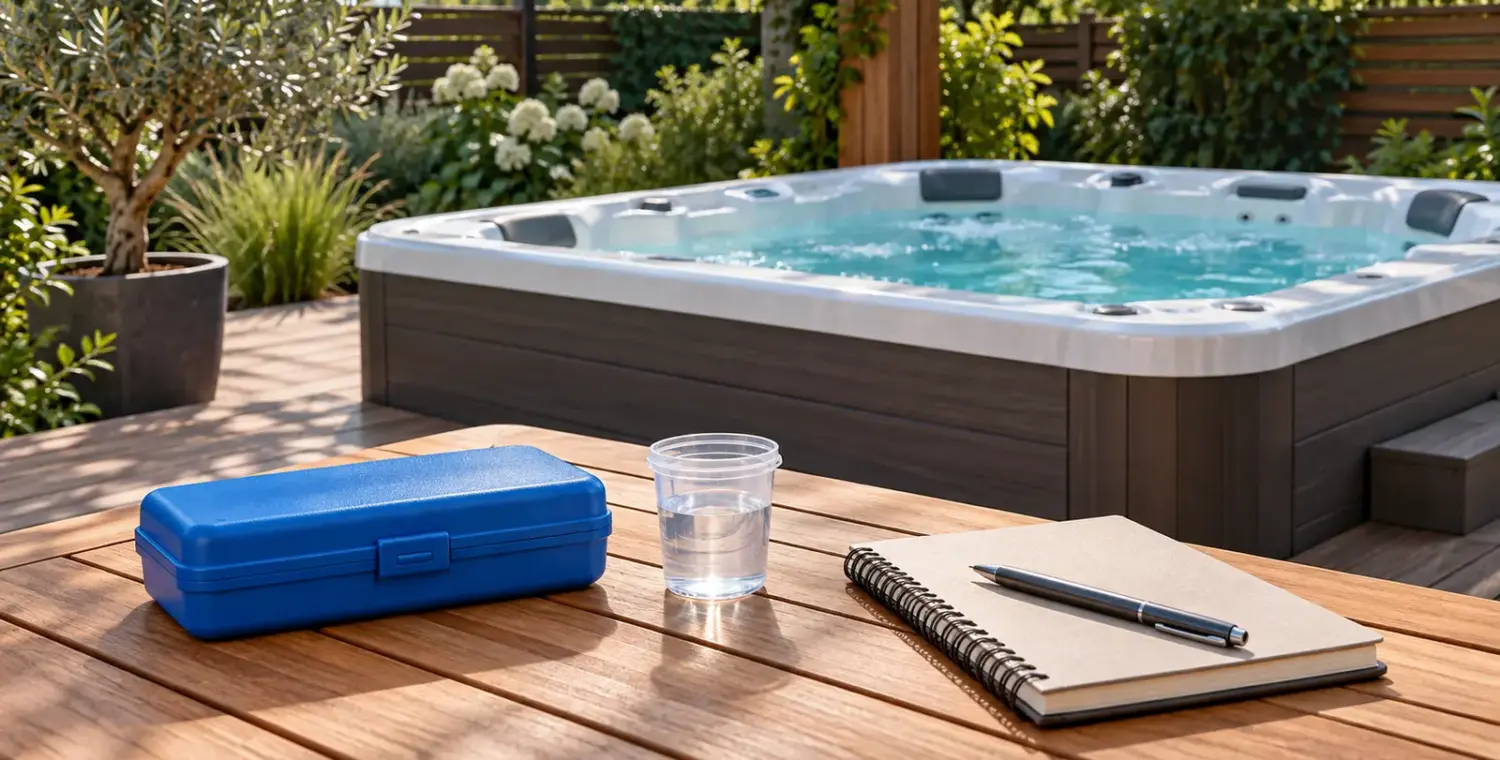
Review the sample instructions, reagent order and reading time. Use the manufacturer’s specified procedure and a fresh representative sample. Clean cells and correct reagents matter; products with similar names or bottle colors are not automatically interchangeable.
Consider bleach-out after strong treatment
CDC warns that chlorine above 10 ppm can partly or completely bleach some DPD tests, producing a false-low or zero reading. If you have repeatedly added chlorine and still see no result, stop the dosing loop and obtain a reliable measurement using the test maker’s recommended method.
Do not improvise a dilution or neutralizer quantity from another kit. Tell the test supplier about the treatment and test range so it can advise on the appropriate method. A low displayed value is not permission to assume the water contains no chlorine.
Check other interference and kit condition
Monopersulfate, a non-chlorine oxidizer used in some spa programs, can interfere with certain total and combined chlorine tests. Taylor documents the issue and kit-specific remedies. It is not evidence that every free-chlorine result after oxidation is wrong.
Inspect reagent dates and storage history, and follow the kit’s lighting and timing instructions. If results remain inconsistent, obtain a second suitable measurement rather than selecting whichever value supports another dose. The water testing guide covers method limitations; apply spa-specific requirements here.
Separate demand from supply
| Possible branch | Clues to record | Next useful check |
|---|---|---|
| Testing problem | Unexpected zero after treatment, odd color or inconsistent methods | Kit instructions, range, reagents and interference |
| Higher sanitizer demand | More bathers, longer use or recent contamination inputs | Approved care program and verified follow-up readings |
| Sunlight exposure | Outdoor spa left uncovered longer than usual | Exposure history and required testing; not a generic stabilizer addition |
| Supply problem | Missed treatment, system warning or changed approved settings | Exact system instructions and owner-level status checks |
| Circulation problem | Abnormal flow, filter warning or equipment alarm | Model troubleshooting and qualified service when unresolved |
| Water-care history problem | Older water, recurring symptoms or an extended maintenance lapse | Broader cleaning and replacement assessment |
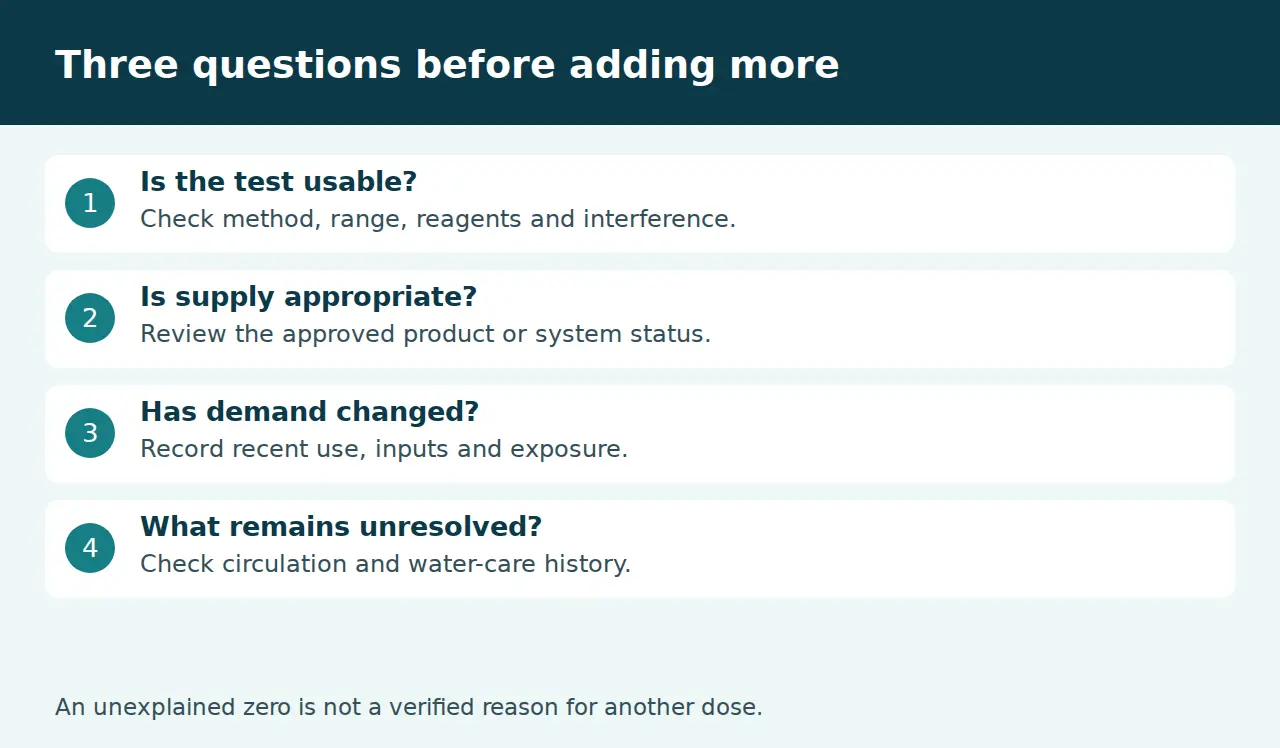
Several branches can occur together. Heavy use can increase demand while an interrupted dosing routine reduces supply. Solve the evidence you have instead of deciding that all fast loss has one cause.
Recent use, contamination and sunlight
CDC identifies dirt, sweat, urine and other material as chlorine-consuming inputs, and notes sunlight and hot tub jets as relevant to loss. Taylor discusses why warm, small-volume spa water needs care suited to its bather load. Neither source predicts the depletion time for your individual tub.
Look at what changed since the last acceptable result. Were more people using the spa? Was it used for longer? Was the cover open outdoors for an extended period? Record observations rather than claiming a specific cause from one low reading.
Reduce avoidable inputs through appropriate pre-soak hygiene and clean swimwear. This supports maintenance but cannot replace the required sanitizer residual. Reassess the approved program when use increases, and add the checks it requires.
Do not copy an outdoor pool stabilizer strategy into a hot tub. CDC recommends against cyanuric acid and stabilized chlorine in hot tubs. Some manufacturer programs specify dichlor, creating a real difference in guidance. Ask the manufacturer or qualified provider to reconcile your program before changing products; do not add CYA or convert sanitizers on your own.
Check the approved sanitizer supply
Manually treated spas
Review the recorded treatment, exact product and operating volume. Confirm that the product is intended for the spa and current program. A missed treatment or an incorrect assumption about concentration can leave the routine inadequate, but the next quantity must come from the label and measured conditions.
Check the product’s storage and condition using its instructions. Do not combine old products, use a contaminated scoop or substitute pool tablets for an approved spa product. Ask the supplier about uncertain compatibility.
Salt systems and other equipment
A spa salt system supplies chlorine rather than eliminating chlorine care. The Hot Spring manual specifically says its salt system still needs regular testing and balancing. That model’s settings, ranges and warnings are not instructions for every generator.
Read the actual display and record warning text, operating mode and approved settings. Use only owner-level checks specified in the system manual. Persistent flow or production warnings need model-specific support; do not open electrical equipment or defeat sensors to force operation.
Oxidation is a separate question
A non-chlorine oxidizer is not automatically a replacement for the required sanitizer. The word “shock” also does not identify a single chemical, dose or re-entry interval. Choose any oxidation treatment within the approved spa program rather than using it to explain away a low residual.
Confirm normal circulation and filter care
Check how the manual says normal circulation should appear. Massage jets, a dedicated circulation pump and a programmed filtration cycle can serve different functions. A lit display or audible motor does not establish that every required flow path is working.
Record water level, filter-maintenance history and any operating alarm. Follow the spa’s shutdown and access procedure before removing a cartridge. Clean or replace filters as directed and do not run the spa without required components.
If circulation is not normal, obtain appropriate advice before adding chemicals whose instructions require it. In cold conditions, loss of circulation also deserves prompt model-specific attention; see winter hot tub care for planning and escalation questions.
When water history calls for a broader reset
Repeated chlorine difficulty alongside recurring foam, odor or cloudiness calls for more than a larger routine addition. Review the fill date, periods of neglect, residue inputs and maintenance already completed.
The hot tub smell guide and foam guide help investigate those symptoms. Do not mask them with fragrances or defoamers while sanitizer remains uncertain. Clearer-looking water is not proof of disinfection.
Ask whether the manufacturer-directed cleaning and water-replacement procedure is needed. A fresh fill alone does not prove that neglected equipment or contamination has been addressed. If illness or serious contamination is suspected, stop use and obtain public-health or qualified professional advice before routine draining or treatment.
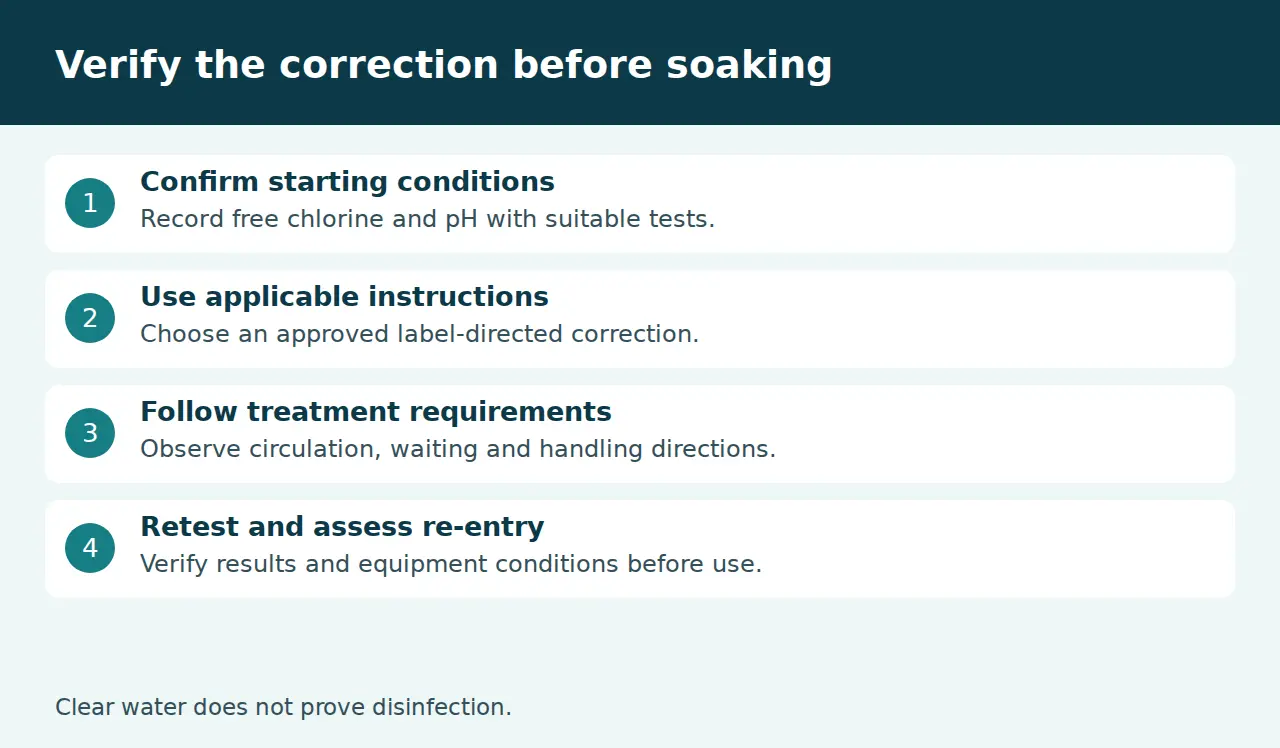
Treat, retest and verify before soaking
- Confirm a usable free-chlorine result and check pH alongside it.
- Identify the supported cause or unresolved branch.
- Use the exact spa and approved product instructions for any correction.
- Follow required protective equipment, circulation, cover handling and waiting periods.
- Retest with a suitable method after the prescribed interval.
- Permit use only when the verified results, equipment conditions and product re-entry requirements are satisfied.
Keep chemicals in original labeled containers, separate incompatible materials and never mix concentrated products. Follow the label rather than a universal scoop or online dose table. Continue testing on the applicable routine, with extra attention during heavy use.
Common questions
Why is chlorine low again after I added it?
Possible explanations include ongoing demand, insufficient approved supply or an unreliable test. Compare the before-and-after measurements, recent use and equipment status. An unexplained pattern needs investigation, not repeated guessing.
Can I use the spa if the water is clear?
Clear water cannot prove safety. Pause use when the sanitizer result is below applicable requirements or cannot be trusted, and verify the full re-entry conditions after correction.
When should I call for help?
Get qualified support for repeated unexplained readings, persistent supply or flow warnings, unresolved contamination concerns or conflicting product instructions. Bring the model, test method, measured results and treatment record.
Research checked October 1, 2026. We only claim hands-on testing when we’ve actually tested the product ourselves. Featured image is an original illustration.
Sources and references
- CDC: Home Pool and Hot Tub Water Treatment and Testing
- Health Canada: Swimming pool and spa chemicals
- Taylor Technologies: Technical and Support FAQs
- CDC: Pool Chemical Safety
- Hot Spring / Watkins Wellness: 2025 Highlife Collection Owner Manual
- Taylor Technologies: The Unique Water Chemistry of Spas and Hot Tubs
- Taylor Technologies: Best Practices for Pool and Spa Water Testing
- CDC: Protecting Yourself from Legionella in Hot Tubs
- CDC: Controlling Legionella in Hot Tubs