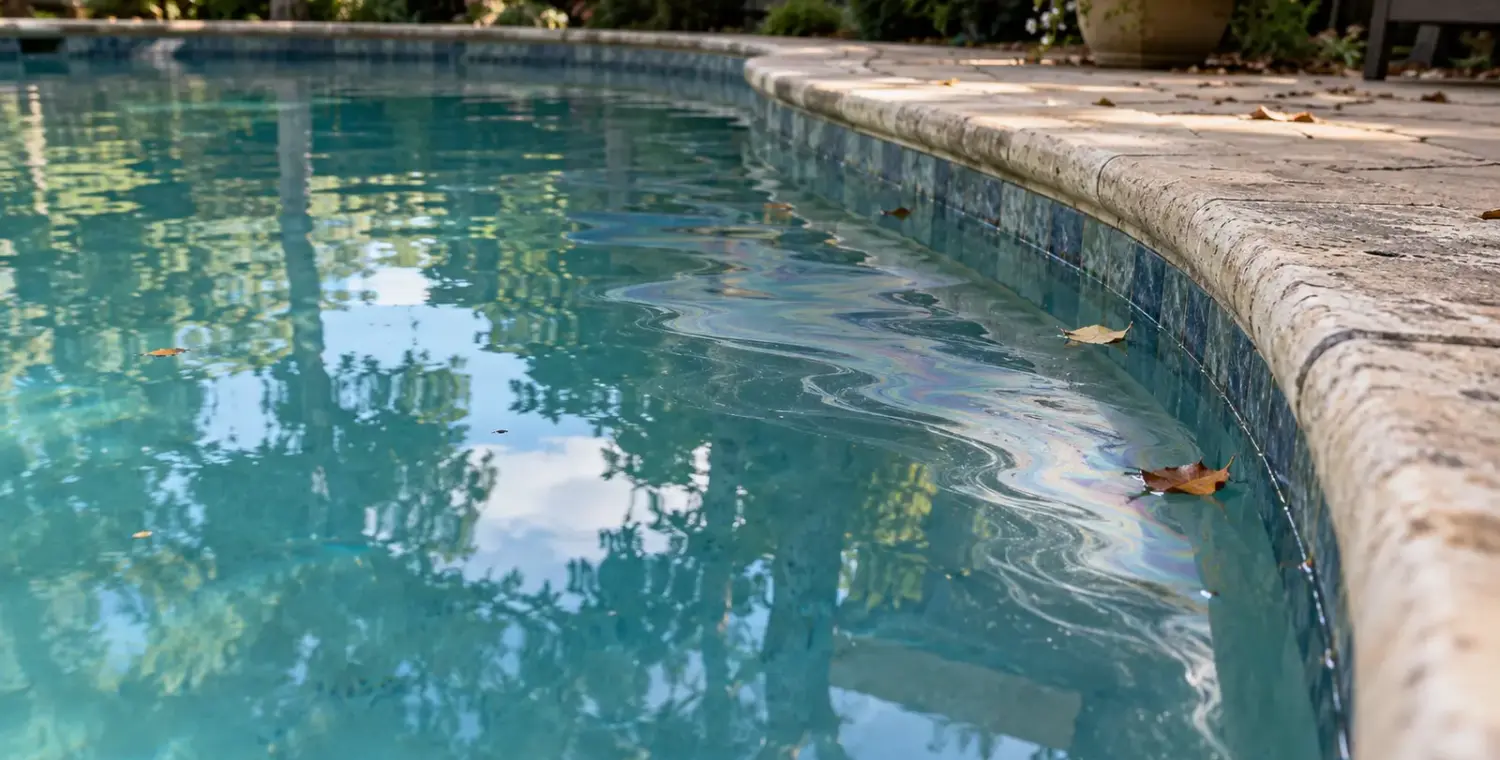
An oily film or greasy waterline on pool water often comes from what swimmers bring in: body oils, sunscreen, lotions and cosmetics. Check recent swimmer products and cleaning history, make sure the skimmer is collecting the surface residue, and investigate an unfamiliar sheen before you assume a harmless source. Match cleanup to the identified residue while continuing sanitizer and pH testing.
Describe what you actually see
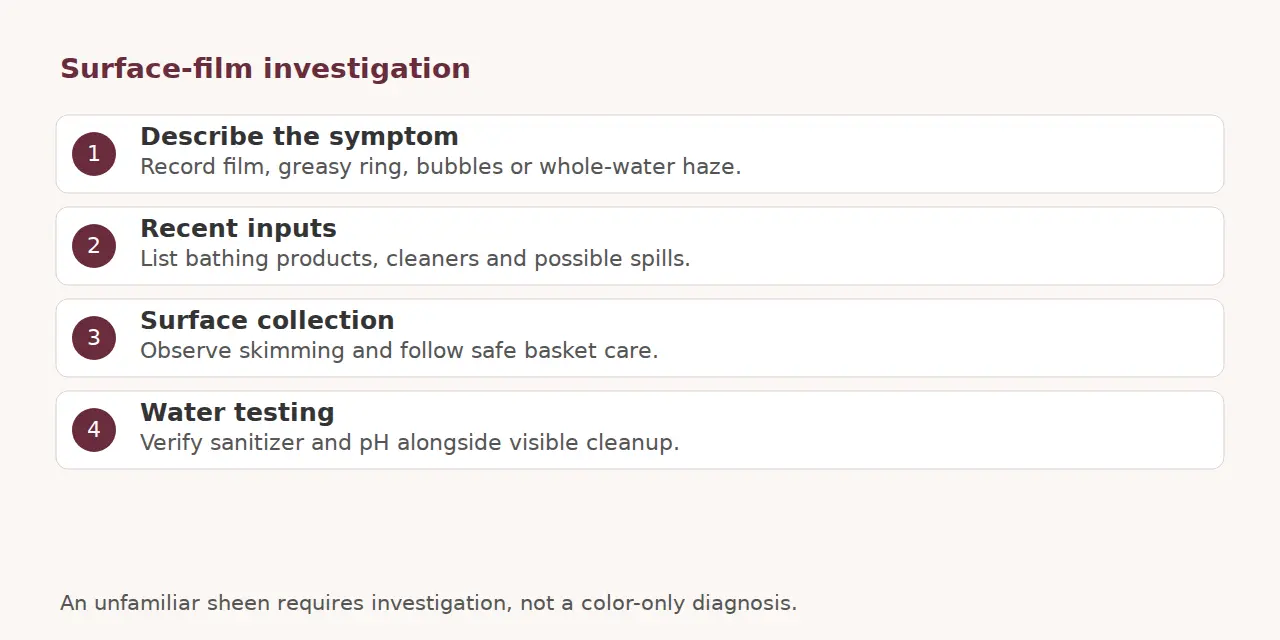
Look from the deck: is there a thin film on otherwise clear water, a greasy ring at the waterline, bubbles that persist, or cloudiness throughout the pool? Photograph it before cleanup and note where it collects.
A greasy coating and a rough, crusty waterline call for different investigations. Manufacturer waterline guidance connects oils, lotions and other swimmer-borne material with greasy buildup, while distinguishing rough scale. Appearance helps select questions, rather than proving a chemical identity.
What changed before the film appeared?
- More bathers, sunscreen, cosmetics or body products than usual?
- A newly used deck or pool-surface cleaning product?
- Recent equipment service, a visible nearby spill or unexplained odor?
- A skimmer or circulation problem noticed at the same time?
Keep needed sun protection in place. The useful step is understanding inputs and following pool-compatible care, not advising swimmers to abandon sunscreen.
Check surface collection without changing valves blindly
Observe normal skimmer activity and whether floating material collects in one quiet area. Check the water level against the pool/equipment instructions and follow the approved basket-cleaning procedure. Our skimmer basket guide covers preparation and safe access.
Record a damaged weir, obstruction or unusually weak collection for service. Leave suction openings alone and don’t improvise valve arrangements. A circulation adjustment requires a layout-specific plan; the return-jet guide explains the observations worth considering.
Good surface collection supports cleanup. It cannot establish what an unknown spill contains.
Choose a cleaning method for the right target
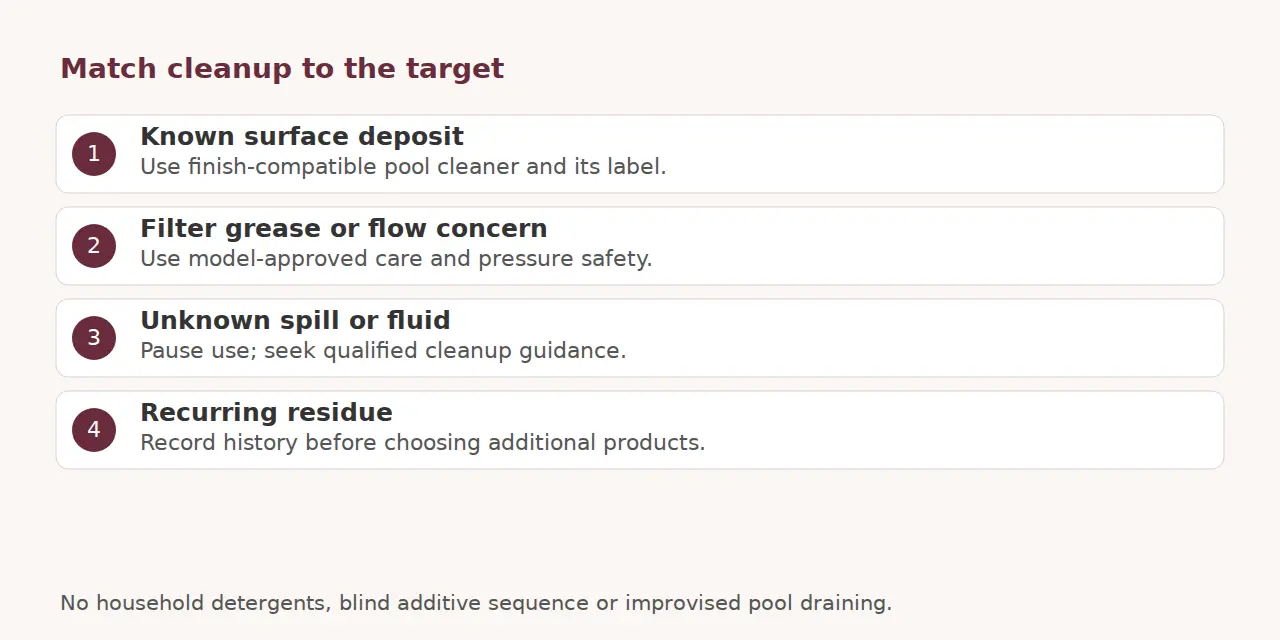
For identified ordinary oily deposits, use pool-surface-approved cleaning methods compatible with the liner or finish. Follow the cleaner’s label, including protection and rinsing requirements. Household detergent, solvent or an improvised degreaser adds another unknown material to the water.
A filter holding greasy residue needs its own assessment. Manufacturer product guidance distinguishes filter oil/grease cleaning from surface cleaning and foam control. That distinction is useful even when you choose a different approved product. Avoid assuming an anti-foam product removes the oil source.
Use the exact filter’s maintenance instructions and the pressure troubleshooting guide if readings or flow are abnormal. Pressure-vessel safety guidance applies before housing service: no opening a pressurized filter or working on energized equipment.
Do you need a water additive?
Only when the identified problem and approved label support one. There is no single enzyme, clarifier or shock dose justified by a sheen alone. Ask a qualified pool-care professional to match persistent residue to testing and material compatibility rather than adding several products in sequence.
When ordinary cleanup isn’t enough
Pause swimming and seek qualified help for an unknown spill, suspected equipment-fluid contamination, unexplained strong odor or residue that repeatedly returns despite appropriate cleaning. Avoid handling or dispersing unidentified material. Don’t drain the pool as an improvised cleanup response; disposal and structural requirements need assessment.
Record the possible source, timing, photographs and products already used. This gives the professional a better starting point than “the water looks oily.”
Keep the surface and sanitation checks separate
Continue routine pool testing under homeowner public-health guidance. Removing the visible ring doesn’t replace sanitizer and pH verification.
Showering before swimming reduces material carried into the water. Keep surface-care supplies pool-approved, maintain permitted skimmer/filter care and record recurring patterns. That makes the next investigation quicker without inventing a guaranteed cleanup time.
Research checked 2026-10-05.