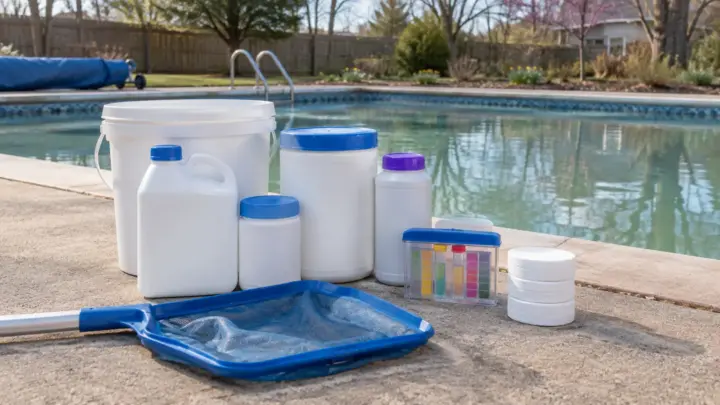
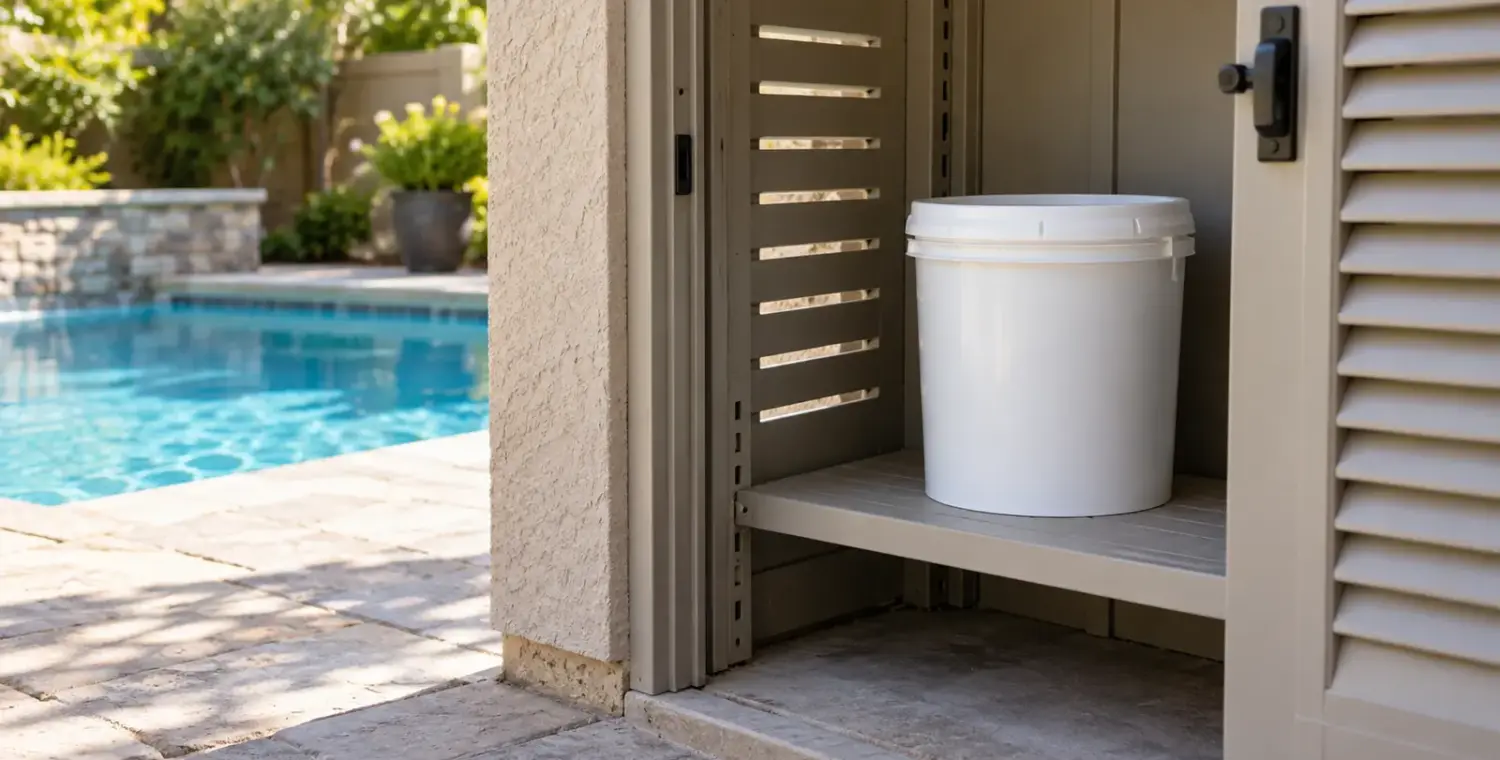
Store pool chemicals in their original labeled containers, in a cool, dry, well-ventilated location secured from children and pets. Separate incompatible products—especially chlorine products and acids—and protect every container from leaks, rain, splash and contamination.
Start with each product’s storage label. Then check the proposed space as a whole: what could drip onto a container, spill into another product, ignite nearby or prevent you from leaving safely? A tidy shelf helps only when its arrangement prevents those contacts.
Keep the container and label together
Leave products in the manufacturer’s packaging with the closure secured as directed. Avoid transferring them to drink bottles, food containers or unmarked tubs. Keep the label readable so anyone handling the product can identify it without opening it.
For deteriorating, damaged or unlabeled packaging, seek manufacturer or local hazardous-materials advice. Don’t identify an unknown product by smelling it or trying it in water. The chemical-safety guidance makes proper identification and original containers central to storage.
Choose a suitable space, not simply an empty corner
The CDC storage poster calls for cool, dry, ventilated conditions away from direct sunlight. Follow the product’s temperature and humidity limits, and any applicable local fire or building rules. A shed that becomes hot, collects dampness or also holds fuel deserves a different plan.
Keep chemicals away from gasoline, oils, paints and other combustible materials. Keep food and beverages elsewhere. Secure access while preserving the ventilation the products require; an improvised airtight box around containers can conflict with that requirement.
Inspect the roof, shelving and nearby plumbing for water entry. Choose a stable location that keeps containers out of standing water without putting heavy or hazardous packages overhead. These observations are easier to make before buying a larger supply.
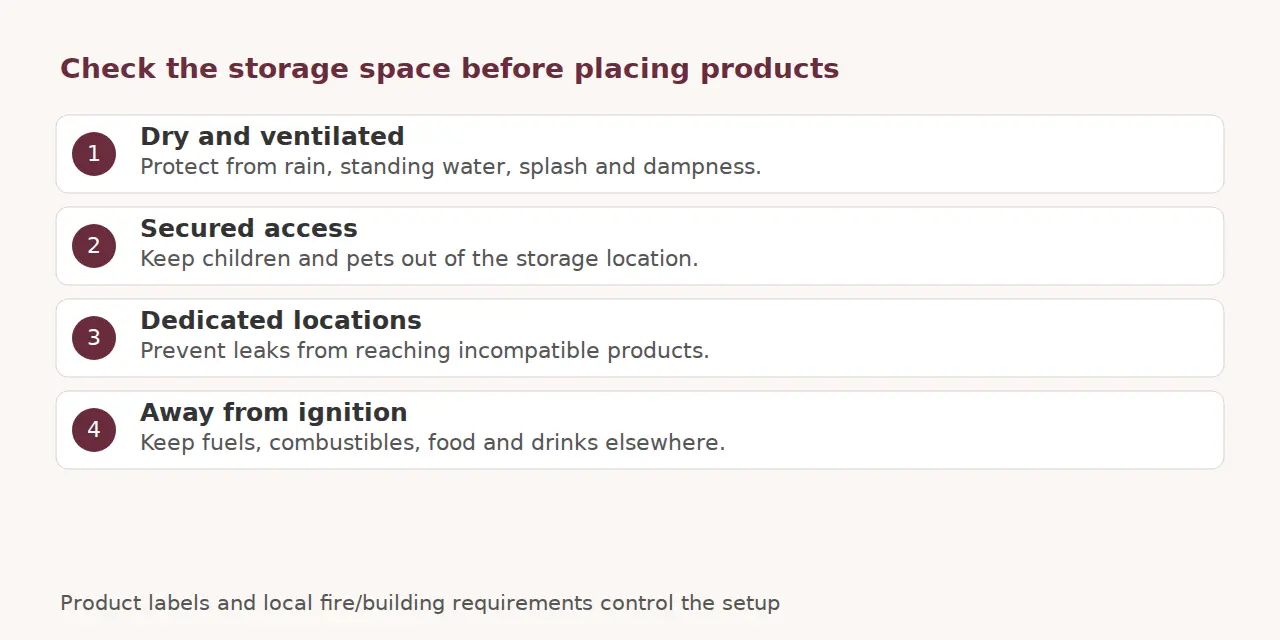
Separate products so a leak cannot combine them
Give incompatible chemicals dedicated locations. Different chlorine formulations also need separation; putting all “pool products” together in one shared tub risks contact if something leaks. Use label and safety-data-sheet compatibility information when planning the layout.
Keep liquids low and away from powders and incompatible containers. Health Canada’s home guidance advises liquids below solids and warns against stacked or overhead storage. Those principles still require compatible placement: acid below chlorine on the same leaking shelf remains a poor arrangement.
Keep measuring tools dedicated and clean. Never top up an old container with new product or combine leftovers to save space. The EPA alert documents reactions from mixed residues, old and fresh chemicals, and unrelated debris.
Dry storage includes your handling routine
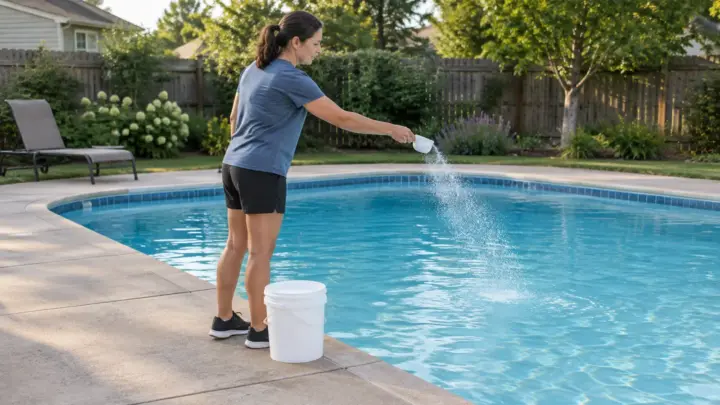
Before opening a container, check that hands, tools and the work area meet its handling instructions. Keep hose spray and wet towels away. Close the package properly after use, then return it to its own location rather than leaving it on the deck.
Moisture contamination can trigger hazardous reactions in some pool chemicals. A damp clump is a reason to obtain product-specific advice, not experiment with drying, dissolving or breaking it apart. Avoid returning spilled material to its container.
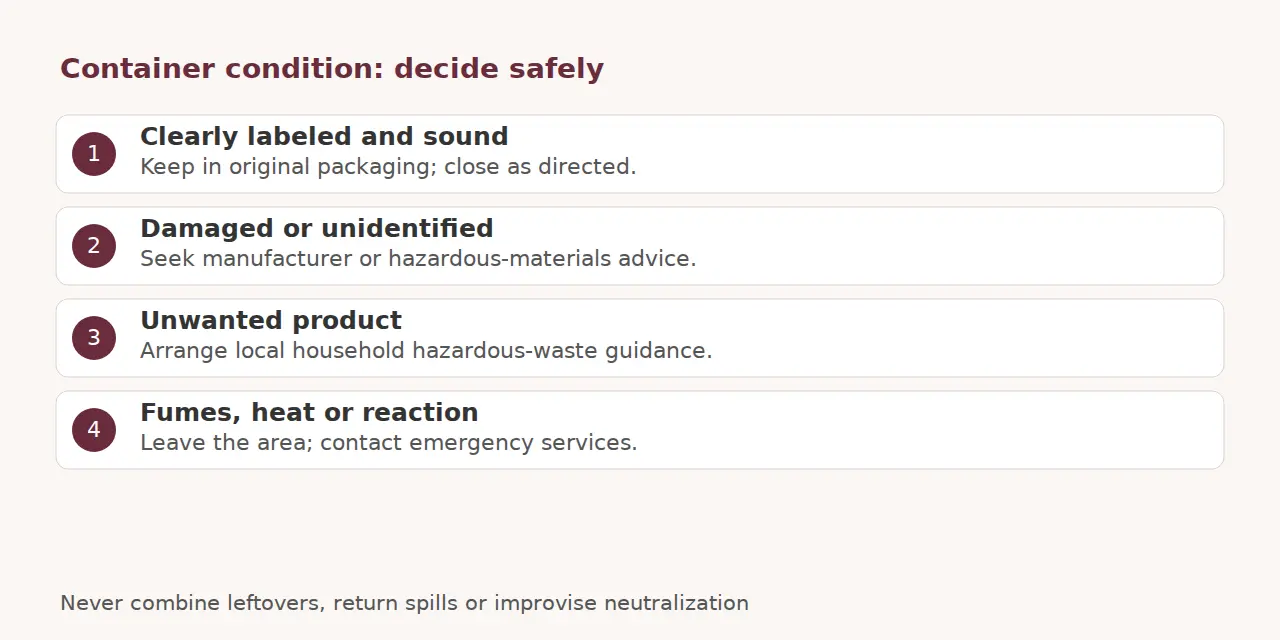
Plan disposal and emergencies before you need them
For unwanted products, contact the manufacturer or your local household hazardous-waste service and follow the product label. Local acceptance and container-disposal rules vary. Keep each product identified and separate while awaiting instructions; never mix waste or pour a guessed disposal solution into a drain.
Keep emergency contacts and product information accessible outside the storage space. If there are fumes, heat, smoke, a suspected reaction or an unsafe spill, leave the affected area, keep others away and contact emergency services. For exposure, seek poison-control or emergency medical advice promptly. Don’t attempt chemical-fire response or improvised neutralization.
The CDC emergency-planning guidance supports having information available before an incident. For routine additions rather than storage, use our pool shock guide and closing-chemicals guide with the actual product directions.
Research checked 2026-10-04.