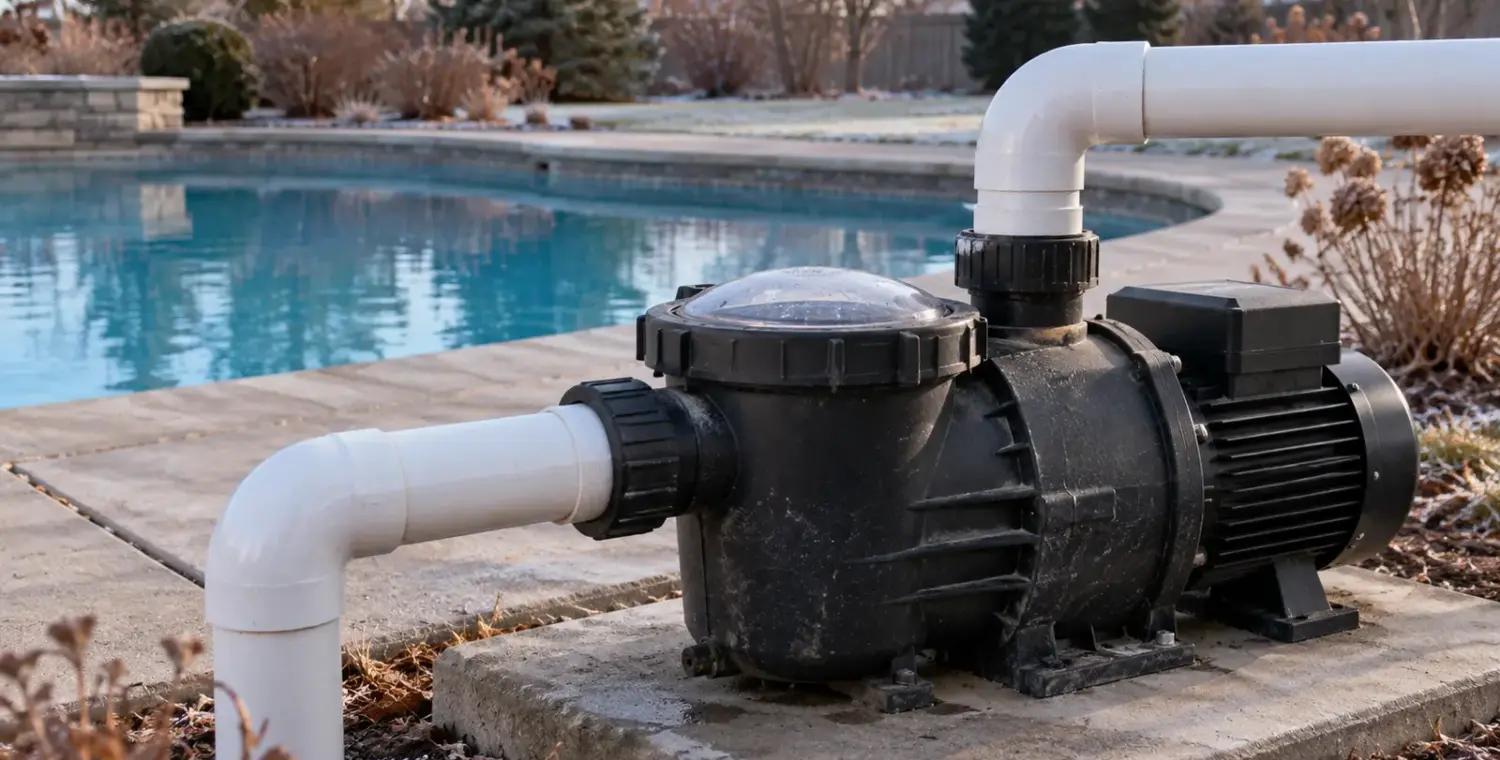
For a pool that remains operational, keep its approved freeze-protection circulation active during a short freezing spell and verify that water is actually moving. If there is no automation, get a continuous-running plan appropriate to the installed equipment before the cold arrives. A frozen, damaged or unprimed system needs assessment instead of a forced start.
This is temporary protection for an operating pool. For prolonged cold, unreliable power or equipment you cannot monitor safely, plan full winterization with a local pool professional. Pentair’s cold-weather guidance recommends automation for short freezes and continuous equipment operation without automation, alongside professional assessment.
Prepare before the forecast becomes urgent
Check the forecast’s duration and severity, not just tonight’s low. Winter storms can also interrupt power and communication, as the National Weather Service preparedness guide explains. Save the service number and the exact equipment manuals while access is easy.
Ask the installer to identify which pump, controller, sensors, valves and water features are included in the plan. Confirm a suitable operating water level, normal circulation and any existing equipment alarms. Keep the normal commissioned settings on record; our pump-runtime guide covers the usual schedule that protective operation can supersede.
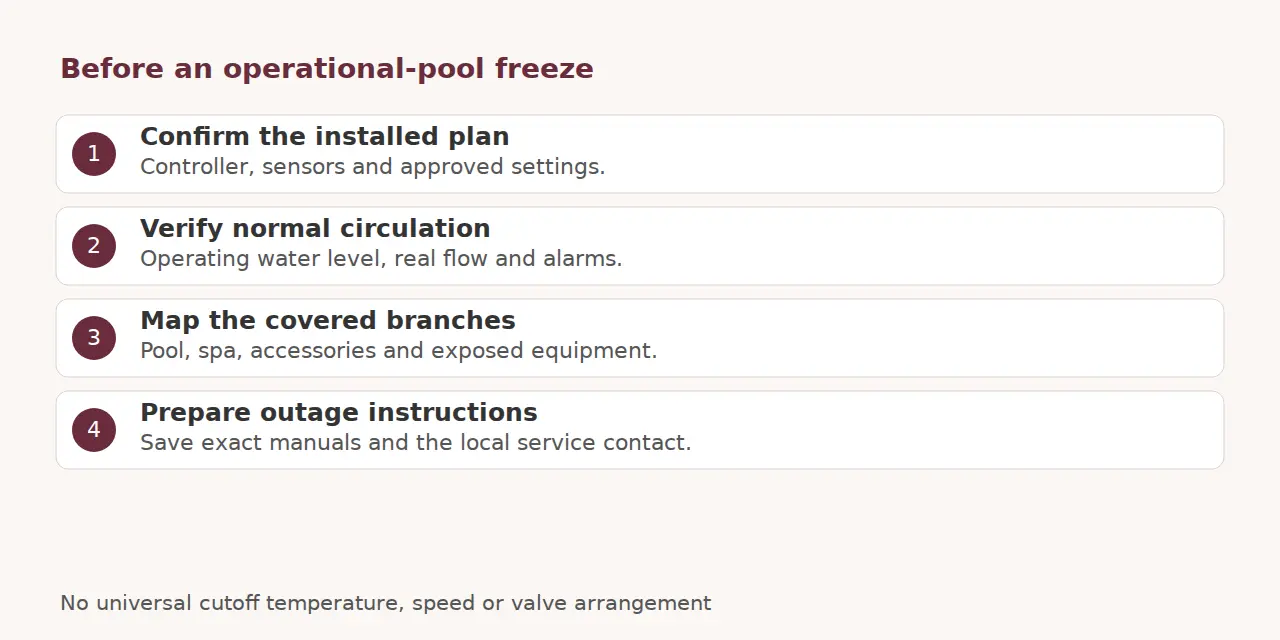
Understand what the freeze mode actually does
The controller normally uses a configured temperature signal to request protective circulation. Confirm the installed feature is enabled, its sensor reading is plausible and the expected equipment responds. Avoid guessing a universal activation temperature or copying another owner’s pump speed.
For a concrete example, the AquaRite S3 Omni installation manual describes an adjustable air-temperature threshold and configured pump speed. With two bodies of water, its valves alternate between pool and spa. That model’s behavior illustrates why a pump-on indicator alone cannot confirm every connected branch is covered.
The same manual says its chlorinator does not operate when freeze protection is the only reason for pump operation. Continue water testing and the usual approved care plan; protective circulation and sanitizer production are separate operating requests.
Check the equipment beyond the pump
Map exposed pipes, filter, heater, salt cell, spa loop and accessory lines with the installer. A branch excluded by the plumbing arrangement needs its own specified protection. Leave automated valves free to follow their commissioned program; unfamiliar manual valve changes can defeat the planned circulation.
Check the heater’s winter instructions even if you intend to keep the pool open. Heating settings, freeze circulation and component drainage need coordination for the actual installation. Neither a warm pool nor a cover verifies protection of exposed equipment. For a full seasonal shutdown, see how to winterize a pool heater. Use the multiport-position guide for terminology, not a substitute winter setting.
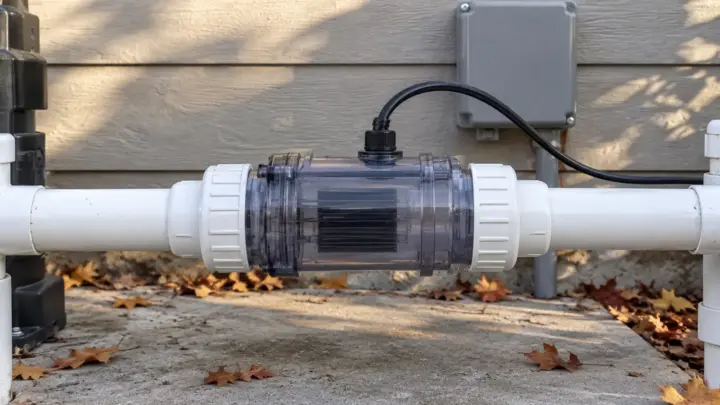
The iChlor winterization instructions, for example, address freezing water in the cell through continued circulation or proper water removal. Simply switching electrical power off leaves the trapped-water question unresolved. Our guide to winterizing a saltwater pool and salt cell covers removing and storing the cell.
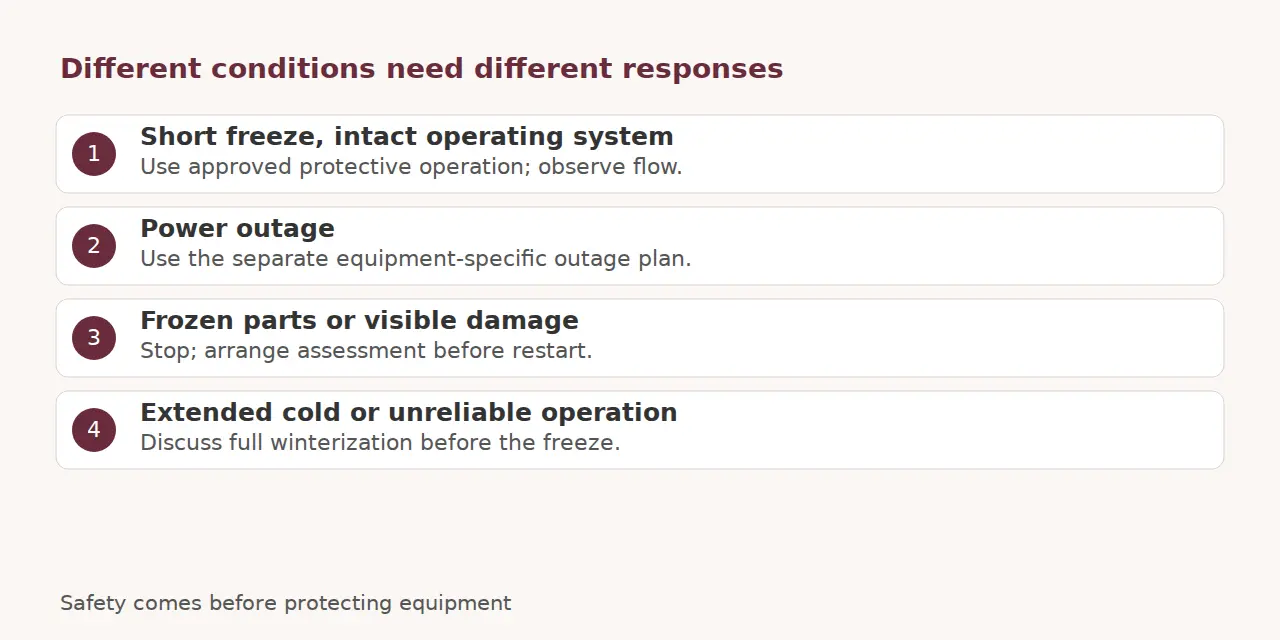
Have a separate plan for a power outage
Powered circulation cannot continue without electricity. Contact the pool professional promptly and use the equipment-specific outage plan established in advance. Only perform documented owner tasks when access is safe; shut down, prevent restart and fully relieve pressure before any permitted opening or draining.
A generic “open all valves and remove all lids” checklist ignores your plumbing and pressure-vessel instructions. Arrange qualified help for line clearing, unknown valves, heater work or frozen parts. Never force a seized pump to run or thaw equipment with a torch.
If backup power is part of the plan, have its connection handled by a qualified electrician. Follow the CPSC generator precautions: portable generators belong outdoors at least 20 feet from buildings, with exhaust away from openings. No indoor generator, improvised wiring or safety-device bypass.
Choose closing when temporary operation is insufficient
Discuss seasonal winterization when extended cold, repeated outages or absence makes reliable protective operation impractical. Record component drain requirements and arrange model-specific line protection before freezing occurs. When you do close for the season, winterizing the pump and filter covers draining and storing those parts.
Our above-ground winterizing guide is for that pool type; inground systems need their own plan. After a freeze or outage, have visible cracks, leaks or abnormal operation assessed before restarting. Use the heater troubleshooting guide only within its safe homeowner scope.
Research checked 2026-10-04.