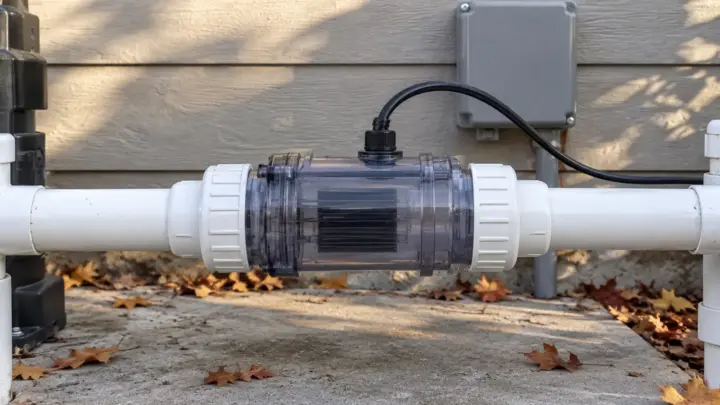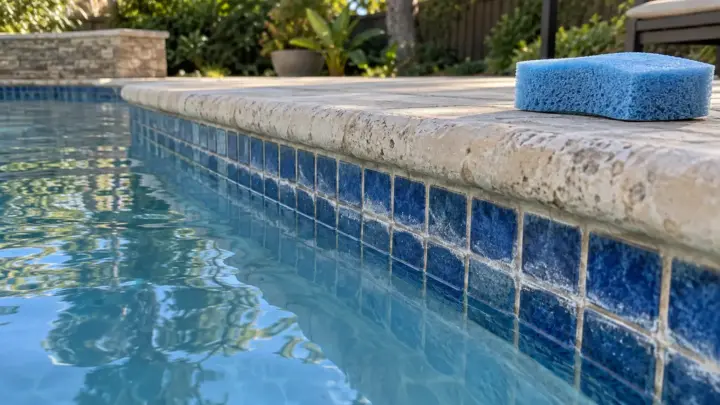
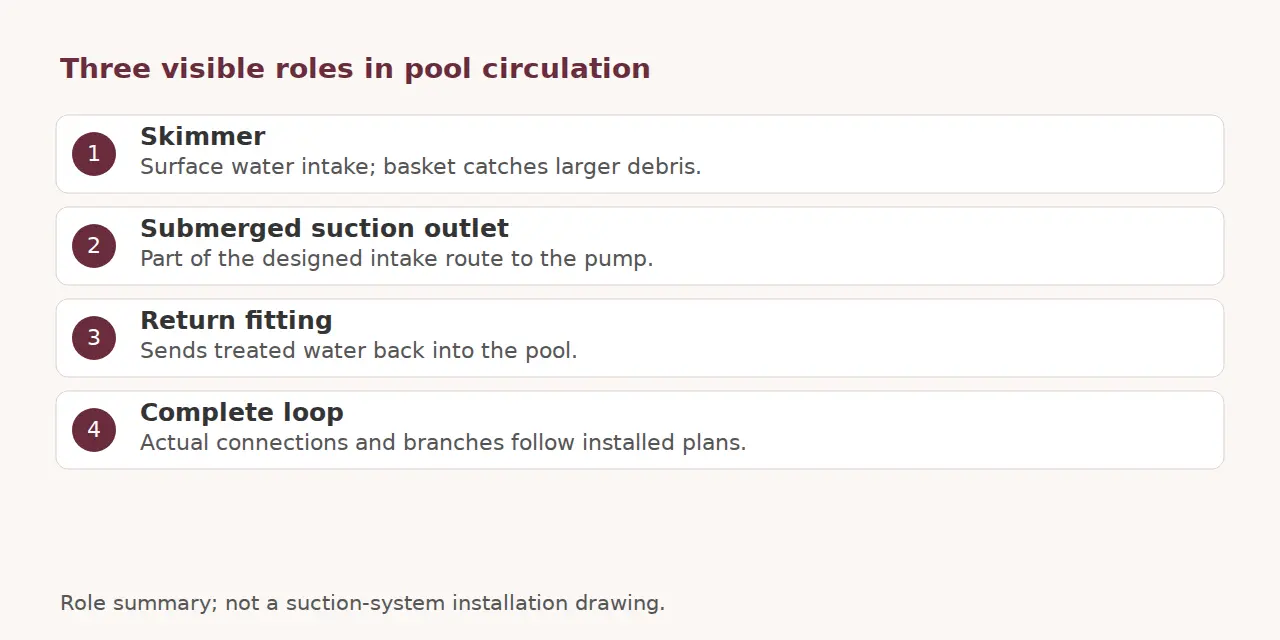
A pool skimmer draws water from the surface; a main drain is a submerged suction outlet that draws water into the circulation system. Return jets send treated water back into the pool. Understanding those three roles is more useful than copying a fixed skimmer-to-drain valve ratio from another owner.
Should the main drain and skimmer both be open? There is no universal valve split. Your pool’s plumbing determines how the intakes connect, so use the normal-filtration settings a qualified pool professional documents for your system, and leave unlabeled valves and suction routing alone. Some skimmers and drain lines meet at the pad; other arrangements connect beneath the skimmer. Get the installed diagram before changing flow paths.
The skimmer collects surface debris
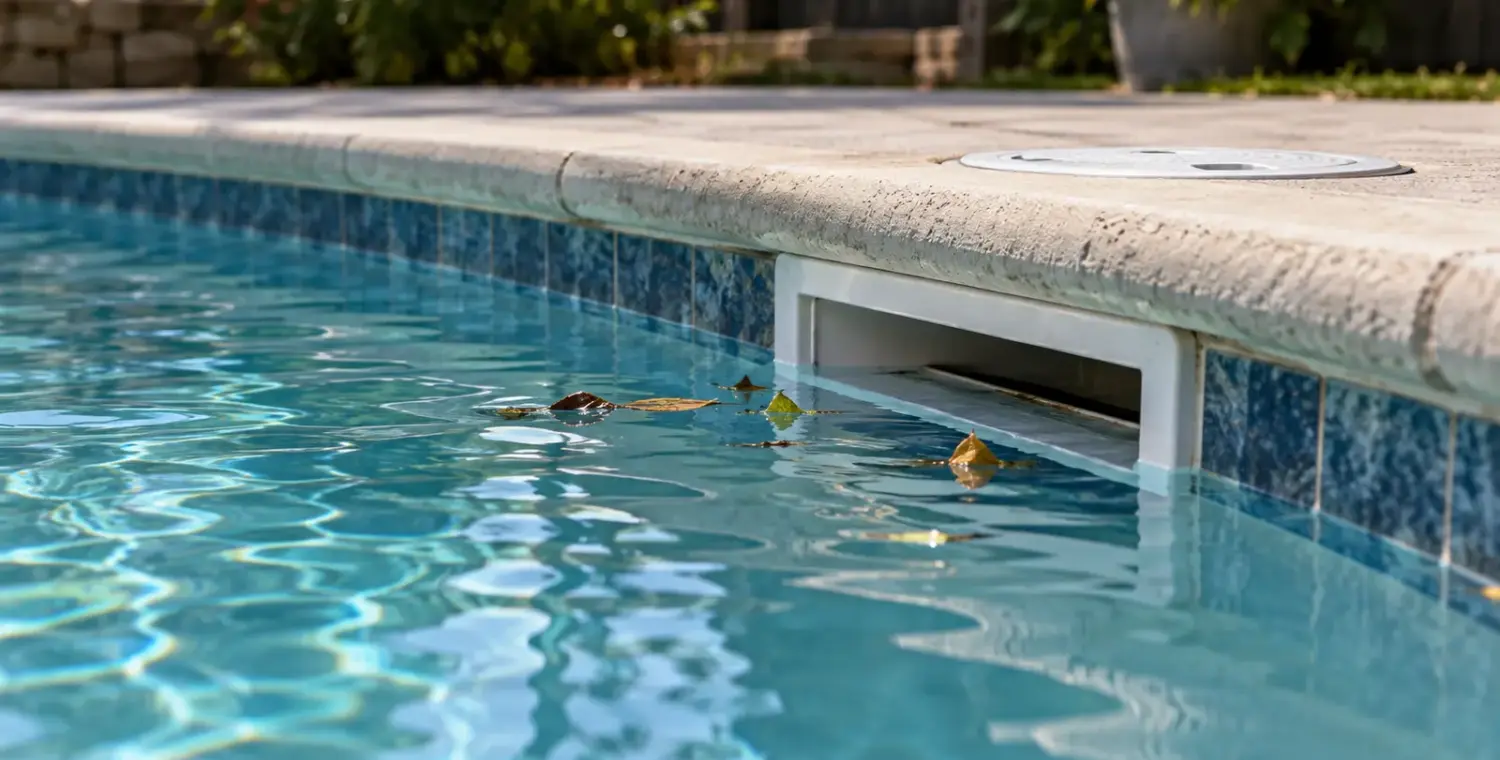
A skimmer sits at the waterline. Water passes through its opening, commonly over a moving weir flap, and larger floating debris collects in the basket. Wind and return flow help bring leaves and insects toward it. Debris elsewhere still needs brushing or cleaning; the skimmer can’t reach every area by itself.
Correct water level and an unobstructed basket support skimming. A low level lets some installations draw air, while an overloaded basket restricts the intake. Use the level guidance for your skimmer rather than filling to a guessed universal mark. Our skimmer basket care guide covers the maintenance routine.
The Bermuda skimmer guide illustrates the weir, basket and optional float/equalizer arrangement. Those optional parts have specific functions; a second hole below a basket doesn’t identify the plumbing of every pool.
What the main drain does during circulation
Despite its everyday name, a main drain usually serves as a suction intake during normal pool circulation. Water drawn through the submerged outlet travels toward the pump and treatment equipment rather than automatically emptying the pool. Actual draining is a separate procedure with structural, disposal and equipment considerations.
A drain intake contributes to the designed water route. It doesn’t act as a whole-floor vacuum or guarantee that settled dirt disappears. Brush and clean the pool according to its surface and equipment guidance; repeated dirt in one spot deserves a circulation and cleaning assessment.
Never test an outlet’s suction with a hand, foot, body, hair or object. Observing normal return movement from a safe location is different from approaching or obstructing a suction outlet.
Intakes, pump, filter and returns form a loop
The pump supplies the energy that moves water. Suction routes bring water toward it, filtration captures particles, and the return side delivers water back to the pool. Heating, sanitation and water features add equipment or branches. Labels and drawings should identify which mode uses which route.
Visible swirls at the surface show local movement; they don’t prove every part of the pool is well mixed. Likewise, a quiet surface doesn’t prove that the submerged intake is blocked. If circulation has deteriorated, use the pump-not-circulating guide and gather exterior observations before arranging service.
Why a universal valve split is a poor instruction
Two pools with similar shapes can have different suction connections, pipe resistance, fittings and equipment. Turning a valve “halfway” also fails to measure the share of water in each branch. Even an accurate-looking handle label needs confirming against the actual plumbing.
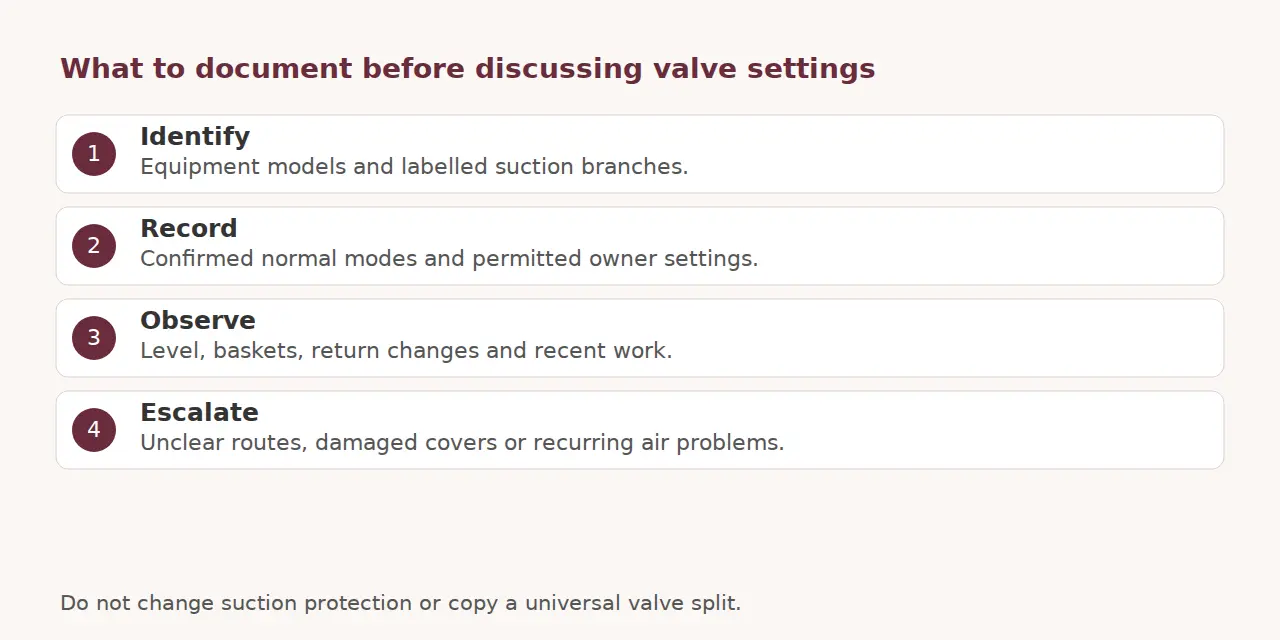
Ask a qualified pool professional to document normal filtration, heating, cleaning and spa modes. The record should show permitted owner settings and which valves should remain alone. Keep photographs of the established configuration after that confirmation; they are useful when a symptom starts after maintenance.
Leave unlabelled valves, stuck actuators and changes to suction routing to qualified service. Restricting one branch changes what the remaining outlets must carry. Preserve the installed entrapment protections rather than trying to improve skimming by closing unfamiliar lines.
Useful owner observations
- Is the pool level within the skimmer’s specified operating range?
- Is visible debris collecting in the basket rather than lingering at the opening?
- Do the normal return patterns look different at the same pump mode?
- Did the change begin after cleaning, a timer adjustment or equipment work?
- Are there known damaged covers, unusual air bubbles or loss of prime?
Keep routine water testing alongside circulation checks. Movement and clear water don’t replace sanitizer and pH measurements.
Keep suction safety separate from performance tuning
Stay away from drains and suction outlets and teach children to do the same. Close the pool if a drain cover is loose, broken or missing, and obtain qualified correction before use. CPSC Pool Safely guidance makes that boundary explicit.
Do not remove covers to inspect flow or improvise replacement covers and fasteners. Have the professional verify the complete suction arrangement, compatible cover ratings and applicable local requirements. A public-pool rule or an old manual drawing is not a complete residential design assessment for your location.
Research checked 2026-10-02.