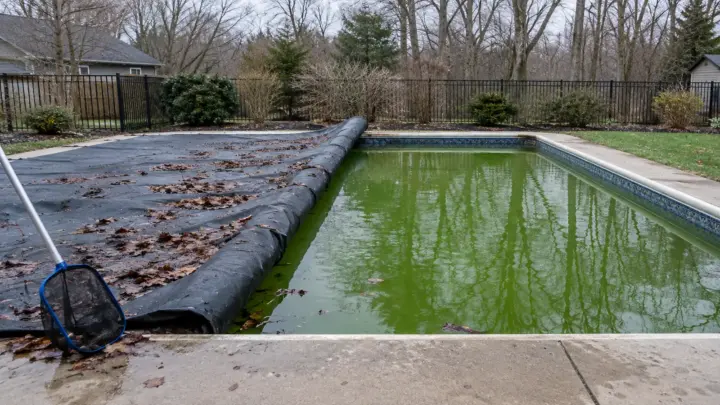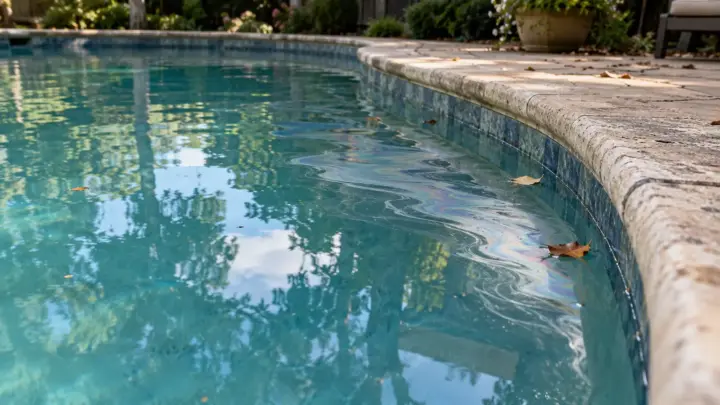
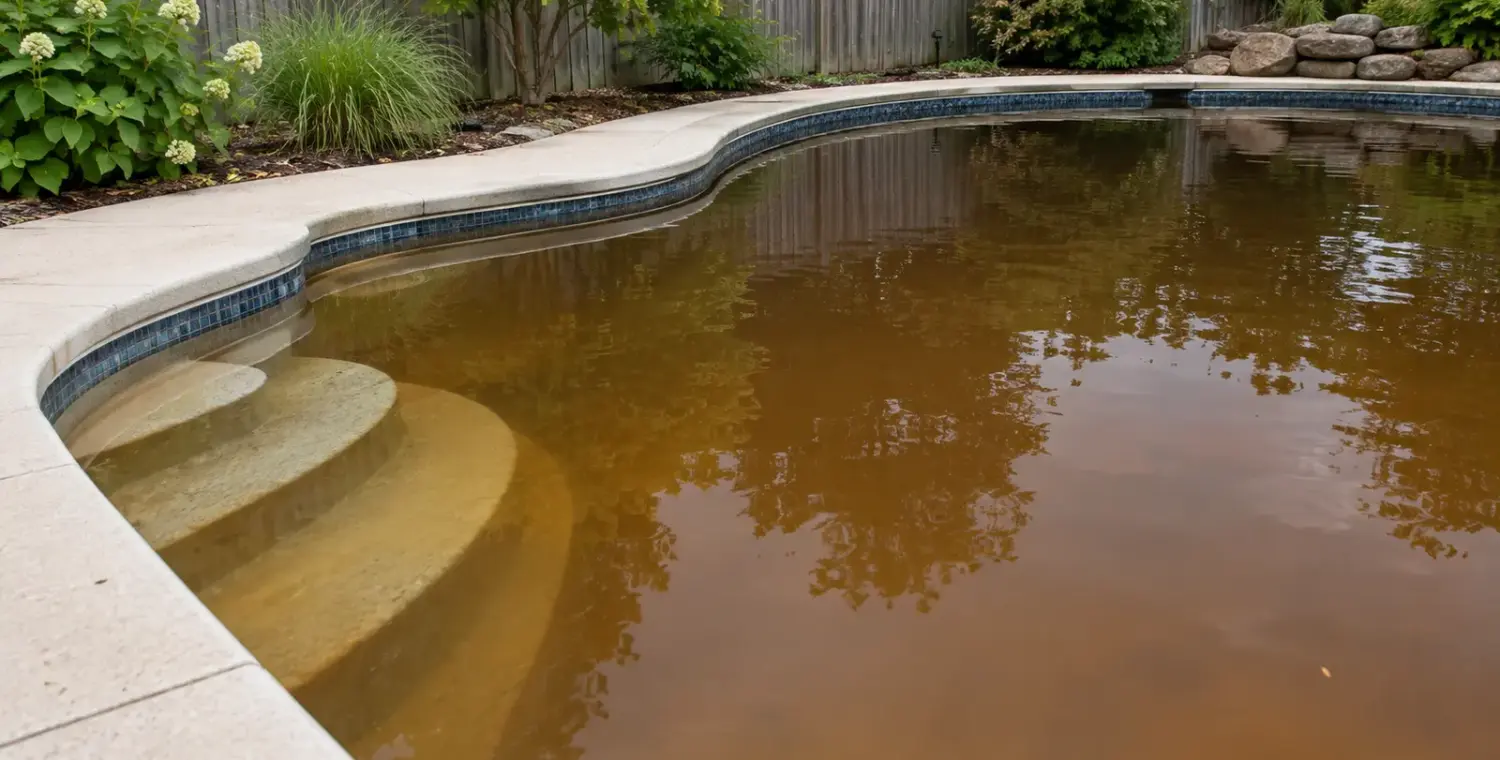
Pool water that turns brown or rusty right after you add chlorine most likely contains dissolved metal, especially iron, that the chlorine has oxidized into visible material. The pattern fits particularly well after a refill from metal-bearing water, such as some well water. Confirm the cause with suitable testing, including metals, before choosing another chemical treatment; a second shock dose is not the answer.
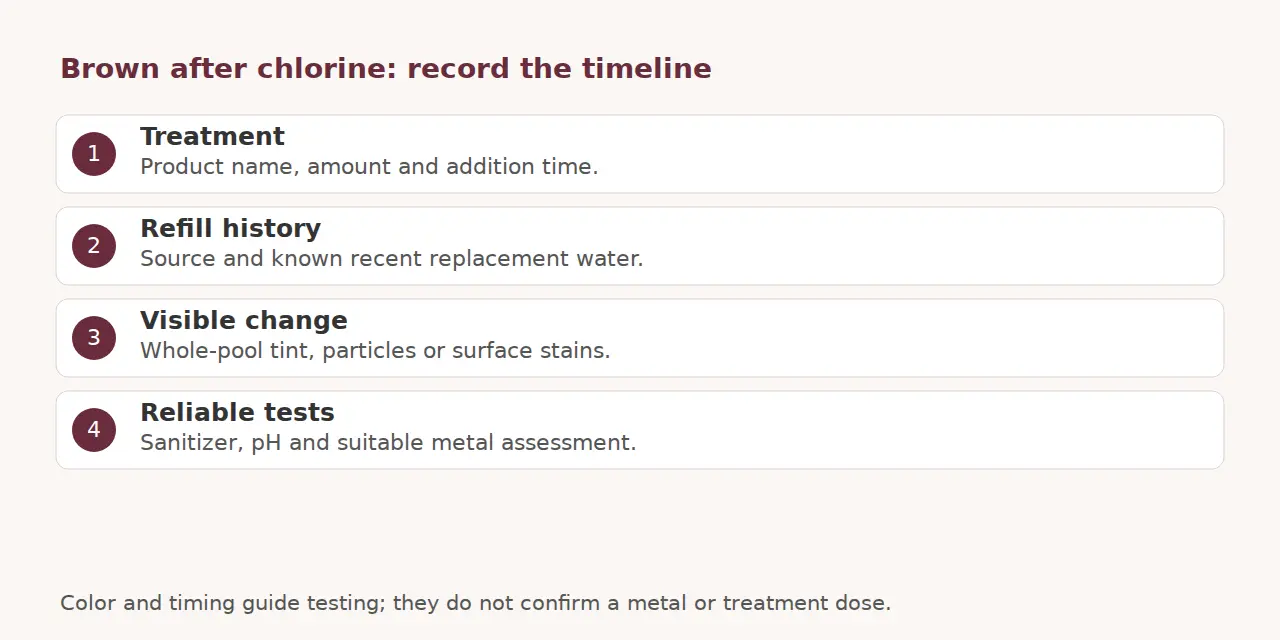
Pause swimming while the water is discolored or its condition is uncertain. Write down what was added, when the color changed and whether fresh water entered recently. Another shock dose chosen solely because the water looks brown risks repeating the wrong response.
Why the timing points toward metals
Metals already in the water can change from a dissolved form to visible material after treatment. Pool manufacturer guidance describes shock additions and pH changes as possible triggers for metals becoming insoluble and depositing on surfaces.
For iron, the fill water can initially look clear. Minnesota’s well-water guidance describes clear-water iron that later turns red or brown, and discusses chlorine oxidation in water treatment. That chemistry supports the investigation; its drinking-water treatment quantities and equipment choices aren’t pool instructions.
Take the timeline seriously without treating it as proof. Note whether the whole water body changed color, a localized plume appeared, particles settled or stains developed. A photograph and a clear history are more useful than assigning a metal from the shade alone.
Check both the pool and its refill source
Ask a qualified pool-water testing provider for the appropriate iron and other relevant metal assessment, plus the usual sanitizer and balance measurements. Explain recent treatment, because the visible material and remaining dissolved metal both matter to interpretation. Follow that test’s sample-container and collection instructions.
Identify the refill source: municipal supply, private well or delivered water. Keep pool and source samples clearly separate. If a well is implicated, a suitable laboratory or water-treatment professional should assess it; a household pool test strip isn’t a complete well-water test.
Record refill amounts if known, but don’t invent them. Ongoing top-ups add more source water over time. EPA pool-efficiency guidance helps identify losses that repeatedly require replacement water.
Keep sanitation and color diagnosis separate
Obtain reliable sanitizer and pH results using your normal test method. Our pool-testing guide explains the measurements. Tell the provider about every product added and whether the result is outside the kit’s range.
CDC warns that high chlorine can bleach a DPD test. An unexpected zero after substantial treatment deserves confirmation rather than another guessed addition. Use a method and procedure approved by the test manufacturer.
If confirmed sanitizer loss, slimy growth or other contamination accompanies the discoloration, include it in the assessment. The green-pool guide and low-chlorine guide address those separate findings. Brown appearance alone doesn’t justify an algae-treatment sequence.
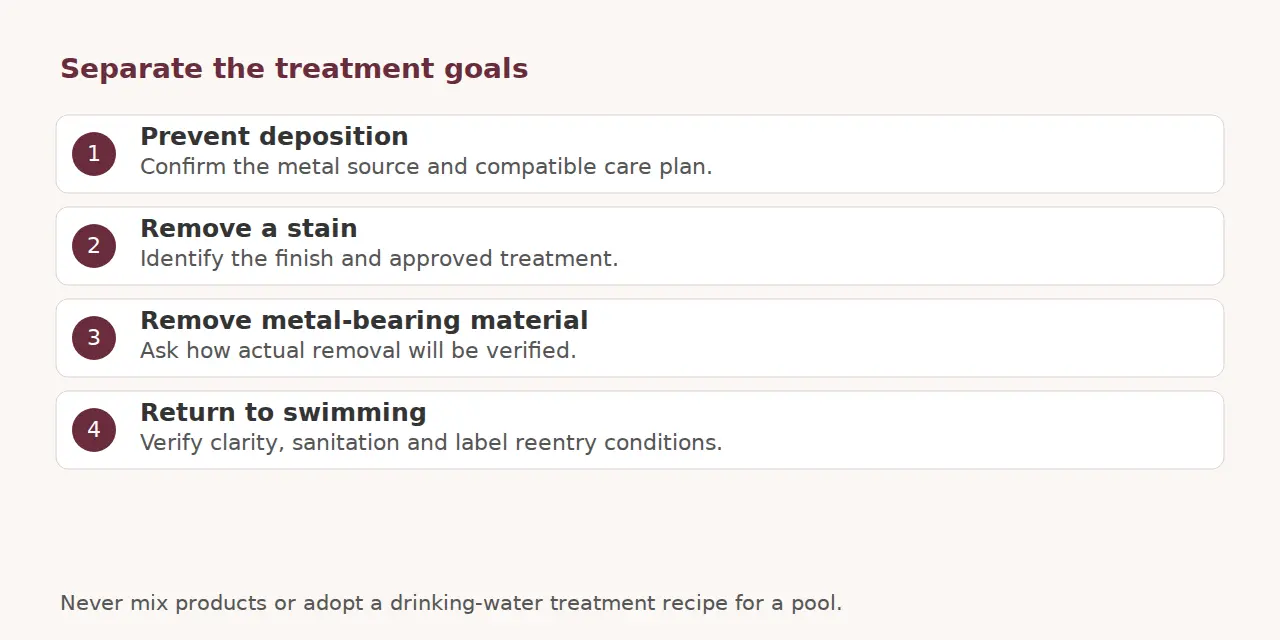
Ask what the proposed treatment actually accomplishes
- Is it preventing further metal deposition?
- Is it lifting a confirmed stain from the finish?
- Is it physically removing the metal-bearing material?
- How will sanitation be maintained and reentry verified?
Those goals require different checks. The manufacturer’s separate stain-removal and chlorine-reduction products illustrate why product names aren’t interchangeable. Choose a compatible, finish-approved plan with exact labels and follow-up tests.
Never mix chemicals, improvise an acid or household stain-removal test, or drain the pool merely to make its color disappear. A provider should plan any water replacement around the pool structure, source-water problem and local discharge rules.
Prevent the same refill-and-treatment cycle
Once the cause is confirmed, address the incoming source or other identified metal source and follow the approved maintenance plan. Keep the product and test log. If discoloration recurs, compare the new event with the original rather than cycling through different stain removers.
Before swimming resumes, verify water clarity, appropriate sanitizer and pH, equipment operation and all treatment reentry requirements. Improving color is only one part of that decision.
Research checked 2026-10-05.