Clean hot tub filters on the schedule required by your spa and filter instructions, adjusting for use and condition as those instructions allow. Rinsing removes loose debris; deeper cleaning uses an approved product to address material that rinsing does not remove. Inspection tells you when cleaning is no longer enough.
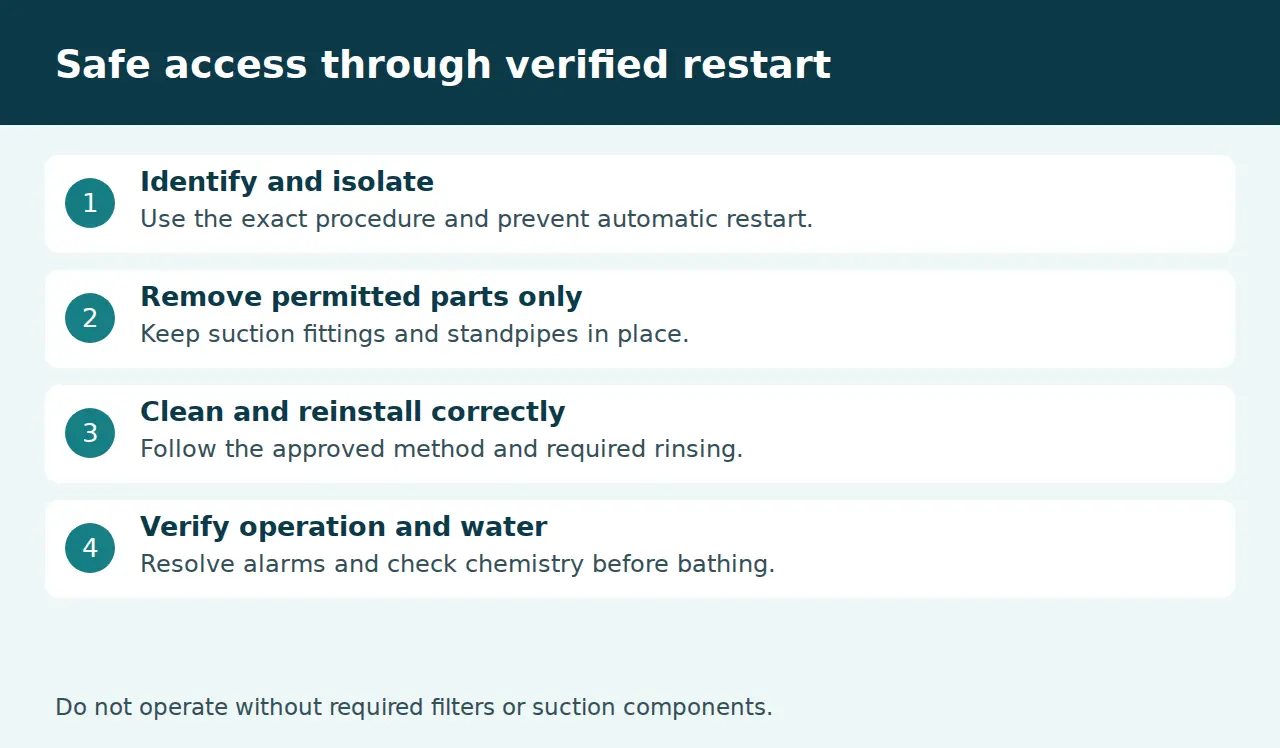
Before removing a filter, follow the spa’s power-isolation and access procedure. Keep required suction fittings in place, do not operate without required filters, and verify normal operation and water conditions after service.
How often should you clean a hot tub filter?
Use the model’s maintenance instructions as your baseline. Hot Spring’s published care guidance describes monthly cartridge cleaning, while its Highlife manual explains that frequency and duration of use and the number of occupants affect the interval. Unicel similarly recommends a spa routine based on usage.
These are qualified examples, not a universal monthly rule. Your cartridge material, water-care program and spa design may require a different routine. A busy period or developing flow concern should prompt the checks specified in the manual rather than waiting automatically for a calendar date.
Keep reminders for routine rinsing, approved deeper cleaning and inspection separately if your instructions distinguish them. Record what was actually done. “Filter cleaned” is less useful than a note identifying rinse only, cleaner used, damage found and the result after restart.
Winter does not remove the maintenance requirement for an operating spa. Plan access and cleaning so the tub is not left without its required circulation or exposed to an unsafe shutdown. Our winter hot tub care guide covers those planning questions.
Identify the filter before choosing a method
Check the exact cartridge part number, spa model and approved replacement specification. Similar dimensions do not establish that two cartridges have equivalent ends, seals or suitability. Ask the manufacturer if the installed element cannot be identified.
Find out whether every filter has the same job. The Highlife manual, for example, describes a separate cartridge serving its circulation system. Do not assume that cleaning the easiest-to-reach element services every required filter.
This guide concerns residential spa cartridge care. A spa connected to an external pressurized pool-style filter needs that filter’s pressure-release and opening procedure. Do not open a pressurized housing using instructions intended for an accessible spa filter well.
Rinse, deep-clean or replace?
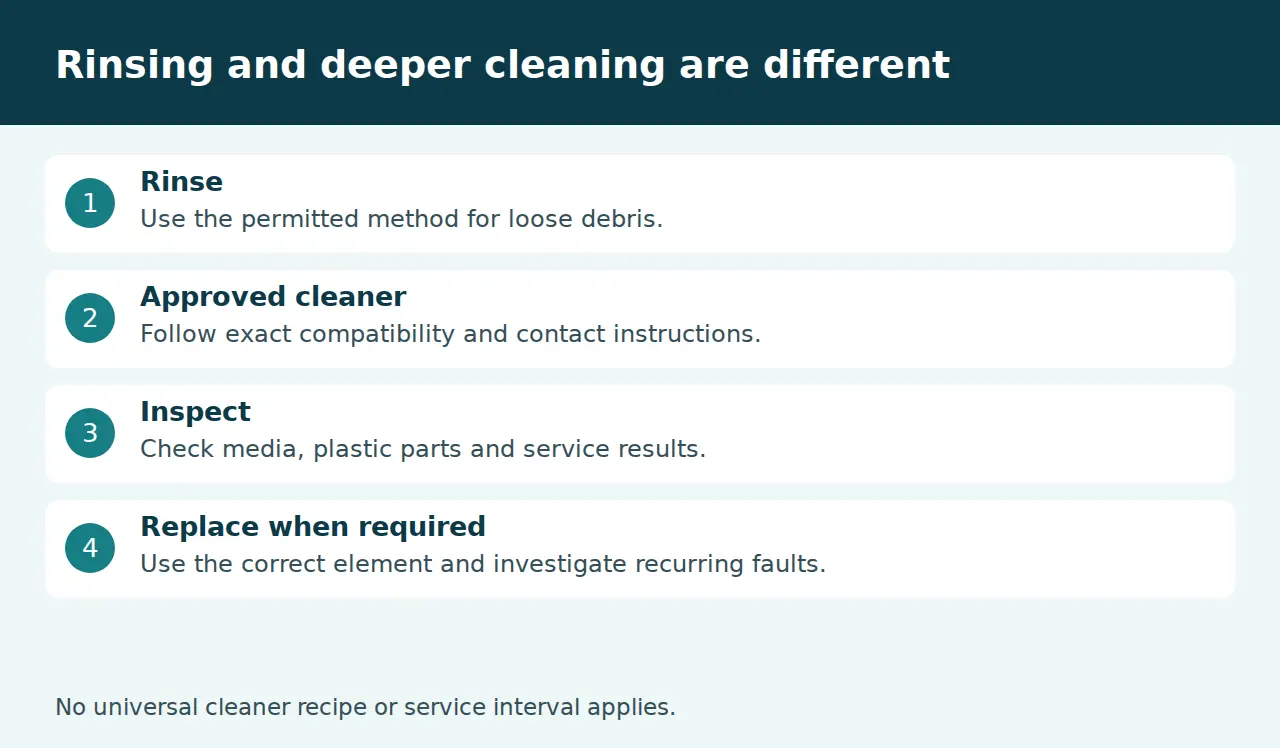
| Task | Purpose | Important limit |
|---|---|---|
| Rinse | Remove loose debris using the permitted water-spray method | Appearance alone does not establish that embedded material is removed |
| Approved deeper cleaning | Address oils or deposits as the filter and cleaner instructions specify | Compatibility, concentration and contact time are product-specific |
| Inspect | Look for structural or media damage and inadequate service results | Do not diagnose every flow problem from cartridge color |
| Replace | Install the correct element when the required criteria are met | A new cartridge does not fix a separate system fault |
Unicel identifies reduced intervals between cleanings, restricted flow and structural failures among replacement-assessment factors. Use those observations alongside the spa’s requirements rather than promising that one cartridge will last a fixed number of years.
Make access safe before removal
- Locate the actual removal procedure. Confirm which cover, retainer and cartridge the manual permits you to handle.
- Isolate power as instructed. Prevent automatic pumps or scheduled filtration from starting while you work. A quiet motor is not evidence that restart is prevented.
- Keep people away from the open area. Secure access and keep children and pets away from cartridges, cleaner and the spa.
- Remove only the permitted parts. Follow the model’s sequence without forcing fittings or changing the suction arrangement.
- Protect against debris entering plumbing. Keep loose material from falling into exposed openings and do not leave the compartment unattended.
The Highlife manual expressly warns against removing filter standpipes or suction fittings during cartridge cleaning. Their presence is a safety matter. CPSC also advises against using pools or spas with loose, broken or missing drain covers. A damaged suction component requires qualified correction, not a temporary workaround.
Rinse using the permitted method
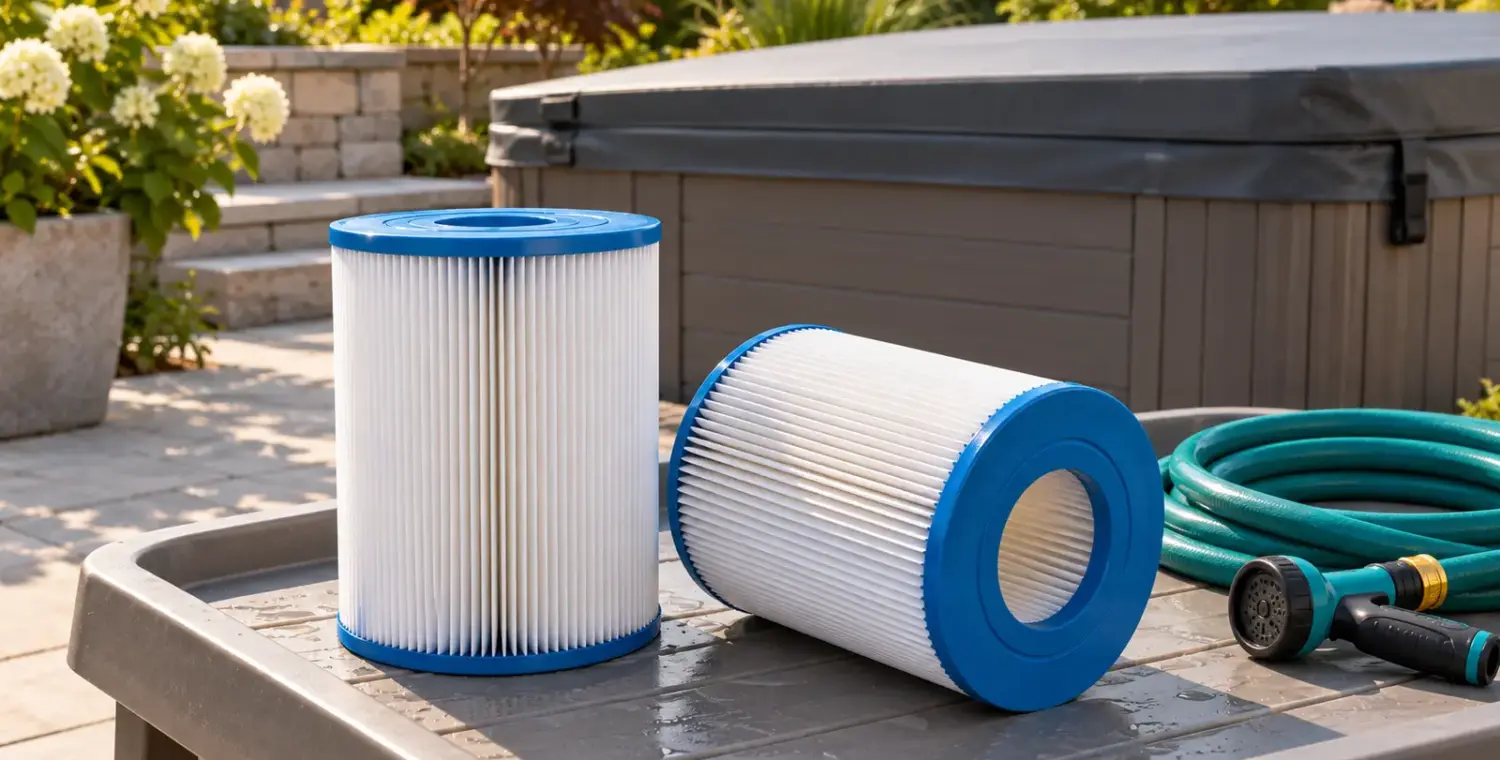
For reusable pleated cartridges, the spa or cartridge instructions commonly describe a garden-hose rinse, paying attention between pleats. Work through the element using the manufacturer’s method and support it on a clean surface so newly removed debris does not immediately return.
Use only the spray method allowed for the actual element. Do not assume a pressure washer, car-wash lance or stronger nozzle is an improvement. If instructions are unclear, ask before using force that the media or plastic parts may not tolerate.
Handle the element carefully. Unicel warns against stiff-brush scrubbing and describes damage from mishandling. Do not pry pleats apart, scrape them with sharp tools or drop the cartridge onto a hard surface.
Arrange a locally permitted destination for rinse water and debris. EPA stormwater guidance explains why pollutants entering storm drains may reach waterways untreated. Keep the work away from a street drain and follow the requirements for your property.
Use a compatible cleaner for deeper service
The Highlife manual describes cleaner-directed soaking and subsequent hose rinsing for its standard filters. Use the cleaner approved for your cartridge and sanitizer program. The concentration, water temperature, contact time and rinsing requirements come from the actual instructions.
Different programs can need different cleaning sequences. Unicel provides a separate supplement for biguanide systems, demonstrating why the sanitizer context matters. Do not borrow that procedure for a chlorine spa or combine products to cover several possibilities.
Read the label and relevant safety information before starting. Use the specified protective equipment and a suitable dedicated container. Keep products in original labeled packaging, separate incompatible materials and never mix concentrated chemicals.
This guide does not provide vinegar, bleach, acid or detergent recipes. If approved cleaning does not remove deposits, ask the cartridge maker or service provider about the next step. Repeated stronger soaks can create a new problem rather than establish that the old one was solved.
Do not generalize appliance-cleaning exceptions
Some specialty elements have unusual approved methods. For example, Hot Spring gives a specific dishwasher exception for its Tri-X filter, with restrictions and dealer advice. That is not permission to put ordinary pleated cartridges into a dishwasher.
Apply only the instructions for the exact filter. A household cleaning cycle, detergent or drying temperature that works for dishes is not evidence of cartridge compatibility.
Inspect before reinstalling
Look at the media, end caps, core and other parts identified in the manufacturer’s inspection criteria. Record visible tears, cracks, collapse or other damage and seek advice on replacement. Do not glue or patch a damaged cartridge as a substitute for the correct element.
Consider performance history as well as appearance. If the interval between required cleanings keeps shrinking, or restricted flow returns after suitable service, ask whether the element is exhausted or another fault is present.
Discoloration alone does not establish a specific contaminant or prove structural failure. Equally, a white-looking cartridge does not establish that its flow and integrity are acceptable. Use the criteria and operating evidence applicable to the model.
Reinstall and verify the restart
Reinstall every required element, retainer and cover in the correct position and follow the tightening instructions. The Highlife manual cautions against overtightening. Do not force a part that does not seat correctly; confirm compatibility and alignment first.
Use the prescribed restart procedure and check normal circulation, water level and any fault messages. Persistent flow or heating warnings need qualified support. Do not bypass a sensor or run without a required filter to make an alarm disappear.
If your instructions permit a spare set, it must be the correct clean replacement set. That can support maintenance planning, but it does not extend the life of damaged elements or change their required inspection schedule.
Filter cleaning does not replace water testing
Test sanitizer and pH as required after service and before use. Check other balance parameters when the symptoms or manual call for them. The water testing guide explains method distinctions; interpret results using spa-specific requirements.
Health Canada cautions that clear water does not necessarily mean disinfected water. Cleaning a cartridge therefore cannot certify the spa’s sanitation, remove every dissolved substance or establish that a significant contamination event has been addressed.
If unusual foam appears after cleaning, consider cleaner compatibility and the required rinse, but do not assume that is the only possible cause. Use the foam guide and check the water. For continuing odor, the hot tub odor guide covers additional branches.
Keep a service record that helps next time
Record the cartridge part number, service date, rinse or cleaner procedure, observed damage, replacement date and post-restart operation. Add the water results and any remaining symptoms. Save photographs of damage for the supplier if useful.
If suitable cleaning has not restored normal operation, provide that record to the dealer. Explain whether the problem occurs immediately after service or returns over time. Replacing filters repeatedly without investigating the pattern may leave the actual fault unresolved.
Common questions
Can I leave the spa running while the filter soaks?
Do not operate without required filters. Follow the model’s shutdown or expressly permitted compatible-spare procedure; do not use another model’s exception as permission.
How long should I soak a cartridge?
Use the time specified for the approved cleaner and exact filter. There is no universal overnight rule, and longer contact is not automatically better.
When should I stop and call for service?
Stop for damaged suction components, uncertain safe access, parts that will not reinstall correctly or persistent flow and heating faults. Keep the spa out of use until the relevant conditions can be verified.
Research checked October 1, 2026. We only claim hands-on testing when we’ve actually tested the product ourselves. Featured image is an original illustration.
Sources and references
- CDC: Home Pool and Hot Tub Water Treatment and Testing
- Health Canada: Swimming pool and spa chemicals
- CDC: Pool Chemical Safety
- Hot Spring / Watkins Wellness: 2025 Highlife Collection Owner Manual
- Hot Spring: Maintenance and Tips
- CDC: Protecting Yourself from Legionella in Hot Tubs
- US EPA: Homeowner Guide to Healthy Habits for Clean Water
- Unicel: Maintenance and FAQs
- US CPSC: Steps for Safety Around the Pool