Most pools need a little attention every day and a fuller clean once a week. How much depends on how many people swim, how much debris falls in, and the weather. There is no single schedule that suits every pool, so this checklist sorts common tasks by frequency, shows where the sources say so, and points out where they disagree.
The short answer
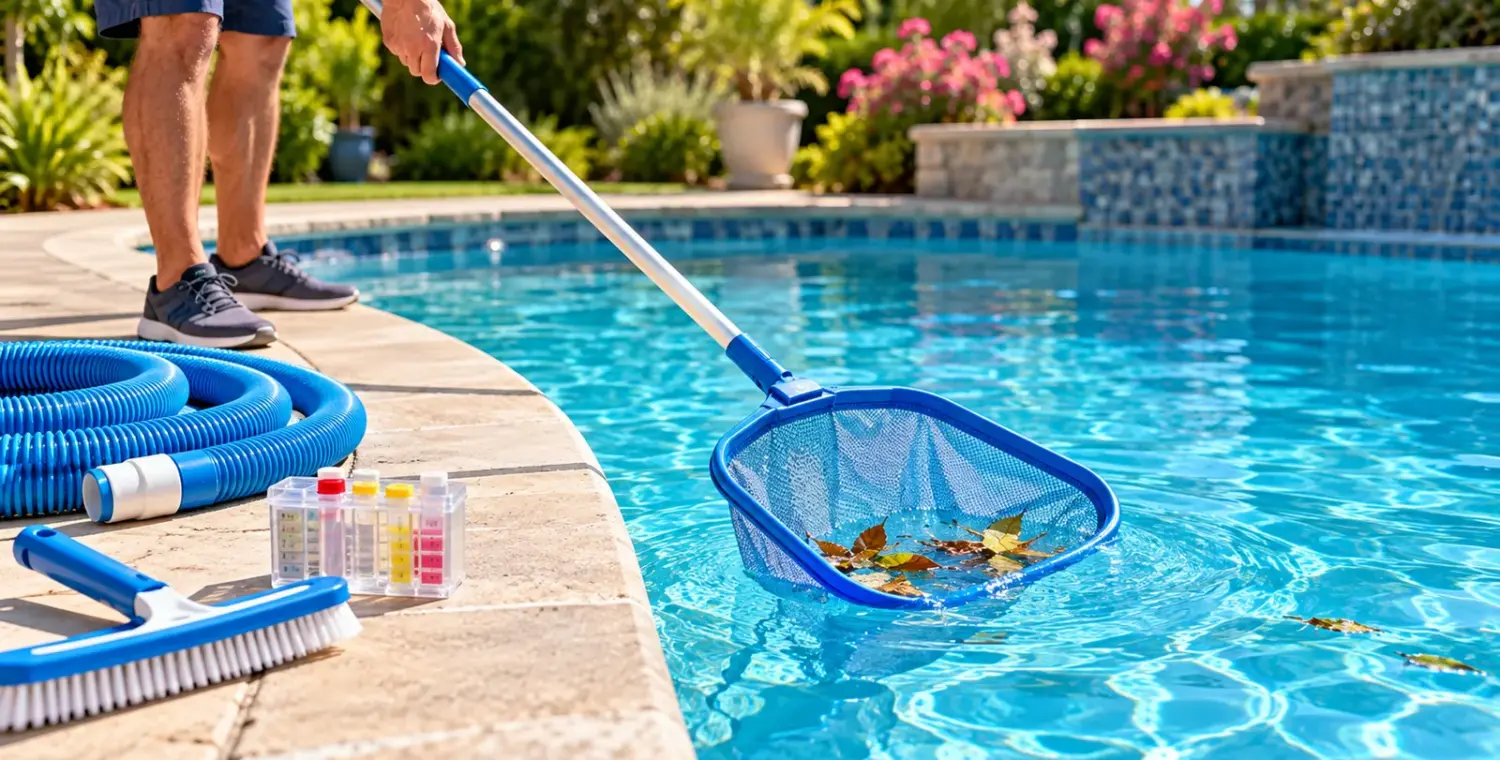
Skim and glance at the pool daily, check the baskets every few days, and do a full clean once a week: brush, vacuum, empty the skimmer and pump baskets, and check the filter. Test the water far more often than weekly. CDC recommends testing chlorine and pH at least twice per day. Clean more often after storms, heavy use or leaf fall.
Key takeaways
- Hayward’s weekly routine covers skimming, brushing, vacuuming, skimmer cleaning, running the pump, checking the filter and testing.
- Sources differ on frequency for some tasks. When they differ, follow the more frequent advice or your equipment manual.
- A broken or missing drain cover is a reason to keep everyone out of the pool until it is fixed.
Checklist at a glance
| Task | Suggested frequency | Source |
|---|---|---|
| Skim floating debris | Daily | Hayward |
| Test chlorine and pH | At least twice per day (CDC); daily or weekly depending on use (Hayward) | CDC, Hayward (see the conflict below) |
| Check the skimmer basket | Every few days, emptying as required (Pentair Bermuda skimmers); weekly or more often (Hayward) | Pentair, Hayward |
| Brush walls, steps and fixtures | Each week | Hayward |
| Vacuum the floor | After brushing, as part of the weekly routine | Hayward |
| Check the filter | Weekly; backwash as needed | Hayward |
| Look at drain and suction covers | Regularly; replace a broken or missing cover before swimming | DOE, CPSC Pool Safely |
Daily
Skim the surface
Hayward describes skimming as a task that should be done daily. It suggests removing debris before it sinks to the bottom, where it is harder to remove and may stain.
Test the water
CDC recommends testing chlorine and pH at least twice per day, and more often when a number of people are using the pool. See how often to test pool water for a schedule by season and the pool water testing guide for what each test means.
Run the pump
Hayward says to run the pump long enough each day for the water to be properly filtered. How long that is depends on your pool and pump; see how long to run a pool pump.
Every few days
Skimmer and pump baskets
Pentair’s Bermuda skimmer guide says to check the strainer basket every few days and empty it as required. The U.S. Department of Energy notes that a dirty pump strainer basket can affect pump and system performance and make the system difficult to prime. Switch the pump off before opening the pump strainer pot. Our skimmer basket cleaning guide covers the steps.
Water level
While you are at the skimmer, check the water level. Pentair says to keep it at least 1½ to 2 inches above the bottom of the skimmer opening for its skimmers. Hayward notes that if the water is more than halfway up the skimmer, debris will not be collected effectively.
Weekly
Brush
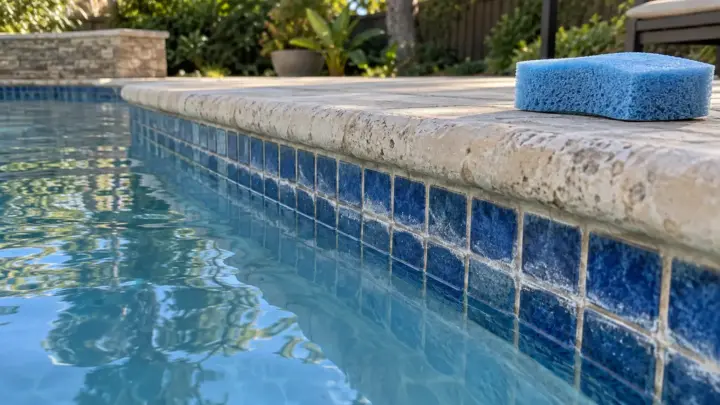
Hayward recommends brushing the pool walls and fixtures, such as ladders and steps, each week to remove dirt and prevent the spread of algae. Brush sediment toward the main drain so it is easier to vacuum. For grime or scale that brushing leaves along the tile line, see how to clean pool waterline tile.
Vacuum
Once walls are brushed, Hayward says the sediment can be vacuumed up with the debris on the floor. Use an automatic cleaner or a manual vacuum following its manual.
Clean the skimmer
Hayward says to clean out skimmers weekly, or more often if necessary. Pentair also suggests periodically checking that the skimmer weir moves freely and replacing it if it is damaged or worn.
Check the filter
Hayward suggests checking the filter weekly and backwashing as needed: weekly for heavily used pools, or when the gauge reads 8-10 psi higher than normal. That figure comes from Hayward; its sand filter manual uses the same 8-10 PSI rise over the initial “clean” pressure. Other filters may use different figures, so clean and maintain your filter according to its manufacturer’s directions. See pool filter pressure and sand vs. cartridge vs. DE filters.
Safety walk-around
The DOE guideline says the main drain and suction covers should be visually checked, and a broken or missing cover should be replaced immediately, before the pool is used again. CPSC’s Pool Safely campaign says that if a drain cover is broken or missing, the pool should be closed until it is repaired or replaced.
Where sources disagree
- Testing: CDC recommends testing chlorine and pH at least twice per day. Hayward’s maintenance page suggests testing daily or weekly depending on use. CDC’s advice is the public health recommendation; following it also covers Hayward’s.
- Skimmer basket: Pentair says every few days for its Bermuda skimmers; Hayward says weekly or more often. Debris load matters more than the calendar.
When to clean more often
- After storms, wind or heavy leaf fall.
- After parties or periods of heavy swimming.
- When water looks cloudy or green. See how to fix green pool water.
- When filter pressure rises or flow drops.
FAQ
Is weekly cleaning enough?
For many residential pools, a weekly full clean plus daily skimming and frequent testing works. Heavy use, trees or storms mean more. Water testing should not wait for the weekly clean.
Do I still need to brush if I have a robotic cleaner?
Hayward’s routine includes brushing walls and fixtures each week. An automatic cleaner may not reach steps, ladders or corners, so check those by hand.
Sources
- CDC: Home Pool and Hot Tub Water Treatment and Testing
- Pentair: Bermuda Gunite Skimmer Installation and User’s Guide
- Hayward: Pro Series Top-Mount Sand Filter Owner’s Manual
- U.S. Department of Energy (Building America): Measure Guideline: Replacing Single-Speed Pool Pumps with Variable Speed Pumps
- U.S. CPSC Pool Safely: The Terrain of Drains: What Makes Them Safer
- Hayward: Weekly Pool Maintenance
Research checked October 1, 2026. We only claim hands-on testing when we’ve actually tested the product ourselves. Manufacturer guidance applies to the named products; follow the manuals and labels for your own equipment.