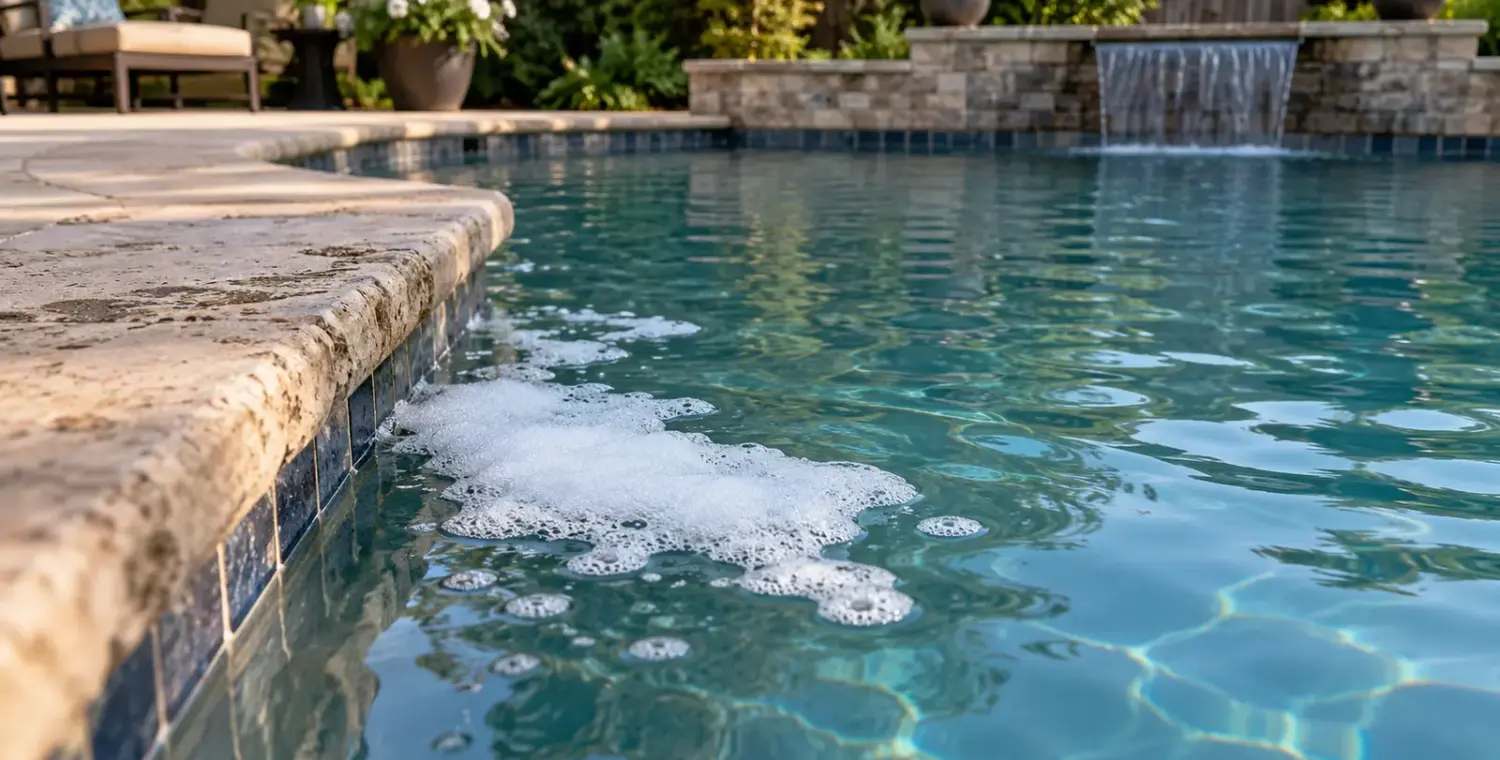
Persistent pool foam is a reason to review recent algaecides, cleaning runoff and swimmer inputs before buying another treatment. Foaming products, soap or oil contamination, and accumulated organic material are documented possibilities. Test the water and check the actual product labels; suppressing bubbles alone leaves the underlying water-care question unresolved.
For a swimming pool, pay particular attention to fountains, jetted returns and an attached spa. Aerated features are important context when checking whether a recently added product suits the installation.
Separate lasting foam from a brief patch of bubbles
Record where bubbles collect, whether they persist, and whether they appeared immediately after a product addition or cleaning job. Photograph the surface from the deck and save the product name. A useful description is “foam appeared after yesterday’s algaecide near the fountain,” rather than “the pool needs shock.”
Include cloudiness, unusual odor or a sanitizer problem in the same record. If haze is the main issue, use the cloudy-pool troubleshooting path. Keep swimmers out while water condition is uncertain.
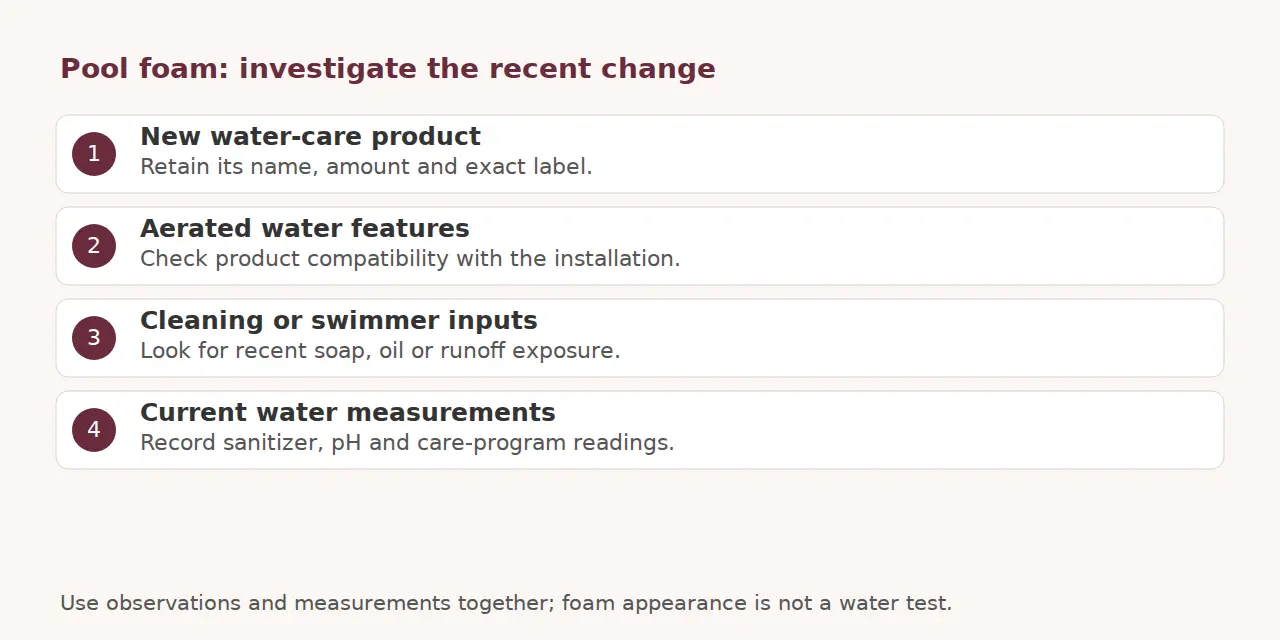
Check the newest product first
Pool-specific manufacturer troubleshooting identifies foaming algicides in pools with jetted returns, attached spas or water features. It also lists foreign soap/oil inputs and organic buildup. Those are leads to investigate, not a chemical diagnosis from bubble size.
Look up the exact formulation rather than assuming every algaecide behaves alike. As one concrete compatibility example, BioGuard lists Back Up 2 as unsuitable for attached spas or water features. That restriction belongs to that product. Ask the supplier to assess a mismatch before making another addition.
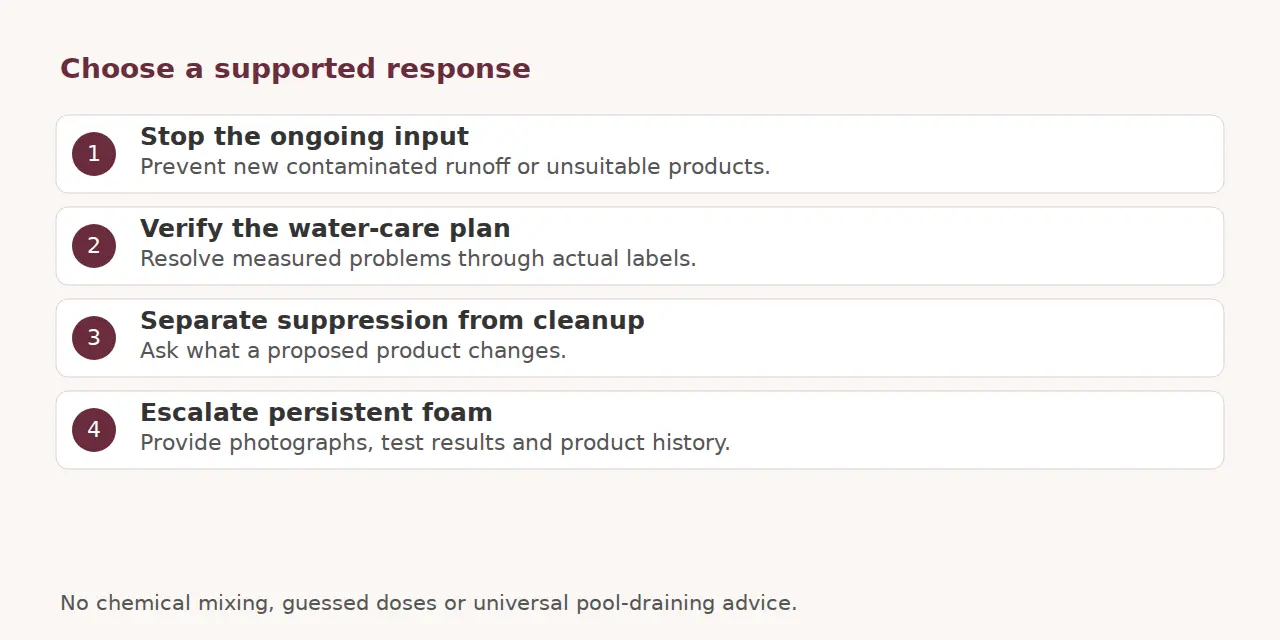
Check amounts against your pool volume and the bottle’s instructions, and record other treatments used. Stop adding the suspected optional product while seeking its manufacturer’s correction advice; continue the established sanitizer program as directed. Never combine chemicals to neutralize a foaming product.
Look for soap, oils and cleaning runoff
Review recent deck, cover or pool-surface cleaning, freshly washed swimwear and unusual bather use. A recent change gives you a practical place to investigate. Prevent further runoff or contaminated objects from entering the water.
Use approved pool cleaning methods and products, including their rinsing instructions. Household dish soap adds another suspected contaminant. For ordinary hot-tub foam, our spa-specific guide addresses a different setting and maintenance routine.
Get measurements before choosing the remedy
Obtain reliable sanitizer and pH readings, then the additional parameters required by your care program. Follow the kit’s sampling and reading instructions. The water-testing guide explains the distinct measurements.
CDC homeowner guidance makes testing part of safe care. Foam height cannot tell you whether chlorine is sufficient, and a small bubble patch doesn’t establish that a large chemical correction is needed.
What an anti-foam product does
Manufacturer product guidance distinguishes foam suppression from cleaners for accumulated oil and grease. If an anti-foam is appropriate, confirm pool/system compatibility and follow its label. Treat it as visible-symptom control within a verified care plan, with follow-up observation and testing.
Repeatedly buying different foam removers makes the history harder to interpret. Persistent contamination or a known dosing error needs supplier assessment. Partial water replacement, if recommended, requires a pool-specific drainage and refill plan; do not empty a pool or choose a replacement percentage from this symptom alone.
Keep the problem from returning
Check product compatibility before future purchases, keep cleaning runoff out and encourage pre-swim rinsing under healthy-swimming guidance. Maintain normal filtration through the exact equipment procedure and a testing routine that fits use.
Call for help when foam persists despite addressing the known input, reliable sanitizer is difficult to maintain, circulation is abnormal or an unknown chemical entered the pool. Bring the label, timing, measurements and photographs. There is no supported universal clearing deadline or foam-removal dose for all pools.
Research checked 2026-10-05.