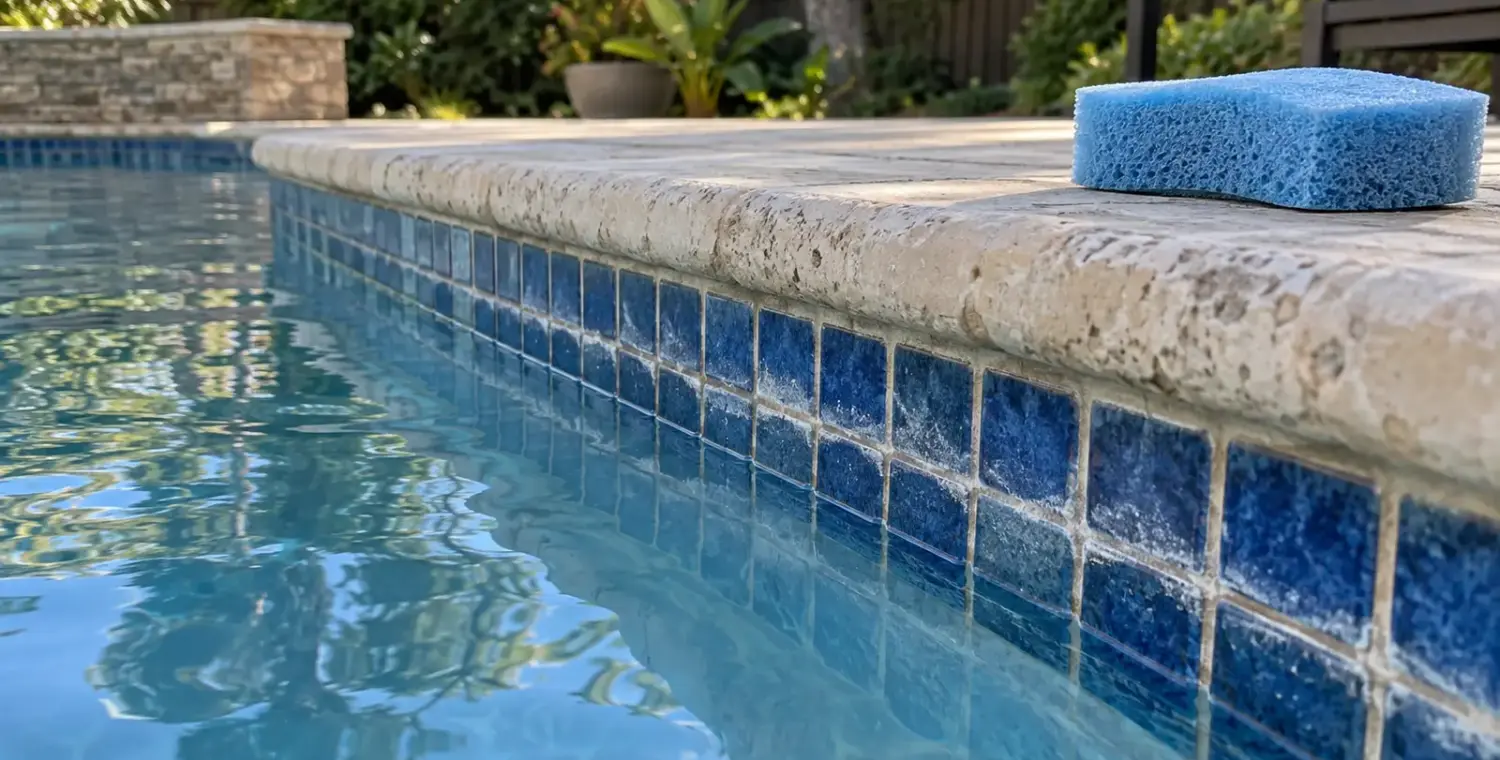
Clean pool waterline tile with a nylon brush or a non-scratch nylon pad and a cleaner made for pool tile, and do it weekly so deposits stay soft. Tile maker Jeffrey Court’s pool guide says to avoid pumice stones and wire brushes, which can damage tile surfaces. Keep muriatic or phosphoric acid products off the tile entirely. Heavy scale that won’t come off with that method is a job for media blasting, not a stronger acid.
First, which deposit is it?
- Scum: a soft, greasy gray or brown band of body oils, sunscreen and dirt. It smears when you rub it.
- Scale: a hard, white or gray crust that doesn’t move with a finger. That’s calcium coming out of the water.
Drag the edge of an old plastic card across it. If it smears, treat it as scum; if it’s hard, treat it as scale.
Clean it in this order
- Identify the tile. Glass, glazed ceramic and natural stone tolerate different things. Daltile says to use no scouring pads, steel wool, sandpaper or other abrasive products on glass tile, and Oceanside says do not use muriatic acid on its glass tile. On marble or limestone, acids, even a light solution of vinegar and water, will etch the stone, and etching can’t be scrubbed back out.
- Test a small patch. Try the cleaner on a spot below a ladder or in a corner. Stop if the tile dulls, changes color, or the grout softens.
- Scum: apply a pool tile cleaner or degreaser and scrub with a nylon bristle scrub brush or a 3M white or blue nylon scrub pad. Wipe the residue away instead of letting it slide back into the pool.
- Scale: use a calcium-release cleaner made for pool tile with the same brush or pad. Do not use abrasive or acidic cleaners.
- Work in short sections from the deck or in the water, and check the finish as you go.
When it won’t come off
Thick, old scale may need media blasting: a specialist blows a soft abrasive at the deposit. Jeffrey Court says baking soda or similar-hardness media is aggressive enough to remove scale but safe for tile, including glass tile. Ask the contractor which media they use and to test a hidden area first.
Acid and safety rules
Do not allow products that contain hydrofluoric, hydrochloric (muriatic) or phosphoric acid to come in direct contact with the tile. That includes when acid is added to the pool water to lower pH: pour it away from the tile line. If acid does touch the tile, neutralize it right away with baking soda and water at 1 lb to 3 gallons, as the manufacturer directs.
Wear gloves and eye protection, follow each product’s directions, and keep swimmers out while you work. Never mix tile cleaners with pool chemicals: CDC warns that pool chemicals can injure people when mixed together.
Keep scale from coming back
- Brush weekly. Fresh deposits come off with a nylon brush alone.
- Balance the water. Jeffrey Court gives an acceptable Langelier Saturation Index (LSI) of 0.0 to 0.5; above 0.5, scaling speeds up. PHTA’s ideal calcium hardness for pools is 200–400 ppm. See calcium hardness in pool water.
- Protect clean tile. Tile protectants make calcium easier to brush off; Jeffrey Court suggests reapplying its product every 6 months.
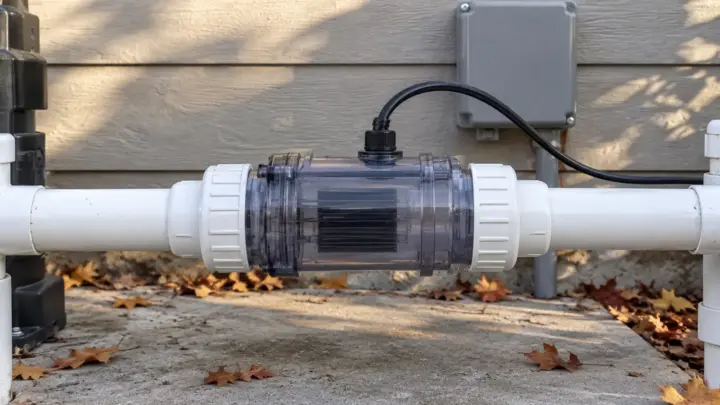
Add the waterline to your weekly pool cleaning checklist, and if white crust also shows up on the salt cell or floats in the water, see white flakes in pool water.
Sources
- Jeffrey Court (tile manufacturer): Pool Tile Maintenance Guide
- Oceanside Glass & Tile: FAQ: pool tile maintenance
- Daltile: How to care for and maintain glass and metal tile
- Daltile: How to care for and maintain natural stone
- Pool & Hot Tub Alliance (PHTA), published by Taylor Technologies: Recommended Water Chemistry Parameters
- CDC: Pool Chemical Safety
Research checked 2026-10-08.