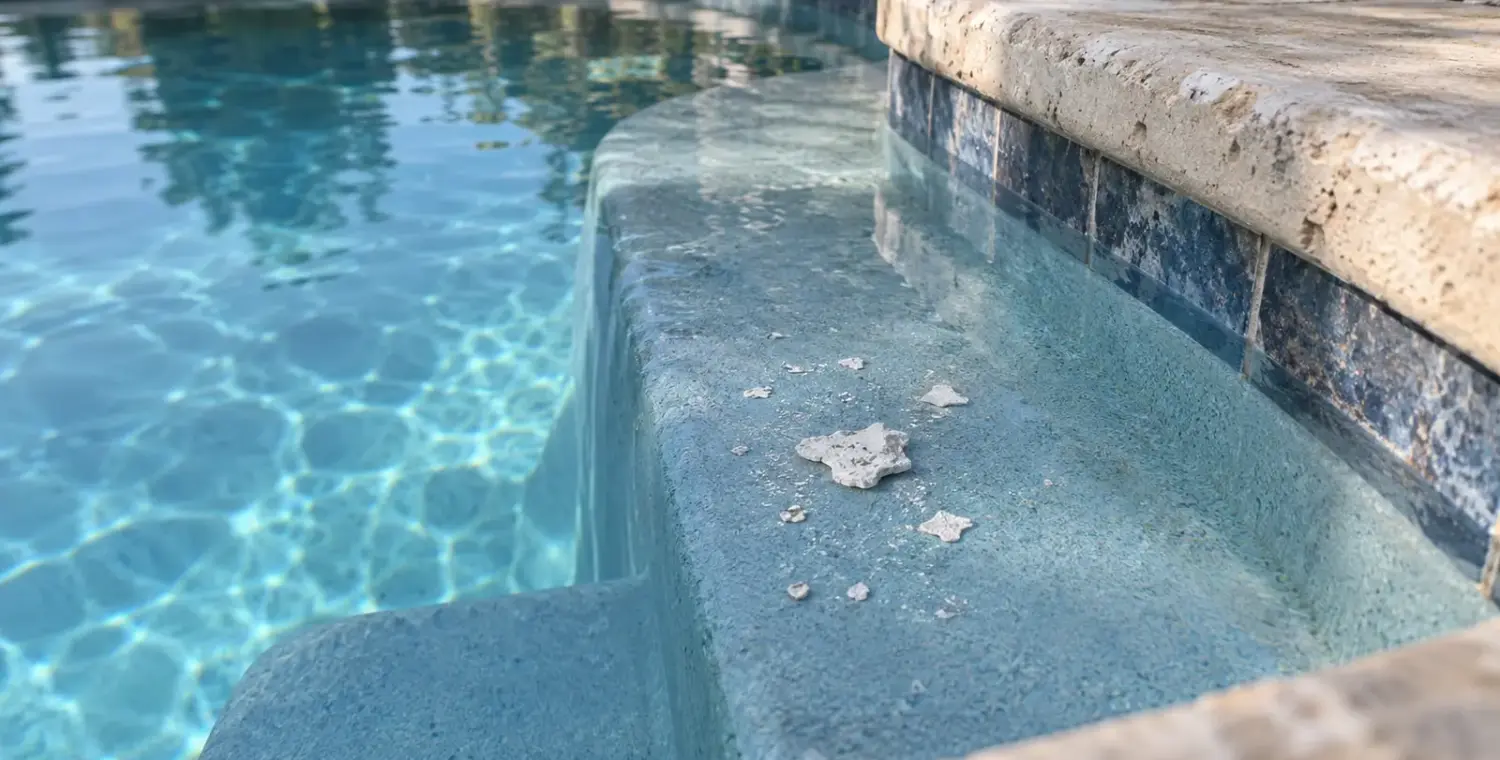
White flakes in a saltwater pool are usually calcium carbonate scale that formed on the salt cell’s plates and broke off. Orenda explains that high pH at the cell blades forms the scale, which fractures as the cell reverses polarity and is carried into the pool through the returns. Confirm that lead by locating the particles, checking your equipment and testing water balance; white color alone is too little evidence to choose a cleaner.
If the pool has no salt chlorine generator, skip that branch.
Follow the particles back to their likely entry point
| Observation | Useful next question |
|---|---|
| Fresh flakes gather below a return | Which equipment sits in that circulation path? |
| White crust is visible through a salt cell | Does its manual permit inspection, and what cleaning is justified? |
| Particles appear beside a damaged surface | Does a finish professional need to inspect the material? |
| Appearance changed after maintenance or a product addition | What changed, and were the correct parts/products used? |
Photograph the location before ordinary cleaning removes the clue. Record whether particles float, settle or recur at a particular return. The table organizes observations; it doesn’t diagnose each material. Keep samples only when safely collectible with normal cleaning equipment, and ask the testing provider how to submit them.
Why a salt cell produces flakes
Scale formation involves the local chemistry at the cell, as well as the wider water balance. Orenda’s technical explanation describes carbonate scale forming on cell blades and fracturing as the cell reverses polarity, with flakes carried toward returns. That explains a plausible route for a salt pool with this symptom.
The IntelliChlor guide also documents white crusty scale and automatic reversing to help remove deposits. Automatic cleaning still leaves a need for inspection under its instructions. The saltwater basics guide explains the equipment if you are unsure what is installed.
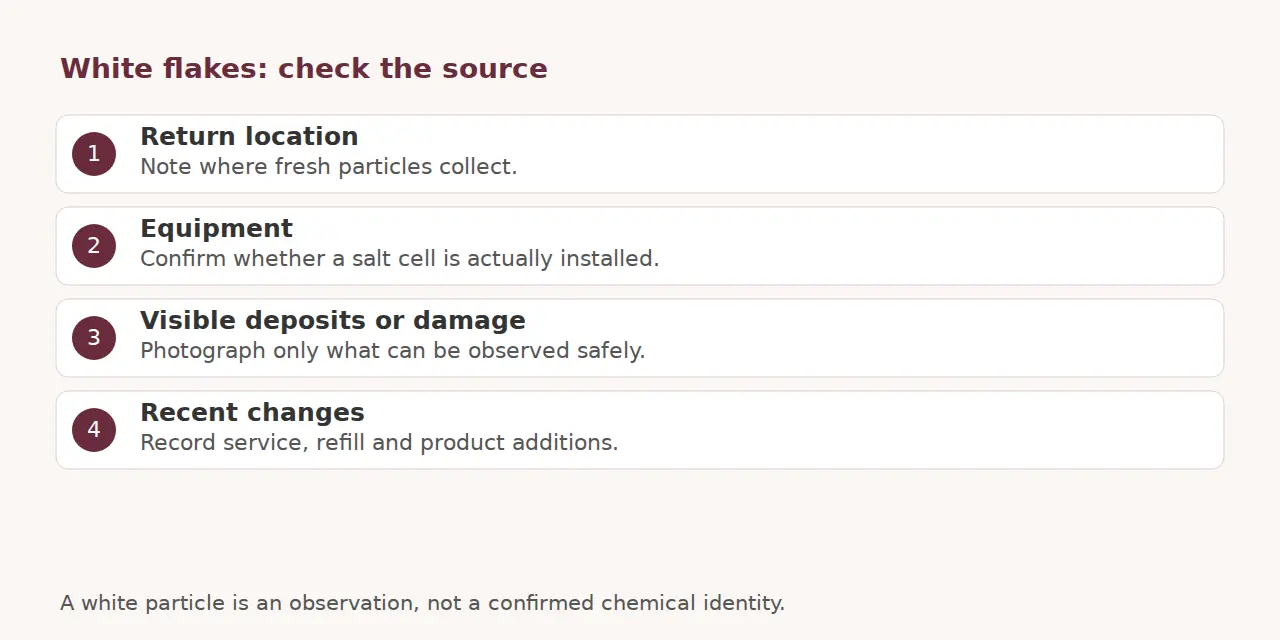
Inspect before deciding to clean
Identify the exact cell model and use its current manual. Exterior photographs and visible deposits are owner observations; removing a plumbed component requires its shutdown, isolation and pressure-relief procedure. Stop if access is unfamiliar or electrical equipment is wet or damaged. Never bypass flow protection, reach into running equipment or open a pressurized system.
Our salt-cell cleaning guide covers the inspection-first decision. A white particle on the floor doesn’t justify routine acid washing of a clean cell.
For the cited IntelliChlor model, rinsing and condition-based cleaning are part of the procedure, and excessive acid washing damages the blades. Leave scraping, improvised solutions and home acid tests out of the investigation. If cleaning is justified, use the complete exact-model instructions and required protective measures, or have the dealer perform it.
Read the balance results together
Obtain calcium hardness, pH and alkalinity results, plus temperature and other inputs needed by the applicable balance method. Scale troubleshooting guidance treats balance as part of the investigation. A single hardness value leaves out important context.
Use the calcium-hardness guide for those distinctions. Follow finish, equipment and product requirements when correcting a confirmed imbalance. Lowering the whole pool’s pH aggressively to dissolve an unidentified particle threatens other materials and bypasses a sound diagnosis.
If the surface is peeling, a fitting is deteriorating or unfamiliar debris continues after approved care, request inspection. Describe the observed damage instead of labeling every white piece “calcium.”
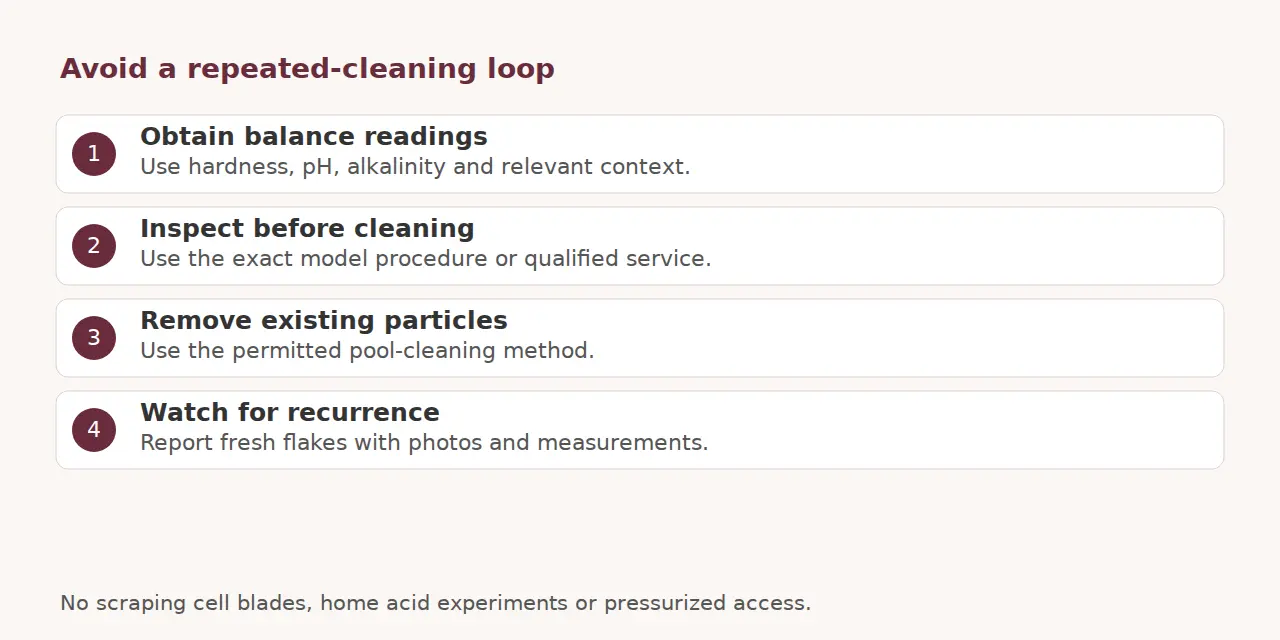
Remove the old debris, then watch for new flakes
Use the pool’s permitted vacuuming or collection method once the source has been assessed. Note where fresh particles appear afterward. Repeated removal without investigating the source turns maintenance into a loop. Proper filter maintenance remains part of the plan; draining is no automatic solution.
Continue sanitizer and pH testing, and keep swimmers out while water or equipment condition is uncertain. Give a service provider the photographs, model, recent changes and results if the flakes persist.
Research checked 2026-10-05.