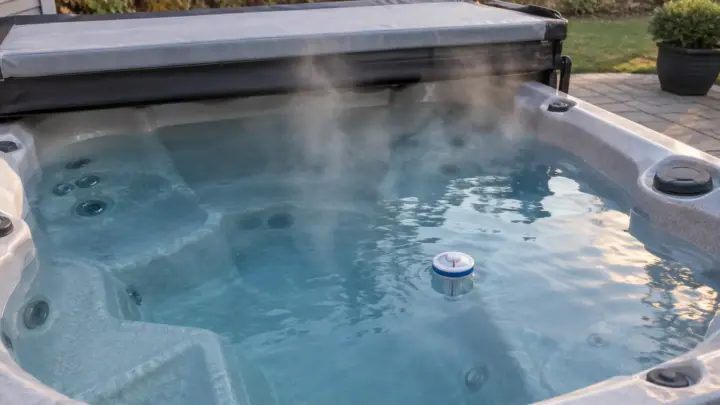
Shock a hot tub by adding 1½ teaspoons of sodium dichlor per 250 gallons (950 liters) with the jets running, or 4 tablespoons of non-chlorine shock (MPS) per 250 gallons. Leave the cover open for at least 20 minutes, and do not get in until free chlorine has fallen below 5 ppm. Those are Hot Spring’s figures for its spa, and the rate on your product label or in your own manual controls.
Shock to clear chloramines, not as a substitute for daily sanitizer. Hot Spring says a strong chlorine smell is combined chlorine (chloramines) and that shocking eliminates it.
How much for your tub
Hot Spring’s rate is per 250 gallons, so scale it by volume: (gallons ÷ 250) × 1.5 teaspoons of dichlor, or × 4 tablespoons of MPS.
| Spa volume | Sodium dichlor | MPS (non-chlorine) |
|---|---|---|
| 250 gallons (950 L) | 1.5 teaspoons | 4 tablespoons |
| 400 gallons | 2.4 teaspoons | 6.4 tablespoons |
| 1,500 liters | 2.4 teaspoons | 6.3 tablespoons |
Worked example for a 400-gallon tub: 400 ÷ 250 = 1.6, and 1.6 × 1.5 = 2.4 teaspoons of dichlor (1.6 × 4 = 6.4 tablespoons of MPS). In litres, 1,500 ÷ 950 = 1.58, and 1.58 × 1.5 = 2.4 teaspoons. Round to what your spoon can measure. Hot Spring says dichlor is 6x stronger than MPS, and other brands’ products differ in strength, so a label rate beats any scaled figure.
Step by step
- Test first. Check free chlorine and pH so you know your starting point. Hot Spring’s recommended free chlorine is 3–5 ppm; the PHTA ideal for spas is 3.0–5.0 ppm, and CDC says at least 3 ppm.
- Prepare the tub. Take the pillows off. Bullfrog says to remove them when shocking and to keep the cover off for at least 30 minutes afterwards.
- Add the shock slowly into the filter compartment with the jet pump running (Hot Spring).
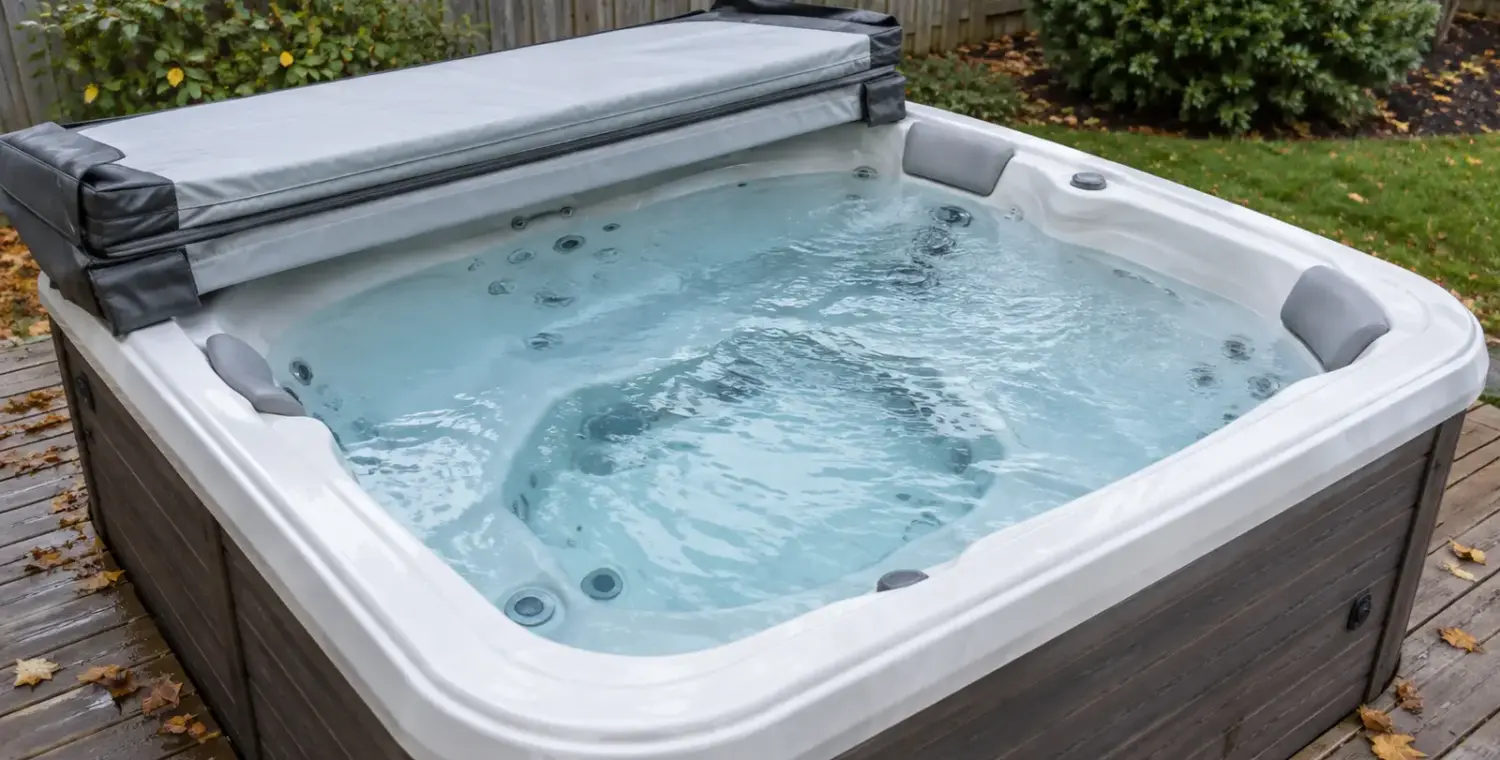
- Run the jets, and leave the cover open for a minimum of 20 minutes so the oxidizer gas can vent. Hot Spring says trapped gas may eventually cause discoloration or degradation of the bottom of the cover.
- Retest. Do not use the spa until free chlorine has fallen below 5 ppm. Hot Spring says to allow the Free Available Chlorine to fall below 5 ppm before using your spa; the PHTA maximum for spas is 10.0 ppm.
How often
Hot Spring says a weekly or monthly super chlorination or shock may be required, depending on your sanitation program. A strong chlorine smell, or combined chlorine above PHTA’s spa maximum of 0.5 ppm, is a signal to do it sooner. Increasing chlorine to 5 ppm for 24–48 hours, Hot Spring says, removes excess waste and chloramines. If the tub has a high reading afterwards, see hot tub chlorine too high. If the reading keeps dropping, see hot tub chlorine too low.
Which product
- Do not use trichlor. Hot Spring says trichlor has a very low pH (2.6) and dissolves too quickly in hot water, giving extremely high chlorine that will damage the spa.
- Dichlor and CYA. Hot Spring recommends sodium dichlor, but CDC recommends not using cyanuric acid or chlorine products with cyanuric acid, such as dichlor, in hot tubs. Follow your manual. Hot Spring’s manual also allows liquid chlorine (sodium hypochlorite), which has no cyanuric acid; use that product’s label rate.
- Never mix products. CDC warns that pool chemicals can injure people when mixed together. Add one at a time.
Never leave an open spa unattended, especially if children are present (Hot Spring DANGER notice). For testing, see the hot tub water testing guide; for smells, hot tub water smells bad; and for the full routine, the hot tub and spa care guide.
Sources
- Hot Spring Spas: Highlife Collection 2025 Owner’s Manual
- CDC: Home Pool and Hot Tub Water Treatment and Testing
- Pool & Hot Tub Alliance (PHTA), published by Taylor Technologies: Recommended Water Chemistry Parameters
- Bullfrog Spas: Draining, Cleaning, and Refilling your Bullfrog Spa
- CDC: Pool Chemical Safety
Research checked 2026-10-08.