An average hot tub uses about 1,699 kWh a year just to stay hot and filtered, which is about $25.58 a month ($311 a year) at the U.S. average home electricity price. The kWh figure is the U.S. Department of Energy’s estimate for a standard portable spa in standby, from California Energy Commission test data. The price is the U.S. Energy Information Administration’s average residential rate for July 2026: 18.31 cents per kWh.
Standby means the tub sitting covered between soaks. DOE says it includes power use to maintain the set temperature and to circulate and filter the water. The California Energy Commission estimated that standby operation represents 75 percent of what a spa uses. Heating up after a refill and running the jets add the rest, so a real bill runs above the standby figure.
Work out your own cost
You need two numbers: the tub’s average standby power in watts, and your electricity price per kWh from your bill.
kWh per month = watts × 24 × 30 ÷ 1,000. Cost per month = kWh × your price.
Worked example. DOE’s average standard spa draws 194 W. That is 4.66 kWh a day, or 139.7 kWh over 30 days. At 18.31 cents per kWh, that comes to $25.58 a month. Electricity prices vary a lot: EIA’s July 2026 New England average was 28.00 cents, which raises the same tub to $39.11 a month.
| Electricity price | Standby energy (194 W) | Cost per month |
|---|---|---|
| 18.31¢/kWh (U.S. average, July 2026) | 139.7 kWh | $25.58 |
| 28.00¢/kWh (New England average, July 2026) | 139.7 kWh | $39.11 |
Your tub may use more or less than 194 W. DOE’s figure comes from models certified for California, and DOE noted that the rest of the country may have shipments of portable electric spas that exceed California’s and other states’ maximum power consumption standards. Inflatable spas are smaller, but DOE noted that even the lowest standby power in the California database (40 W) over a 5,040-hour season exceeds 200 kWh per year.
What pushes the cost up or down
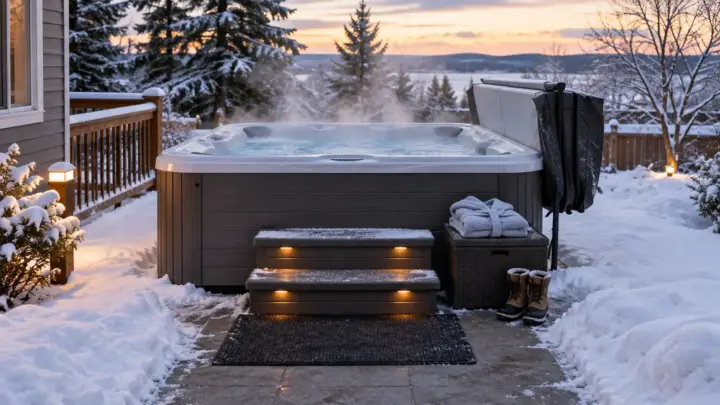
- Cold weather. Hot Spring says energy efficiency may decrease in very cold periods, as the heater will cycle more frequently. See hot tub water care in winter.
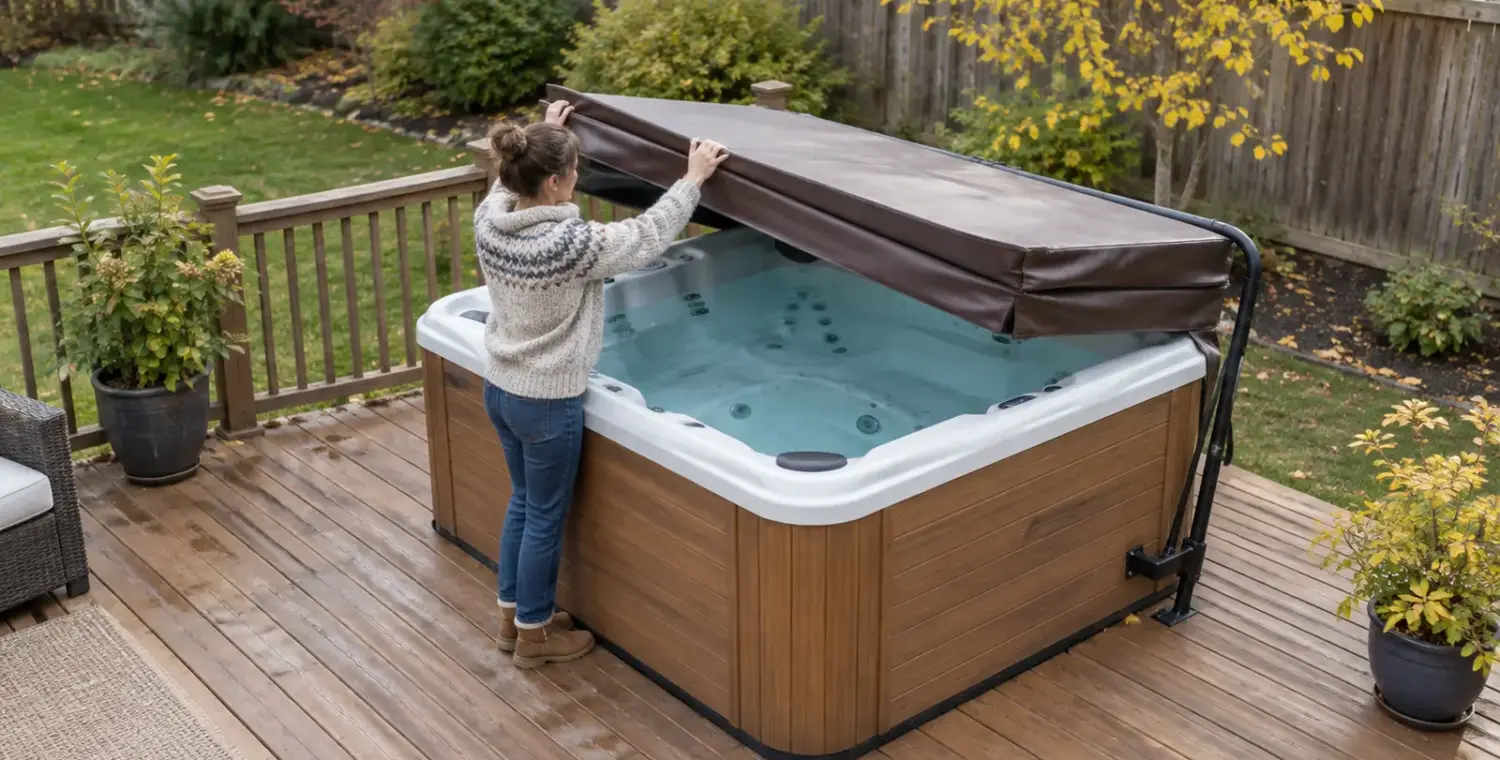
- The cover. Hot Spring says to always keep the spa covered when not in use. If yours has become heavy and wet, see waterlogged hot tub cover.
- Equipment insulation. Hot Spring says its equipment-compartment insulating kit will also help to maximize the spa’s energy efficiency.
- Set temperature when you’re away. Hot Spring says you may wish to lower the spa temperature by five or ten degrees before a trip, while keeping the water warm so it can’t freeze.
- Refills. Every refill has to be heated from tap temperature, so drain only as often as you need to.
If the tub runs constantly but can’t hold temperature, see hot tub won’t heat. For the full routine, see the hot tub and spa care guide.
Sources
- U.S. Department of Energy: Energy Conservation Program: Final Determination of Portable Electric Spas as a Covered Consumer Product
- U.S. Energy Information Administration: Electric Power Monthly, Table 5.6.A: Average Price of Electricity to Ultimate Customers by End-Use Sector, by State (July 2026)
- Hot Spring Spas: Highlife Collection 2025 Owner’s Manual
- Hot Spring Spas: How to Winterize Your Hot Tub
Research checked 2026-10-12.