Sand that repeatedly arrives through pool returns deserves a filter inspection, especially when it begins after a media change. A damaged internal sand-retaining component is one documented cause. First confirm where the grains appear and identify the filter model; arrange service instead of opening the tank or repeatedly backwashing in hope of a cure.
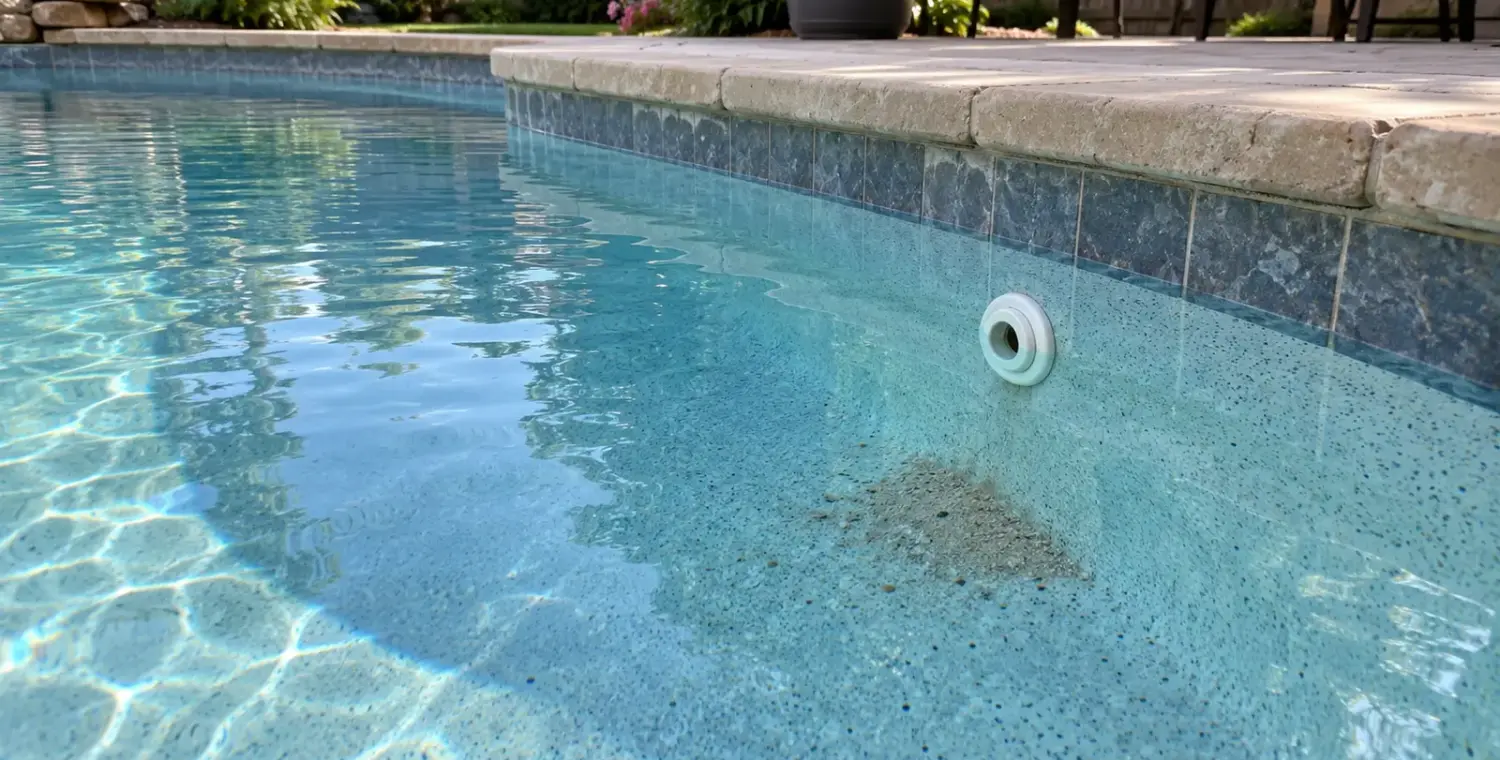
A little grit on the floor also has other possible routes into an outdoor pool. The useful distinction is material entering from outside versus material leaving the filtration system.
Confirm the source before ordering parts
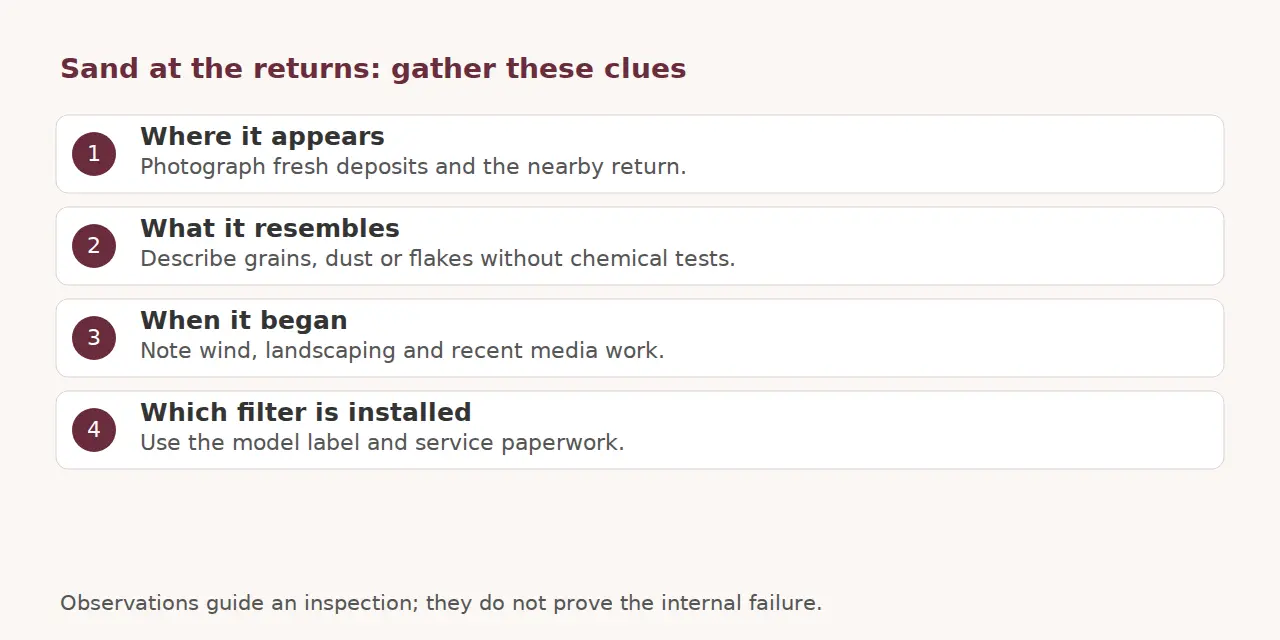
Photograph the deposit and its location from the deck. Note whether a fresh pile appears below a return during normal operation, or whether the material is scattered after windy weather, landscaping or foot traffic. These observations help a technician choose an investigation; they don’t identify an internal defect by themselves.
Describe the particles plainly: coarse grains, fine dust, soft flakes or something else. Save a sample only if it is safely accessible with normal pool-cleaning equipment. White flakes and powder need different identification from sand. Avoid a home acid test or tasting the material.
Confirm that you actually have a sand filter. Our guide to filter types helps with that starting question. A cartridge or DE installation changes the likely components entirely.
Stop before opening any pressure equipment
Never loosen a filter lid, clamp, valve or fitting while the system is pressurized. Internal work requires pump shutdown, power isolation, prevention of automatic restart and full pressure relief under the exact manual. Trapped compressed air is a serious hazard. Pentair recommends professional filter maintenance; arrange qualified service for this internal diagnosis.
Keep away from a damaged tank, leaking closure or wet electrical equipment. Use safe shutdown controls only when accessible without approaching a hazard. Let the technician decide how to inspect uncertain equipment.
The lateral assembly is a documented suspect
Sand filtration needs internal components that retain the media while carrying filtered water away. The System 3 SS design, for example, uses a lateral and hub assembly.
That model’s troubleshooting section connects sand in the pool with a broken lateral. It gives a concrete inspection lead, rather than a universal diagnosis for every tank. Ask the service provider to examine the actual retaining assembly and identify the damaged part before replacing media alone.
If this started after changing the sand
Provide the filter model, service date, installed media packaging and quantity recorded by the installer. Compare those records with the exact model’s filling instructions. A generic bag marked “sand” isn’t sufficient confirmation of compatibility.
Have the installation and internal assembly assessed together. Don’t compensate for an unknown problem by adding extra media, plugging an internal opening or changing pump speed. There is no universal sand grade, fill amount or repair part in this guide.
Why another backwash isn’t a complete repair
Backwashing addresses accumulated material in the bed. It cannot restore a broken retaining component. Use the backwashing decision guide for ordinary cleaning, keeping repair diagnosis separate. EPA’s pool-efficiency guidance also makes proper filter maintenance relevant to water use.
Record pressure alongside the known clean-system baseline and pump setting. Our pressure troubleshooting guide explains the context. Pressure alone neither identifies a broken lateral nor clears the assembly for opening.
Make the service visit and follow-up useful
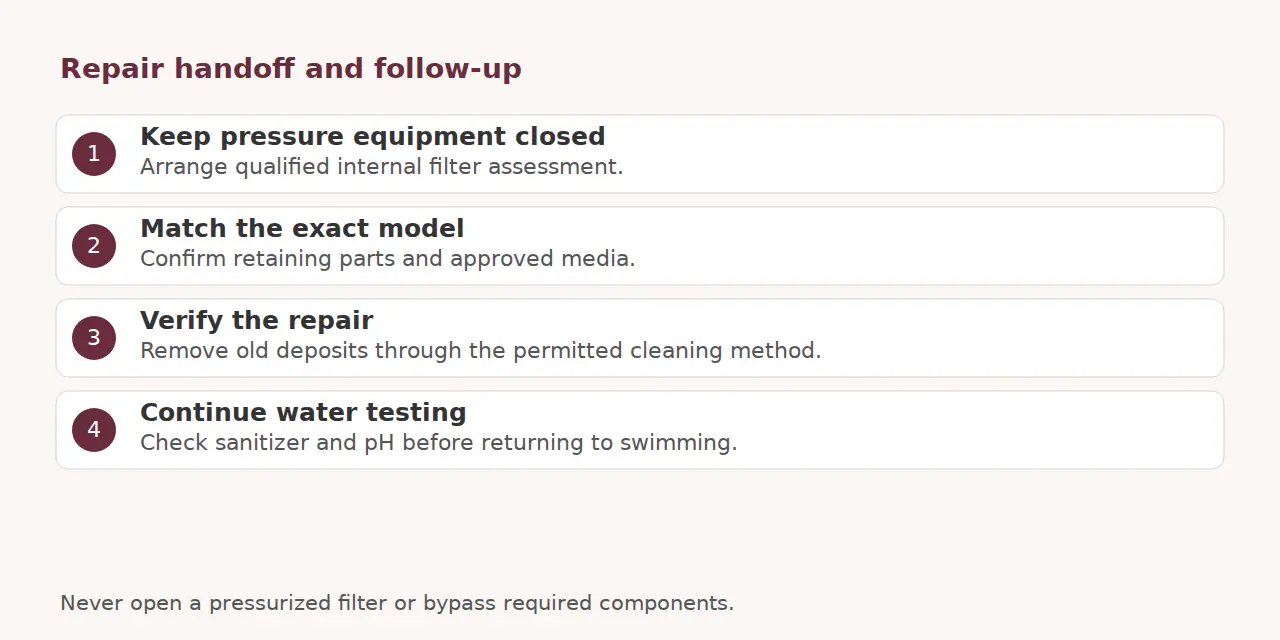
- Send model information and photographs of the deposit.
- Explain whether grains appear at returns and when the issue began.
- Include recent media work, valve changes and service records.
- Ask which failed component was confirmed and how correct operation will be checked.
After approved repair and startup, use the permitted cleaning method to remove the old deposit, then watch for fresh material. Continue sanitizer and pH testing. A clean floor shows that a visible symptom improved; safe swimming also requires sound water and equipment conditions.
Research checked 2026-10-05.