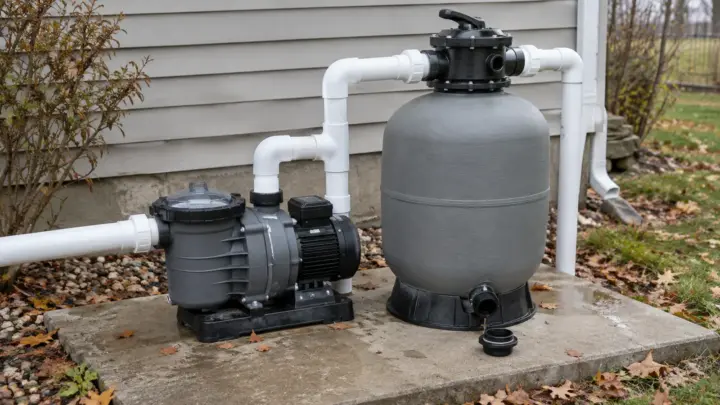
Backwash a sand filter when it reaches the cleaning trigger in its own manual, measured against its clean operating baseline. Inspect regularly, especially after a heavy debris load, but avoid treating every week as an automatic cleaning deadline. A rising pressure reading and declining flow are clues to evaluate together.
If pressure changes suddenly, the tank or valve is damaged, or the pump loses its water supply, stop and investigate safely instead of waiting for a cleaning threshold.
Record the clean baseline first
After proper cleaning and restart, record the filter pressure with the system operating normally. Note pump speed or mode, valve configuration and any attached cleaner. Compare later readings at the same documented conditions; a different pump mode makes the comparison less useful.
Use the same units and a functioning gauge. A stuck or unreadable gauge needs assessment before you rely on it. Never unscrew it under pressure. If no valid baseline exists, have it established after service rather than adopting another pool’s “normal” number.
Our filter-pressure guide separates a cleaning question from other high- and low-pressure faults.
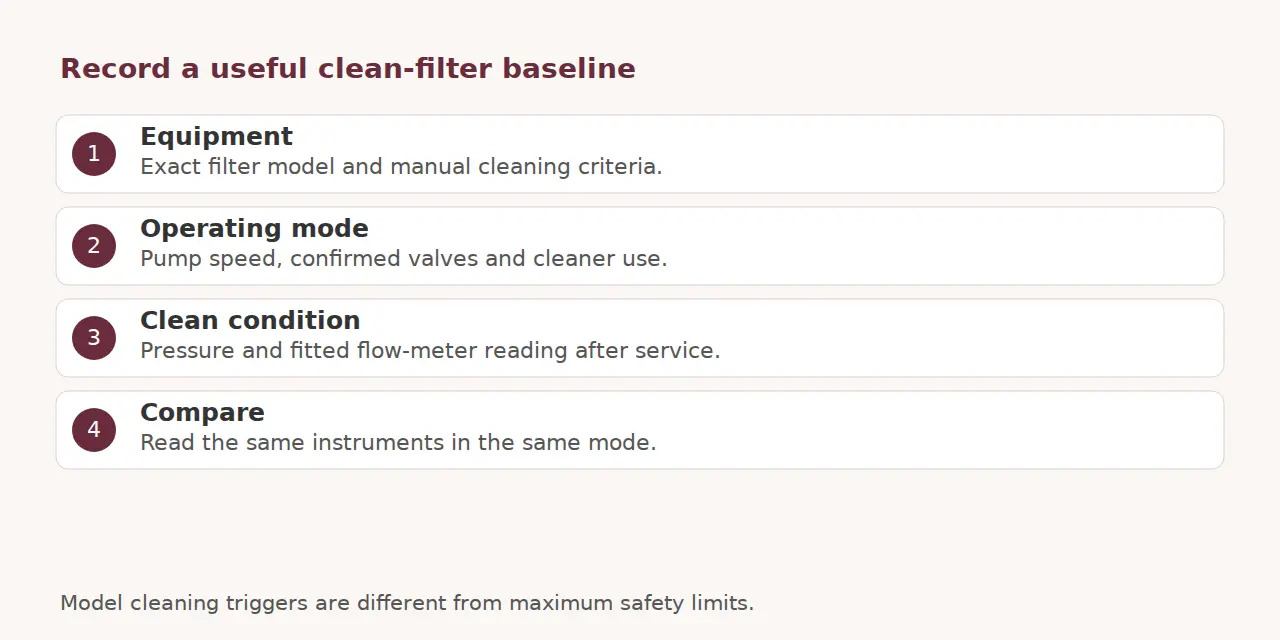
Use a model-specific rise, not an absolute pressure
The reviewed ProSeries manual gives an 8–10 psi rise above initial clean pressure for its listed sand-filter models. The Sand Dollar/Cristal-Flo II guide gives a 10 psi rise. These are related examples, but the instructions belong to their respective equipment. Use your exact manual rather than averaging them into a new rule.
Both comparisons start at the clean reading. They are not instructions to backwash every pool when the dial itself reads 8, 10 or any other universal number. A maximum working-pressure rating is a safety limit, not a target or a reason to postpone abnormal-operation checks.
A flow meter adds another useful observation when the system is set up for one. The Sand Dollar/Cristal-Flo II manual also identifies a 30% decrease from clean flow as a cleaning criterion. Apply that only within the model’s instructions and unchanged operating conditions, not to a weak jet estimated by feel.
Expect the inspection need to change with conditions
Windblown dust, pollen, heavy rain and pool clean-up change what reaches the media. Check the baseline comparison after unusual loading. A quiet period and a debris-heavy week need different attention even when the calendar dates look similar.
Repeated cleaning without a reason wastes water and can undermine filtration on the reviewed Sand Dollar system. Keep a reminder to inspect; let the actual condition and equipment instructions determine the cleaning decision.
Remove accessible basket debris through approved owner procedures before blaming the sand bed. Weak flow with low pressure points toward a different investigation than gradually rising pressure. Use the pump circulation guide for those observations.
Before a backwash, confirm the safe procedure
- Identify the actual sand filter, valve and correct cleaning instructions.
- Confirm the permitted waste-water destination under local rules.
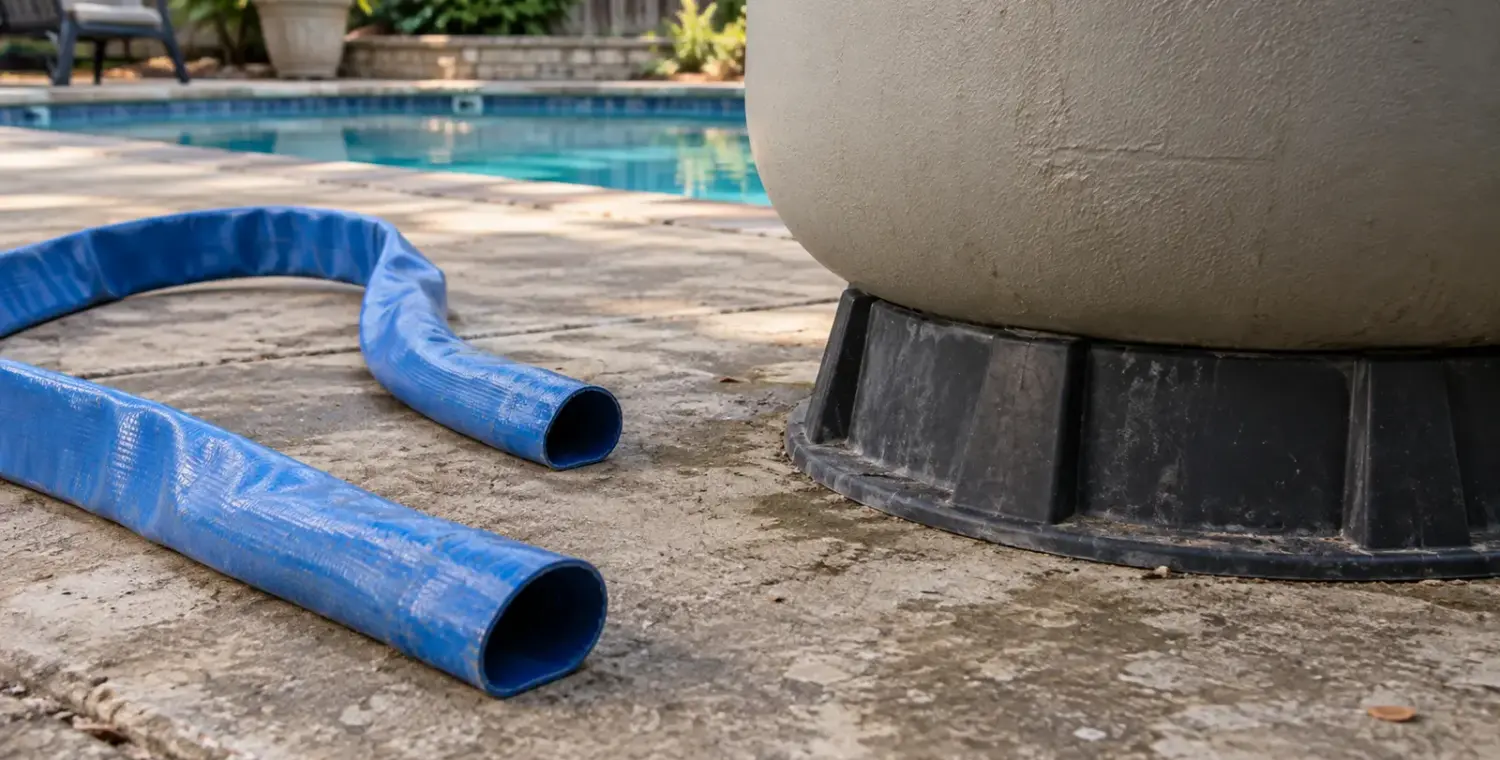
- Keep the approved discharge route free of blockage and hose kinks.
- Stop the pump and prevent automatic starts before every required valve change.
- Follow the manual’s pressure-release, standing-clear and restart steps.
- Maintain the required pool water level; stop before air enters the intake.
Backwash and rinse durations differ between models and between initial commissioning and routine cleaning. Follow the applicable procedure and endpoint instead of borrowing a fixed number of minutes. Do not open a filter tank or valve housing as part of an improvised cleaning routine.
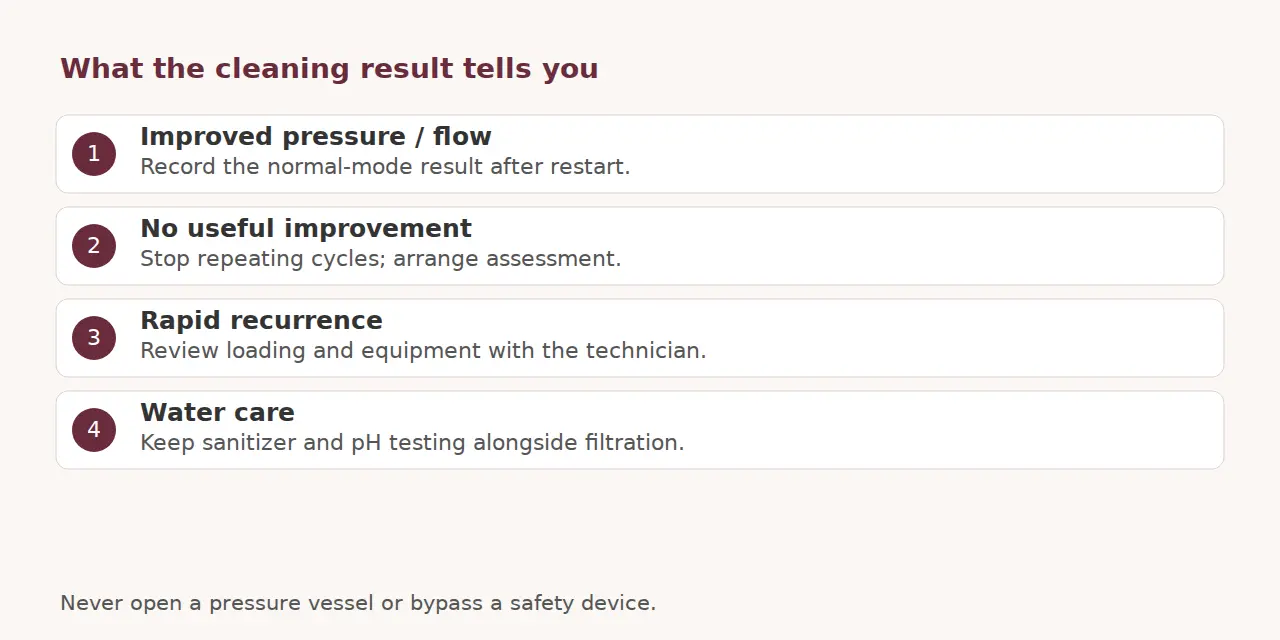
Check the result after proper restart
Record the new pressure under the same mode and observe normal return flow. An improved reading is useful; persistently elevated pressure or rapid recurrence deserves investigation. Don’t raise pump speed or repeat water-wasting cycles indefinitely to mask a restriction.
Provide the technician with the clean record, before/after observations, equipment models and recent changes. Restricted returns, deposits, unsuitable flow or internal damage are different problems. Leave internal media work, pressure-system repairs and chemical cleaning to qualified advice.
Keep sanitizer and pH testing alongside filter care. Clearer water after backwashing does not establish safe chemistry. Stay clear of suction outlets, and close the pool for a damaged or missing drain cover until corrected.
What if the filter isn’t sand?
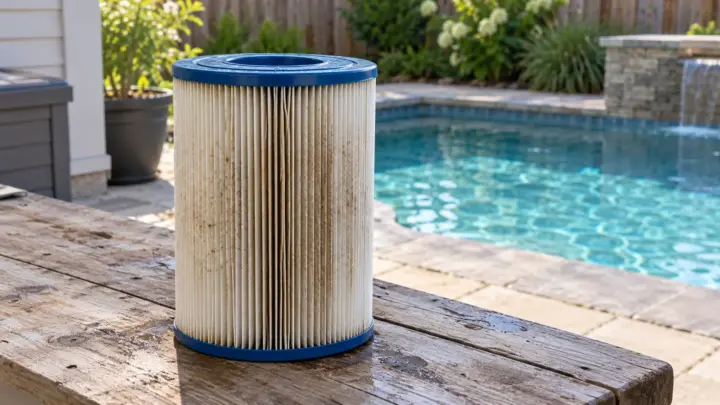
Stop and identify it. Cartridge cleaning and D.E. media care have different requirements, even when tanks look similar. Our filter-type comparison explains the ownership differences. This sand-filter timing guide isn’t a cleaning recipe for those systems.
Research checked 2026-10-03.