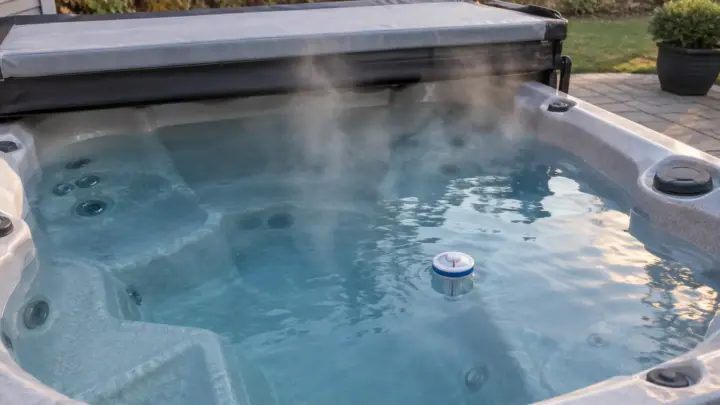
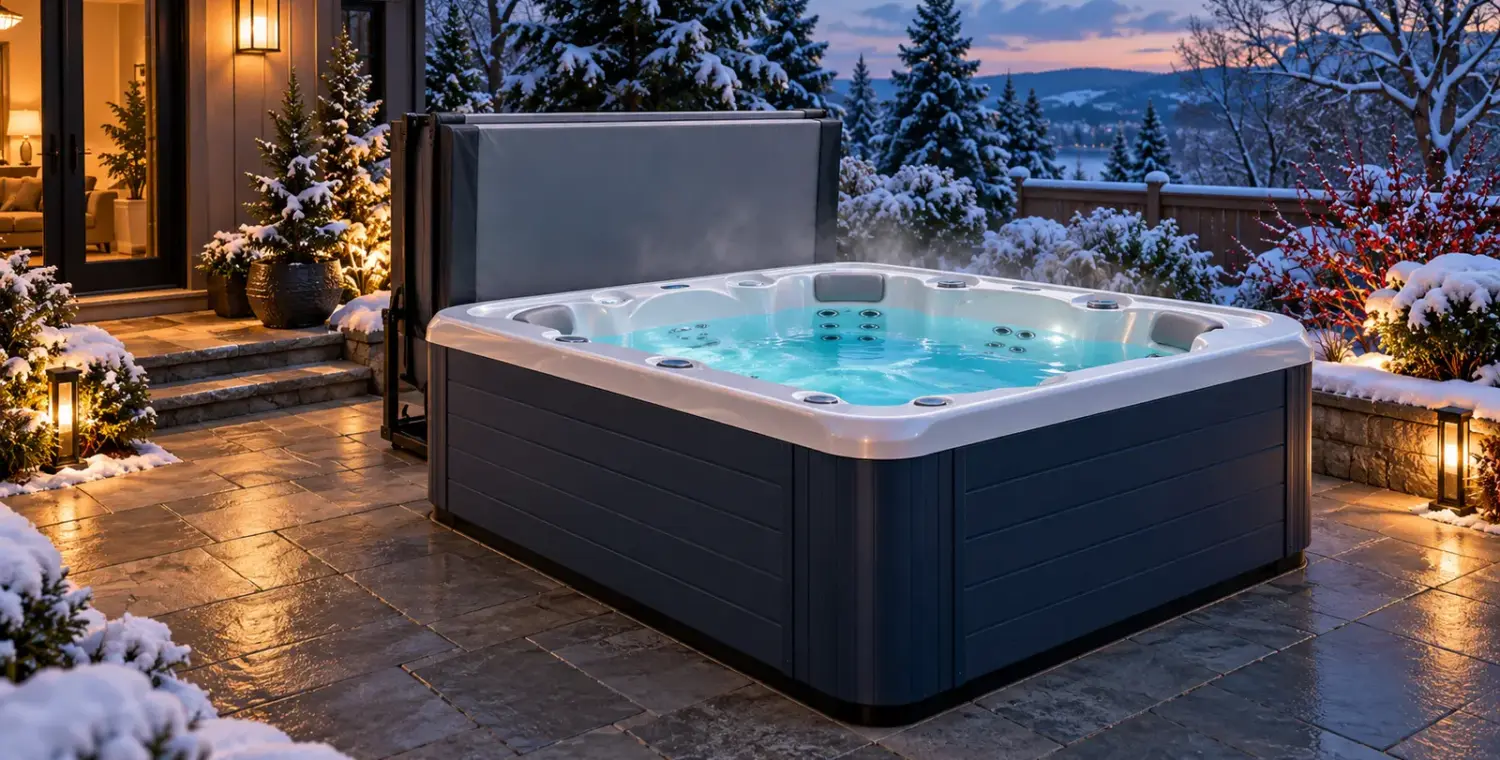
Winter hot-tub care has two priorities: keep the water properly treated and keep the circulation and heating system working. A clear surface does not prove the water is safe, and warm water in the shell does not prove every pipe is protected from freezing.
This guide is for a spa approved for winter operation. Check the manual for your model and region first, especially for portable or inflatable spas with outdoor-temperature restrictions. If you are closing the spa completely, you need its full winterization procedure rather than a reduced version of routine water care. For inflatable models, see whether you can use an inflatable hot tub in winter; for a complete shutdown, see how to winterize a hot tub.
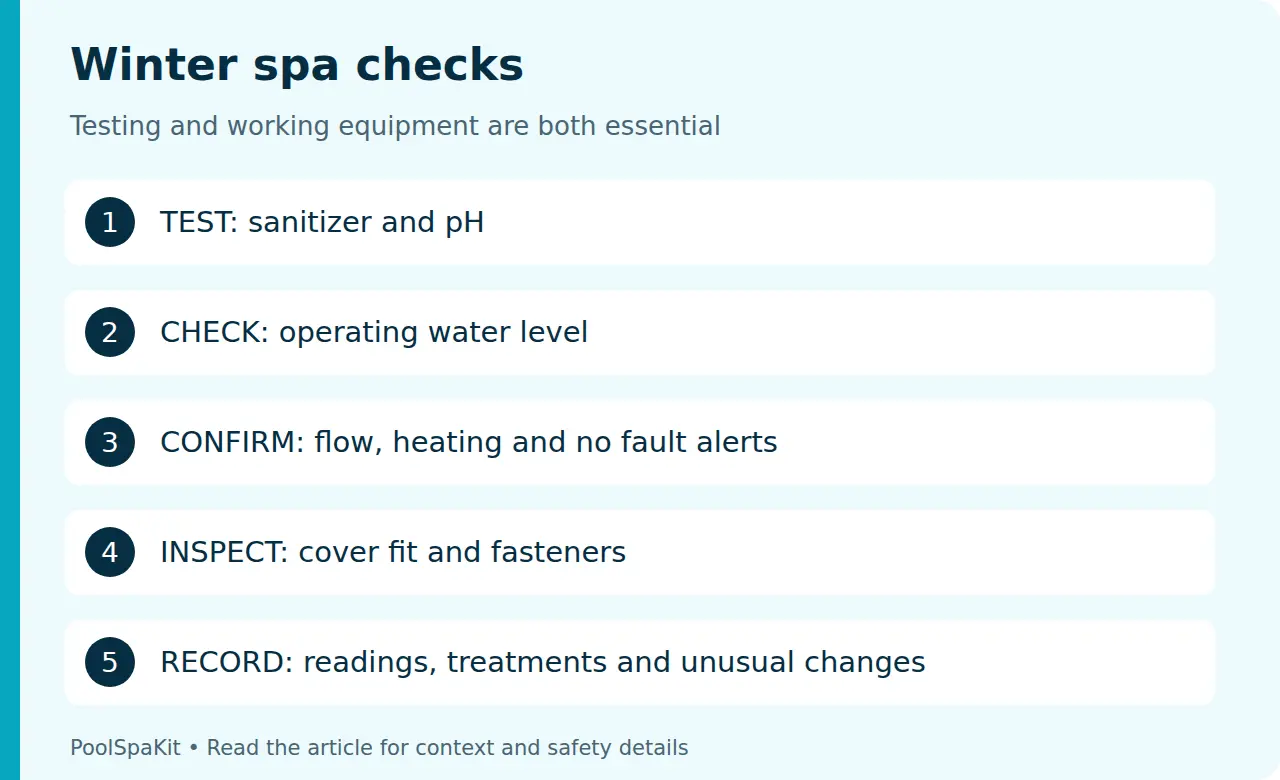
Your winter routine at a glance
- Test sanitizer and pH routinely, with additional attention around heavy use.
- Check the actual water level and confirm circulation and heating operate normally.
- Keep filters clean according to the model’s maintenance instructions.
- Inspect the insulated cover, fastening points and fit.
- Record unusual water loss, alarms and changes in temperature.
- Arrange monitoring before travel and keep the dealer’s emergency contact available.
Make the checks easy to do. Keep the test kit in its permitted storage conditions, not in a freezing outdoor cabinet. Keep a short log with the date, readings, water temperature and any treatment. A pattern of declining sanitizer or water level is more useful than an isolated “looks fine.”
Keep sanitizer and pH under control
Winter air does not remove the need for disinfection. People still introduce contaminants, and the spa is still warm when it is operating. Use the sanitizer system approved for the spa and test it with a kit that measures the relevant parameter.
The following are CDC’s current hot-tub user guidance, not amounts of product to add. Your label may specify a narrower operating range or additional restrictions. If the instructions conflict, ask the manufacturer to reconcile them before changing treatment or using the spa.
| Check | CDC guidance | How to use it |
|---|---|---|
| Chlorine | At least 3 ppm; seek advice if above 10 ppm. | A minimum is not a target to exceed indefinitely. Follow the product’s permitted use range. |
| Bromine | 4–8 ppm. | Use a bromine-appropriate test and the approved treatment system. |
| pH | 7.0–7.8. | Check alongside sanitizer rather than judging water by appearance. |
| Water temperature | No higher than 104°F / 40°C. | This is a ceiling, not a recommendation for every person. |
CDC’s home-water guidance recommends testing sanitizer and pH at least twice daily and more often with heavy use. Do not replace testing with a fixed scoop added after every soak. The necessary treatment depends on measured water conditions, volume and the product concentration. Our guide to hot tub pH and alkalinity covers the balance readings that sit alongside sanitizer.
A real disagreement about stabilized chlorine
CDC advises against cyanuric acid and chlorine products containing it in hot tubs. Some manufacturer programs differ: Hot Spring’s 2025 Highlife manual specifies sodium dichlor for its manual-chlorine program. Dichlor is stabilized chlorine. These are genuinely different recommendations.
Do not silently treat either as universal. Ask your spa manufacturer or qualified service provider how its approved program aligns with current public-health advice. Do not switch sanitizer types, combine systems, or substitute pool tablets on your own. This guide does not endorse an unsupervised conversion.
Add chemicals safely, with the required circulation
Read the actual label each time. Use its protective equipment, addition method, waiting interval and instructions for circulation. Spa manuals can specify particular addition locations and cover-open periods; they are not interchangeable between models.
Never mix chlorine with acid, combine different chlorine products, or mix products together in a bucket. Open and handle one container at a time. Add treatments separately, allowing the circulation interval each label requires. Only predissolve when the label explicitly directs it.
“Shock” is a treatment category, not one chemical. A non-chlorine oxidizer is not automatically a substitute for the spa’s required sanitizer. Decide whether an oxidizing treatment is needed within the approved care program; do not use it to mask a circulation failure or persistently dirty water.
If the pump is not circulating, stop and seek model-specific advice before adding chemicals that require circulation. Secure stored products in their original containers, protected from moisture and separated from incompatible materials. Keep children and pets away during handling.
Check circulation, filtration and water level
Confirm normal operation in the way your manual describes: expected return flow, scheduled filtration, heating behavior and any fault messages. A massage pump, a dedicated circulation pump and a filtration schedule may perform different jobs. Do not assume that hearing a motor means all required flow is present.
Inspect and clean filter cartridges on the manufacturer’s schedule, and sooner when its guidance calls for it. Follow shutdown instructions before removal. Rinse or use an approved cleaner as directed, and replace damaged or worn cartridges. Do not operate with the filter removed unless the manual specifically permits that procedure.
Keep the water within the model’s operating marks. Hot Spring notes that cold, dry conditions can increase evaporation and that low water can interfere with circulation. Check after use and during routine inspections. Investigate unexplained or rapid loss rather than assuming it is evaporation.
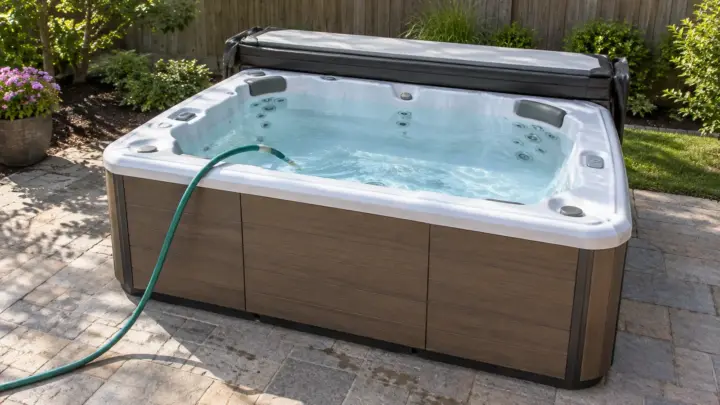
Plan topping up before the hose or outside tap freezes. Do not introduce water in a way that exceeds the spa’s permitted fill temperature. After a substantial top-up, test again and make only the adjustments the readings justify. Keep the hose from becoming a slip or trip hazard.
Use the cover well and inspect it closely
A fitted insulated cover helps retain heat and water. Inspect the seal around the rim, hinge area, seams and fasteners. A damaged, poorly fitting or unusually heavy waterlogged cover needs attention; request a compatible replacement rather than relying on a loose tarp as equivalent insulation.
Clear accumulated snow using the cover manufacturer’s method. Avoid sharp tools and do not climb or stand on the cover. Use the lifter as designed, and keep children from accessing the spa while it is open.
Close and secure the cover after use, except during any supervised label- or manual-required ventilation interval following treatment. Do not shorten that interval to save heat. Keep the access route clear and lit so routine checking is still practical in winter weather.
Freeze protection needs an operating system
Automatic freeze protection depends on the spa’s sensors, controls, power and working pumps. Jacuzzi describes models that activate pumps when freezing conditions are detected. That does not make the system effective during a power failure or guarantee protection when water level or circulation is inadequate.
Read what the mode actually does on your model. Check whether a sleep, economy or vacation setting changes heating or filtration, and whether it is permitted for your expected winter conditions. Do not copy a neighbor’s low setpoint without checking the manual.
Use only manufacturer-approved insulation accessories. Blocking ventilation or adding an improvised heater inside the equipment compartment creates risks the spa was not designed to manage. A phone app is useful for alerts, but arrange a person who can respond if you are away.
Vacations and extended non-use: choose a workable plan
Before travel, decide between maintained winter operation and complete manufacturer-directed winterization. Leaving a filled spa powered off is not a middle option for freezing conditions.
| Situation | Practical plan |
|---|---|
| Short trip with reliable checks | Follow the manual’s vacation program; arrange someone to check water level, operation and chemistry, and to act on alarms. |
| Long absence with a service arrangement | Confirm the actual inspection and treatment schedule, access, emergency contacts and outage response. |
| Extended absence without anyone available | Ask the dealer about complete winterization before departure. Simply draining the shell can leave water in equipment and lines. |
Leave the helper the manual, approved products and written instructions. Do not expect an untrained neighbor to diagnose electrical faults or perform emergency plumbing work. On return, verify operation and water condition before bathing, even if remote readings looked normal.
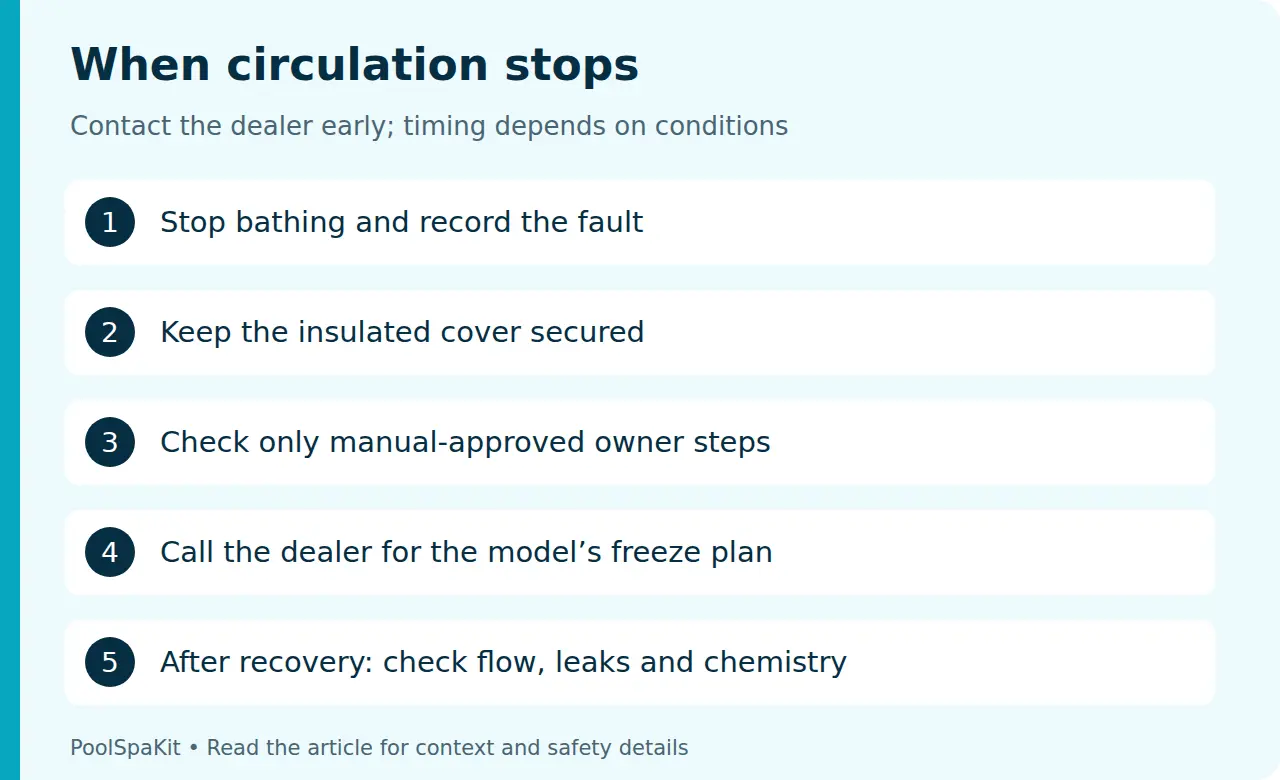
What to do if power or circulation stops
- Stop using the spa. Record the fault message, time and current conditions.
- Keep the insulated cover secured. Avoid repeated opening that loses heat.
- Determine the situation safely. Check utility outage information and the manual’s owner-level troubleshooting. Do not open electrical components or repeatedly reset a tripping breaker.
- Contact the dealer promptly. Explain outdoor conditions, outage duration, model and whether any circulation remains.
- Follow its emergency freeze-protection plan. A prolonged outage in severe cold may require professional winterization, including removal of trapped water.
There is no reliable universal number of hours a spa can sit without power. Insulation, wind, outdoor temperature and plumbing layout vary. Warm bulk water does not establish that exposed equipment is safe.
Manufacturer advice also differs in context. Jacuzzi’s Canadian outage article discourages immediate draining, while its J-400 manual calls for removing water from the spa and equipment during prolonged outages in severe freezing conditions. The sensible distinction is short-term heat retention versus a complete emergency shutdown when freezing risk demands it. Follow the exact manual and obtain help early.
Do not apply a blanket “drain it now” or “never drain it” rule. Do not pour boiling water into the spa, place a domestic heater in the cabinet, or improvise electrical connections. If freezing is suspected, have the system inspected before restarting; do not try to force a frozen pump to run.
After power returns, check before soaking
Confirm normal flow and heating, look for leaks, and resolve alarms through the approved procedure. Test sanitizer and pH before use. Treat and retest according to the approved program; do not assume restoration of electricity restores water quality. If chlorine readings stay low, see what to check when hot tub chlorine is too low.
If water is cloudy, sanitizer cannot be maintained, or the outage was prolonged, ask the service provider whether cleaning, a water change or other corrective work is needed. Schedule routine water changes when draining and refilling can be completed safely; winter is not a reason to postpone a needed water-care reset indefinitely.
Temperature and winter-use mistakes
Do not raise the water temperature beyond public-health or manufacturer limits to compensate for cold air. Follow CDC’s health precautions, including advice for pregnancy, alcohol and young children. If a health condition or medication affects heat tolerance, obtain individual medical advice.
The recurring mistakes are skipping tests because the water looks clear, leaving low water uncorrected, ignoring filtration alarms, choosing an unsuitable economy mode, treating a cover as freeze protection by itself, and departing without anyone able to respond. A consistent check-and-record routine is more useful than a bigger dose of chemicals.
Research checked September 30, 2026. We only claim hands-on testing when we’ve actually tested the product ourselves.
Sources and references
Manufacturer guidance is model-specific; public-health guidance does not set a universal winter dosing recipe.
- CDC: What You Can Do to Stay Healthy in Hot Tubs
- CDC: Home Pool and Hot Tub Water Treatment and Testing
- CDC MMWR: Pool Chemical Injuries in Public and Residential Settings
- Hot Spring / Watkins Wellness: 2025 Highlife Collection Owner’s Manual
- Hot Spring: Using Hot Tub in Winter
- Hot Spring: Hot Spring Spas Maintenance Tips
- Jacuzzi: Complete Jacuzzi Guide to Protect Your Investment Through Cold Weather
- Jacuzzi Canada: Power Outage? Hot Tub Dos and Don’ts You Should Know
- Jacuzzi: J-400 Installation and User Manual