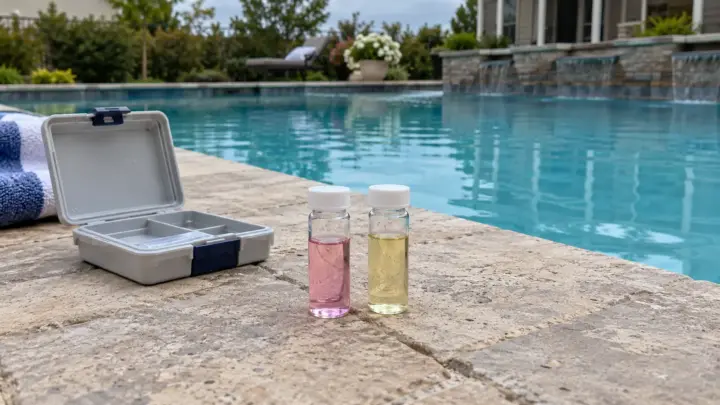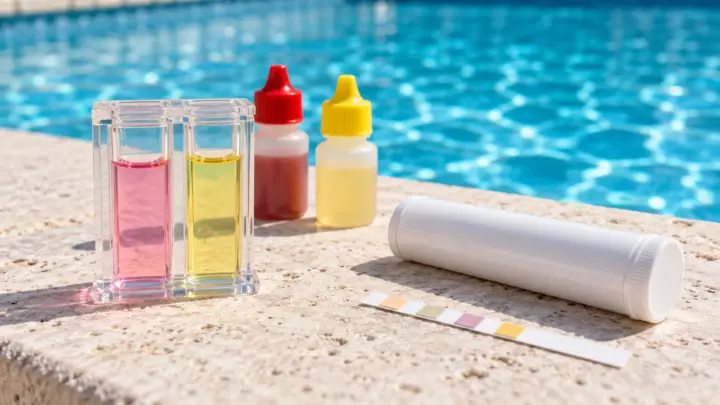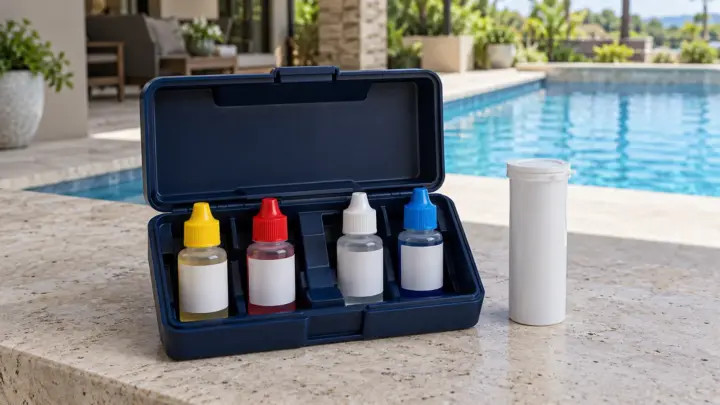
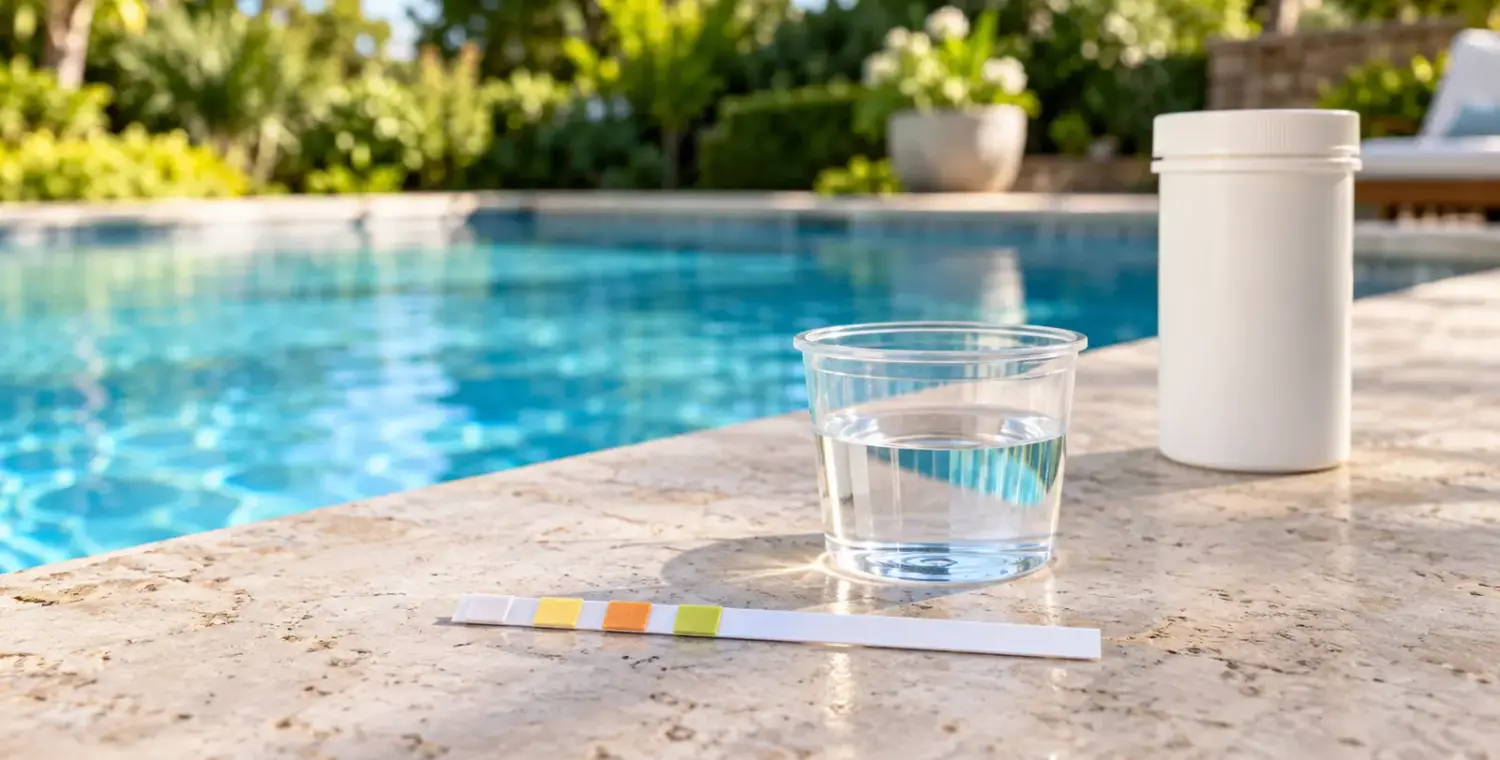
Pool test strips are simple, but the timing matters. Use dry hands, take a representative water sample, dip the strip exactly as your product directs, and compare the pads within the stated reading window. Different brands use different dip and wait times, so follow the bottle in your hand rather than a routine you remember from another kit.
Most bad strip readings come from simple handling mistakes: wet fingers, the wrong sample location, poor lighting, or reading the pads too early or too late. If a result looks surprising or would lead to a big chemical adjustment, repeat the test carefully or confirm it with a more suitable method before dosing.
Set up before you open the bottle
Check the product name, intended use and expiry guidance. A chlorine-pool strip, a bromine-spa strip and a specialty salt strip may use different procedures and charts. Confirm that your strip measures the parameter you need rather than assuming every multi-pad product contains the same tests.
Read the complete directions, including immersion, agitation, excess-water handling, pad order and reading time. Put the matching chart and a timer within reach. Arrange a clean, dry place to make your comparison without leaving supplies scattered around the pool or accessible to children.
Check that the cap closes properly and that the bottle has been kept within its storage instructions. Do not start with strips that became wet in storage, were handled with wet fingers or have an uncertain history after prolonged heat. An unexpired date does not repair mishandling.
Plan what you will record: date, time, parameter name, reading, units and relevant recent treatment. Keep the pool testing schedule separate from the strip procedure. Knowing when to test does not tell you how long to dip this particular strip.
Choose representative water
Follow the manufacturer’s sampling-location and depth instructions. LaMotte’s Insta-TEST handbook, for example, describes sampling below the surface and avoiding fresh-water inlets, return lines and chemical feeders. These are useful reasons to choose ordinary pool water rather than a local stream that may not represent the wider pool.
Use a safely reachable location. Do not lean dangerously over deep water or enter the pool simply to reach a sample. Where the product permits a collected sample, use the specified clean vessel and sample technique. Test promptly onsite rather than carrying an aging sample through a hot afternoon.
After treatment, follow the product’s mixing, circulation and retesting directions. There is no universal wait that applies to every product and situation. A reading beside recently introduced chemical is not a reliable shortcut around those directions.
For spa testing, check the strip and spa instructions concerning air jets and sample collection. LaMotte specifically advises testing its strips with spa jets off. Do not change a pool’s operating equipment merely to imitate a procedure intended for a different system.
If two areas repeatedly give different readings, record the locations and discuss circulation and sampling with a qualified provider. Do not simply average the numbers and assume the entire pool is suitable for use.
Keep moisture and fingers away from the pads
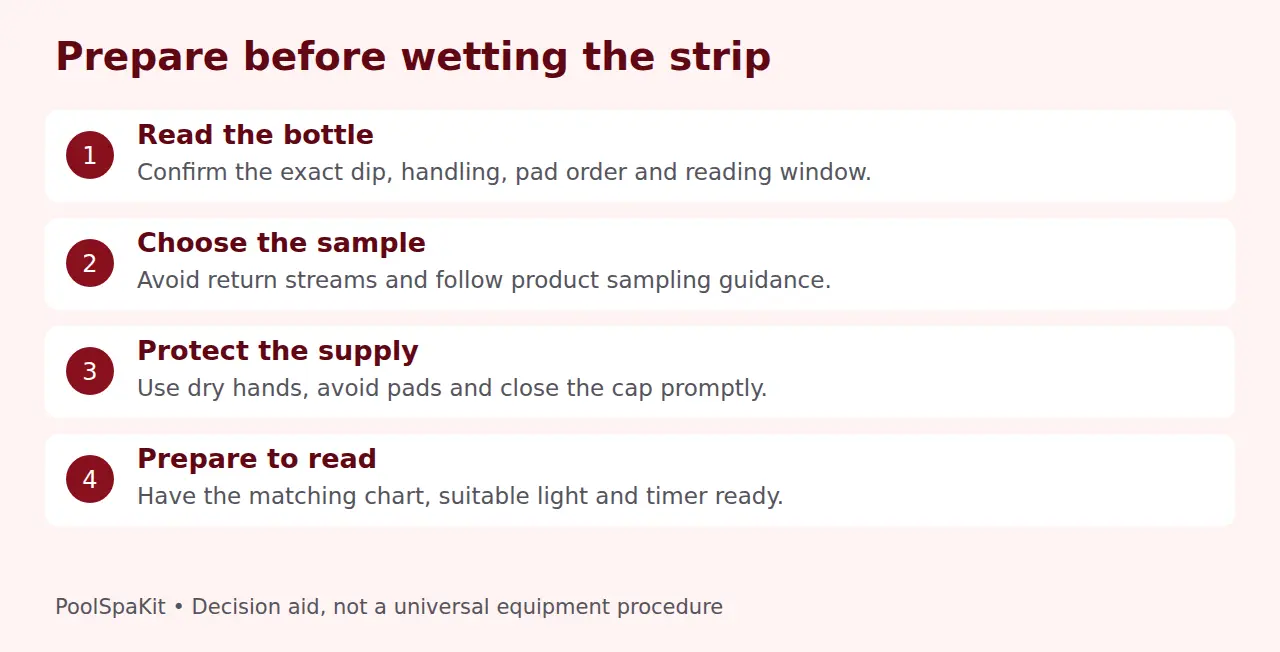
Dry your hands completely before opening the container. Remove one strip using the manufacturer’s handling method and avoid touching its reactive pads. Close the cap promptly before you approach the water so an accidental splash cannot wet the remaining supply.
LaMotte’s handbook explains that moisture can start the pads reacting before testing. That makes dry handling part of the test itself, rather than merely a tidy storage habit. Keep unused strips in their original protected container instead of a pocket, open tray or unlabeled bag.
Do not return a wet or handled strip to the bottle. If several strips fall onto a wet surface, set the affected supplies aside and obtain replacements or manufacturer advice. Do not assume that drying the pads restores their original condition.
Dip exactly as directed, not by a remembered routine
Cover the required pads with water for the prescribed contact time. Some products require particular movement or orientation. Use the directions for the actual product in your hand, including any specialty procedure that differs from ordinary multi-pad testing.
Do not assume that shaking is always wrong or always required. Likewise, a longer soak is not automatically a more accurate test. Follow the stated removal orientation and excess-water handling. Wiping the pads or pressing them against a towel can introduce another unapproved step.
Manufacturer educational pages can be less specific than the label. LaMotte’s general tips page includes a short immersion instruction and also refers to a three-swirl method in a troubleshooting note. Its handbook directs users to the bottle’s instructions. If guidance appears inconsistent, ask the maker about your exact product instead of combining two procedures.
Practice the sequence mentally before wetting the strip: wet, remove, handle, time and compare. Keep the timer accessible without using wet hands to open the bottle again. Once the test begins, the reading window deserves your attention.
Read at the specified time in suitable light
Follow the pad order and reading window on the package. Pads do not necessarily develop at the same rate. The Insta-TEST handbook explains its chlorine-first sequence in relation to other pads needing additional development time; that is not permission to reorder every manufacturer’s strip.
Compare in natural daylight where practical, with glare controlled and tinted sunglasses removed. LaMotte and Taylor both identify lighting as a source of color-reading difficulty. A strongly colored indoor lamp can make a comparison harder even when the chemistry and timing were correct.
Use the chart supplied for that exact strip. A faded chart, a chart from another product or a screen photograph is a poor substitute. If the chart is damaged, obtain the correct replacement from the manufacturer. Do not select a convenient internet chart merely because the color blocks look similar.
If you miss the window, repeat with a fresh strip. Do not wait several minutes until a pad looks closer to the result you expected. An old strip that has dried beside the pool should not become the household’s reference for a later decision.
Record what the pad measures
Read the label beside each pad and chart scale. Free chlorine and total chlorine are different measurements. A strip reporting total hardness should not be entered as calcium hardness. The guide to pool water tests explains how these parameters fit together.
Use the manufacturer’s rules for a color between blocks, and report only the resolution the method supports. If you cannot confidently distinguish two colors, record that uncertainty. Do not invent decimal precision or choose the “ideal” block simply because it appears reassuring.
Read the entire required panel before deciding on treatment. A sanitizer result and pH result belong together in water-care assessment. A result within one printed band does not establish that every pool requirement has been met or that water is free of all hazards.
Troubleshoot an unexpected result before dosing
| What happened | Check first | Next step |
|---|---|---|
| Result changed after waiting | Required window and pad order | Repeat on a fresh strip at the correct time |
| Color is patchy or difficult to match | Wetting, light, chart and pad handling | Use product-specific interpretation or confirm another way |
| Reading conflicts with treatment history | Parameter, sample location and mixing instructions | Confirm before an additional chemical correction |
| Several tests remain implausible | Expiry, storage, contamination and test range | Replace suspect supplies and seek appropriate testing |
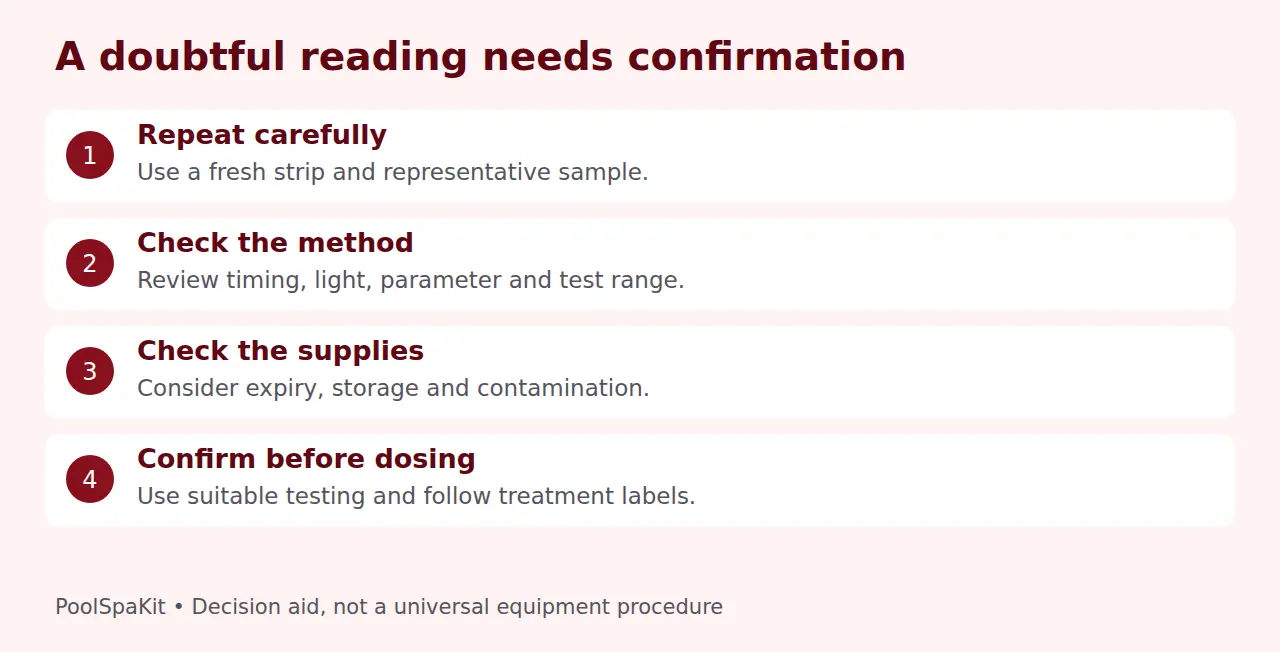
Repeat once carefully with a fresh representative sample and current supplies. A repeated result is more useful when the procedure is correct; repeating the same mistake does not establish accuracy. Note the bottle and lot information if you need manufacturer help.
CDC recommends DPD testing rather than strips for the most accurate chlorine and pH results. Use a suitable, correctly performed confirmation method when a strip is doubtful. Remember that confirmation kits also have limitations: CDC warns that chlorine above 10 ppm can bleach a DPD result and produce a misleading low or zero.
After a substantial chlorine addition, do not assume an apparent zero means another dose is required. Consult the test maker’s high-range instructions or request qualified testing. Do not improvise dilution, change reagent quantities or mix reagents from unrelated kits.
Finish the test without creating the next error
Dispose of the used strip according to its instructions and return the closed bottle to suitable storage. A dry indoor location within the maker’s limits is usually easier to control than a damp pool shed. Keep supplies secure, separate from treatment chemicals and away from children and pets.
Act only on a trustworthy result and the applicable product guidance. For a confirmed pH issue, the high or low pool pH guide provides context. Follow chemical labels, use required protective equipment and never mix treatment chemicals together.
Keep swimmers out while relevant operating conditions remain uncertain or fail your applicable requirements. A test strip helps measure water chemistry; it does not replace supervision, equipment safety or a response to contamination. Finish with a clear log entry showing the result, any correction and the required next check.