A properly used, in-date DPD test kit is the stronger choice when you need dependable chlorine and pH readings. CDC recommends DPD testing for the most accurate results and describes test strips as less accurate. Strips remain convenient for quick checks, but convenience does not make an uncertain color match a sound basis for a substantial chemical adjustment.
The choice is more specific than “strips versus drops.” Liquid kits can use different chlorine methods, different ranges and different tests for water balance. Choose a method that measures the parameter you need, then use its instructions consistently. A careful strip test can be more useful than a drop test performed with the wrong reagent or sample volume.
What each method actually does
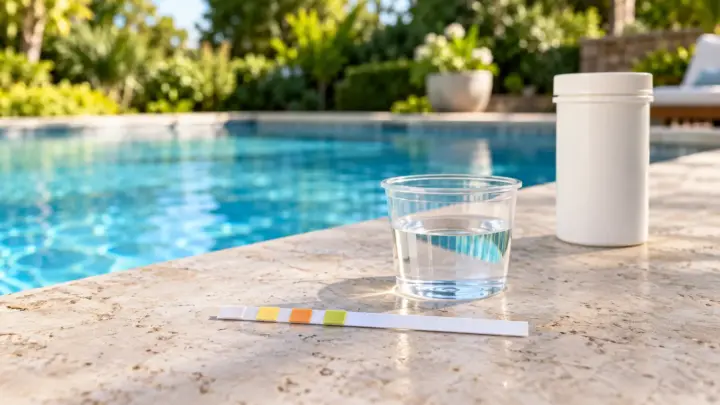
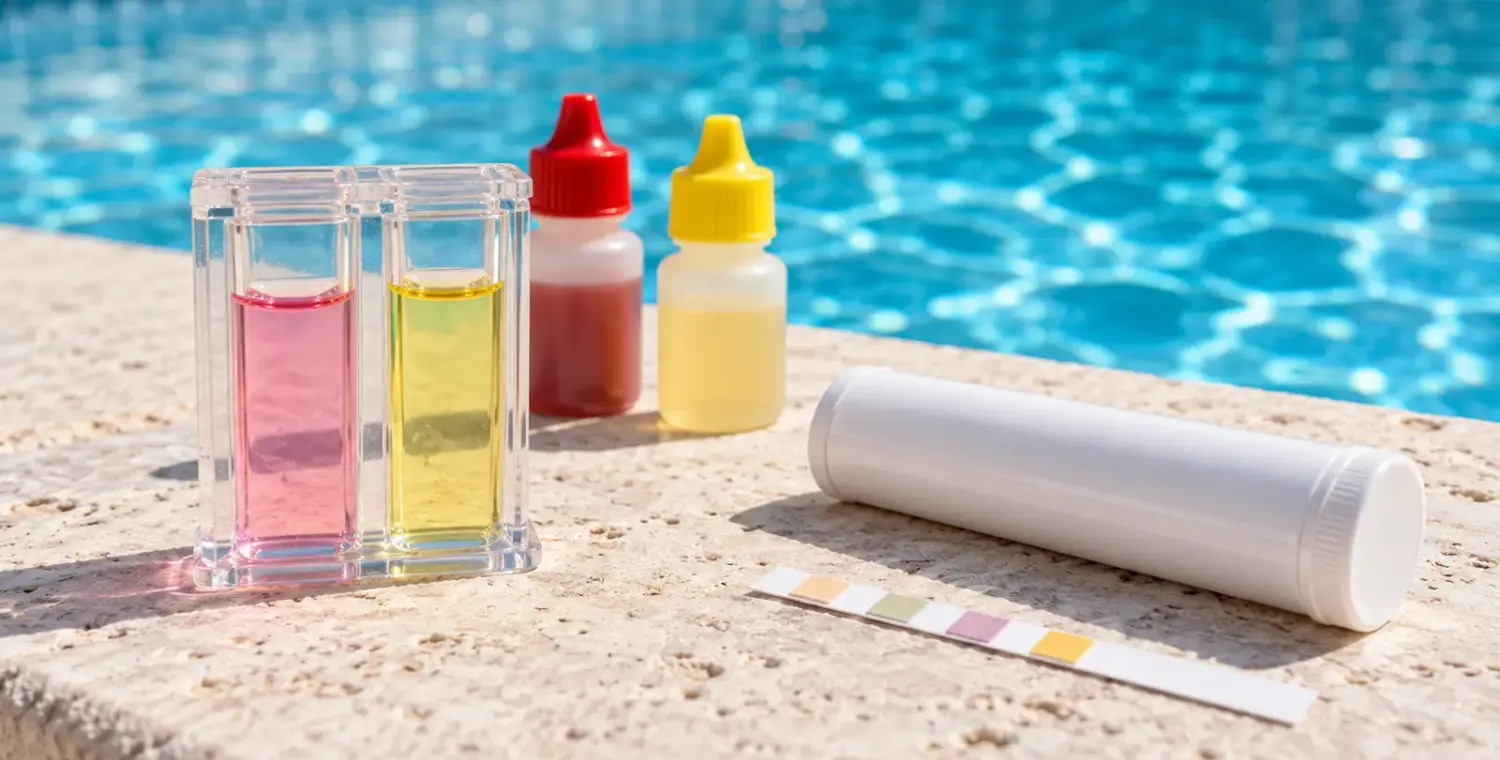
A visual test strip has reactive pads that change color after the specified contact with pool water. You compare each pad with the chart for that exact product at the required time. One strip can cover several measurements, but its printed color blocks limit how finely you can interpret the result. A value between blocks deserves an honest record, not extra decimal places.
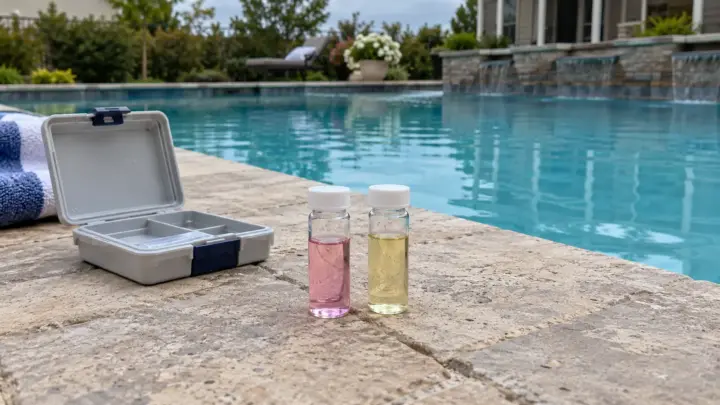
A liquid color-comparison kit develops a color in a measured sample. The user compares it with standards in a matching comparator. For chlorine, DPD color matching is one common method. An OTO-style yellow chlorine test is a different method; Taylor explains that its OT test measures total chlorine, while its DPD method can measure free and total chlorine.
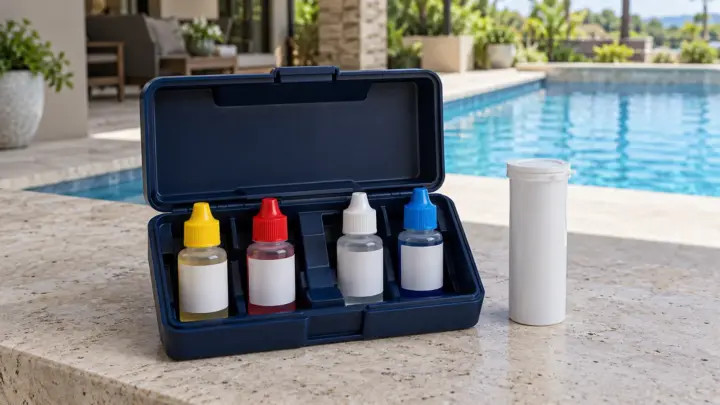
A drop-count titration is different again. Reagent is added until the specified endpoint, and the drop count is converted using the kit’s sample volume and factor. Taylor distinguishes its K-2005 color-matching DPD chlorine test from the K-2006 FAS-DPD drop test. This example explains methods; it is not a product ranking or a claim that every kit in a plastic case performs the same tests.
Electronic readers and photometers introduce their own procedures, compatibility and maintenance requirements. A strip intended for a particular reader should not be judged as though it were necessarily the same product as a visually read strip. This guide compares ordinary homeowner visual strips and manual reagent kits.
Compare the practical trade-offs
| Question | Visual strips | Reagent kit |
|---|---|---|
| Daily effort | Few handling steps, but timing and several pad readings matter | More preparation, reagent identification and cleanup |
| Reading method | Colors matched with product chart | Color match, drop endpoint or other test-specific method |
| Useful range | Limited to labeled pad ranges | Depends on exact method, sample and supplied instructions |
| Storage weakness | Moisture, heat and touched pads can undermine confidence | Reagent age, contamination and storage can undermine confidence |
| Best selection question | Does this strip cover my required checks? | Does this kit provide the measurements and resolution my care plan needs? |
The useful ownership comparison is the work involved in a completed, trustworthy test. Count instructions, supplies, expiry management and the ability of the household tester to recognize a questionable result. A complicated kit left unused does not create a reliable testing routine.
Compare replacement supplies before buying. Can you obtain the correct reagents or strips locally, identify their dates and keep them within storage limits? Avoid assuming a universal cost per test: kit contents, sample procedures, refill sizes and the tests you actually perform all affect that comparison.
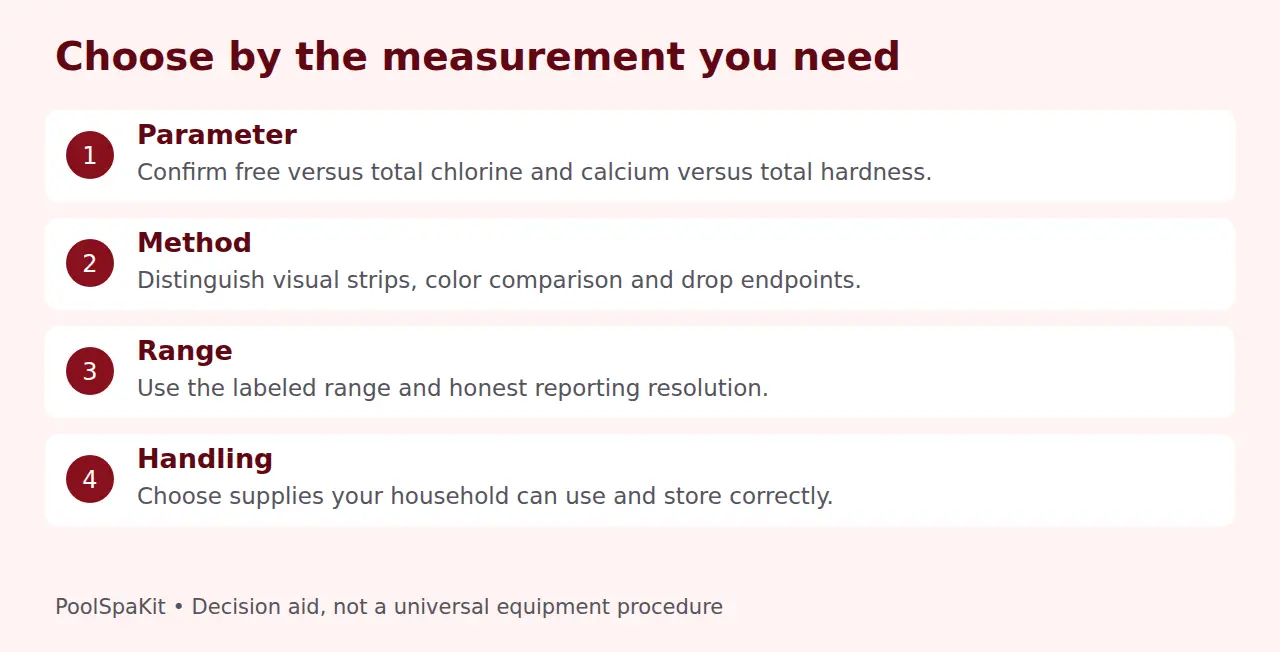
Match the measurement before comparing the numbers
Two products may disagree because they are reporting different things. Free chlorine is not total chlorine. Total hardness is not automatically calcium hardness. Read the parameter name, units, range and method before deciding that one product is inaccurate.
For example, a total-only chlorine result cannot establish how much free chlorine is available. Likewise, a strip labeled total hardness may include magnesium, while a calcium-hardness test addresses calcium. The pool water testing guide explains these distinctions and the roles of alkalinity, stabilizer and calcium in a care plan.
Check whether your chosen supplies actually cover that plan. A basic chlorine-and-pH kit may need additional tests. A multi-pad strip may also omit a required measurement or have an unhelpful range. More pads on a bottle do not prove that all important questions are answered.
Keep the result at the resolution the method supports. Do not average a broad strip interval with a finer endpoint reading to create an apparently precise middle number. Record both, investigate the disagreement and choose an appropriate confirmation method.
Where strips most often become misleading
Strip performance depends on the product-specific wetting and reading procedure. Dip duration, agitation, excess-water handling and pad order are not interchangeable across brands. LaMotte’s guidance describes several details for its Insta-TEST products; the current instructions on your bottle remain the procedure to follow.
Have a clock or timer ready before wetting the strip. Read in suitable natural light, without tinted sunglasses, against the matching chart. If you miss the prescribed window, use a fresh strip rather than interpret a dried strip later. A phone photograph adds its own color processing and should not replace the intended visual comparison.
Keep hands dry and away from reactive pads, close the bottle promptly, and protect it from moisture and extreme heat. A bottle that was repeatedly opened with wet fingers has a different history from a well-kept bottle with the same expiry date. Consider storage history when a result seems implausible.
Where liquid and drop-count tests go wrong
More steps create more opportunities for handling error. Check the fill mark at eye level, identify each reagent, and follow the stated sequence. Do not substitute a similar-looking bottle because its name or color seems close. Taylor specifically warns that other manufacturers’ reagents are not interchangeable with its comparators.
For drop tests, keep to the specified bottle orientation and sample volume. Use the conversion factor belonging to that procedure. For color tests, use the required lighting and reading time. An uncertain endpoint is a reason to repeat carefully or request help, not add arbitrary extra reagent.
Rinse and maintain test cells as instructed so leftover reagents do not interfere with the next test. Follow product safety and disposal directions. Never improvise an acid-cleaning recipe for a comparator or mix test reagents with treatment chemicals.
A liquid kit also needs sound reagents. Check the manufacturer’s date, storage guidance and signs of deterioration. Replacing supplies is better than trying to compensate for a suspect reagent with more drops. The right chemistry in a damaged or contaminated measuring cell can still leave an unreliable result.
What to do when strips and a kit disagree
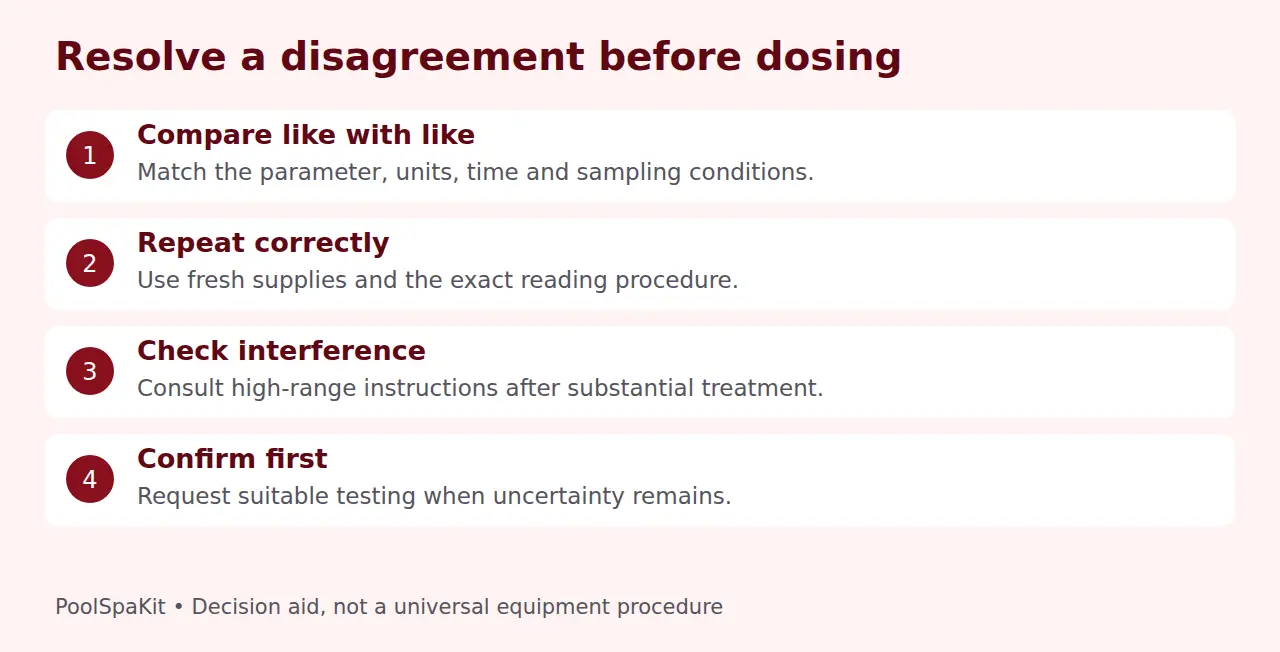
First repeat from representative samples collected under comparable conditions. Confirm the same parameter, fresh supplies, correct chart, sample size and timing. Write down recent treatment and whether the water had circulated as directed. Samples from different places or different times may not represent the same conditions.
Take an apparent zero chlorine result seriously after a substantial addition. CDC warns that a DPD test can partially or completely bleach when chlorine exceeds 10 ppm, producing a falsely low result. This is a method limitation, not proof that another dose is needed. Follow the exact kit’s high-range procedure or obtain appropriate confirmatory testing.
If the discrepancy remains, ask the manufacturer or a qualified pool-care provider about the method and possible interference. A pool-store result is useful when its measurement, method and sample handling are known; it should not be accepted solely because it was produced elsewhere. Do not keep adding chemicals while trying to force unrelated tests to agree.
Choose a setup your household can use well
Before purchasing, write a short list of the decisions the test must support. A sanitizer check before swimming, an alkalinity adjustment and an equipment salt alarm are different jobs. Bring that list to your supplier so the selection starts with required measurements rather than the number of colors on the package.
For an owner making chemical adjustments, prioritize a suitable DPD-based kit and learn its procedures. Keep convenient strips if they help complete routine checks, while establishing which unclear or consequential results need confirmation. This is an editorial workflow recommendation, not evidence that a specific strip brand has been independently tested against every kit.
Teach the person who actually tests the water. Let them practice the sample mark, reading sequence and log entry before a confusing result arises. Keep the current instructions with the supplies, and make a clear rule for pausing treatment or swimming when operating conditions cannot be confirmed.
The method does not replace the schedule. Use the existing pool water testing schedule to plan regular and event-driven checks. For cloudy water, follow a broader testing and troubleshooting sequence; a clear-looking sample or one satisfactory pad cannot diagnose the whole pool.
When treatment is necessary, use the chemical label and your pool’s requirements. Never mix treatment chemicals with each other. Resolve the reading first, then calculate and apply a label-compliant correction and retest as directed.
Research checked October 1, 2026. We only claim hands-on testing when we’ve actually tested the product ourselves.