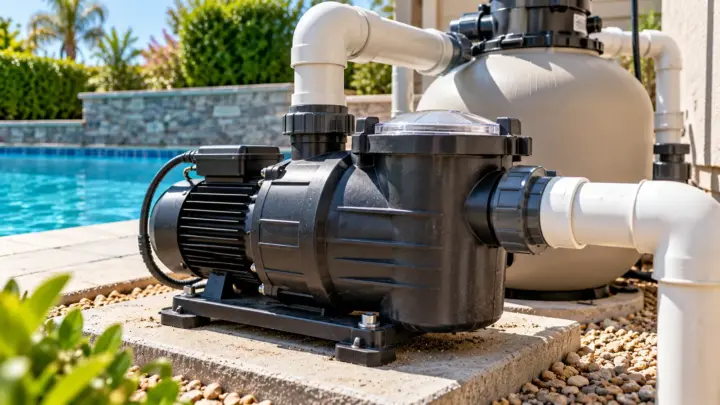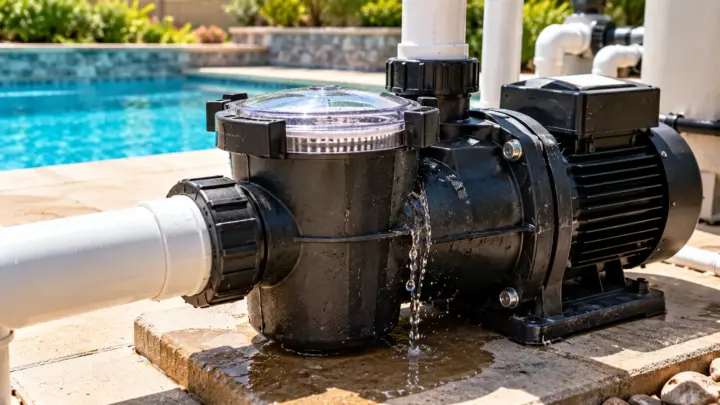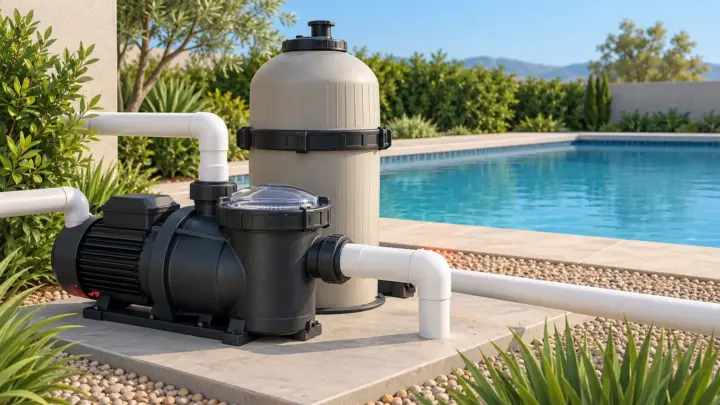
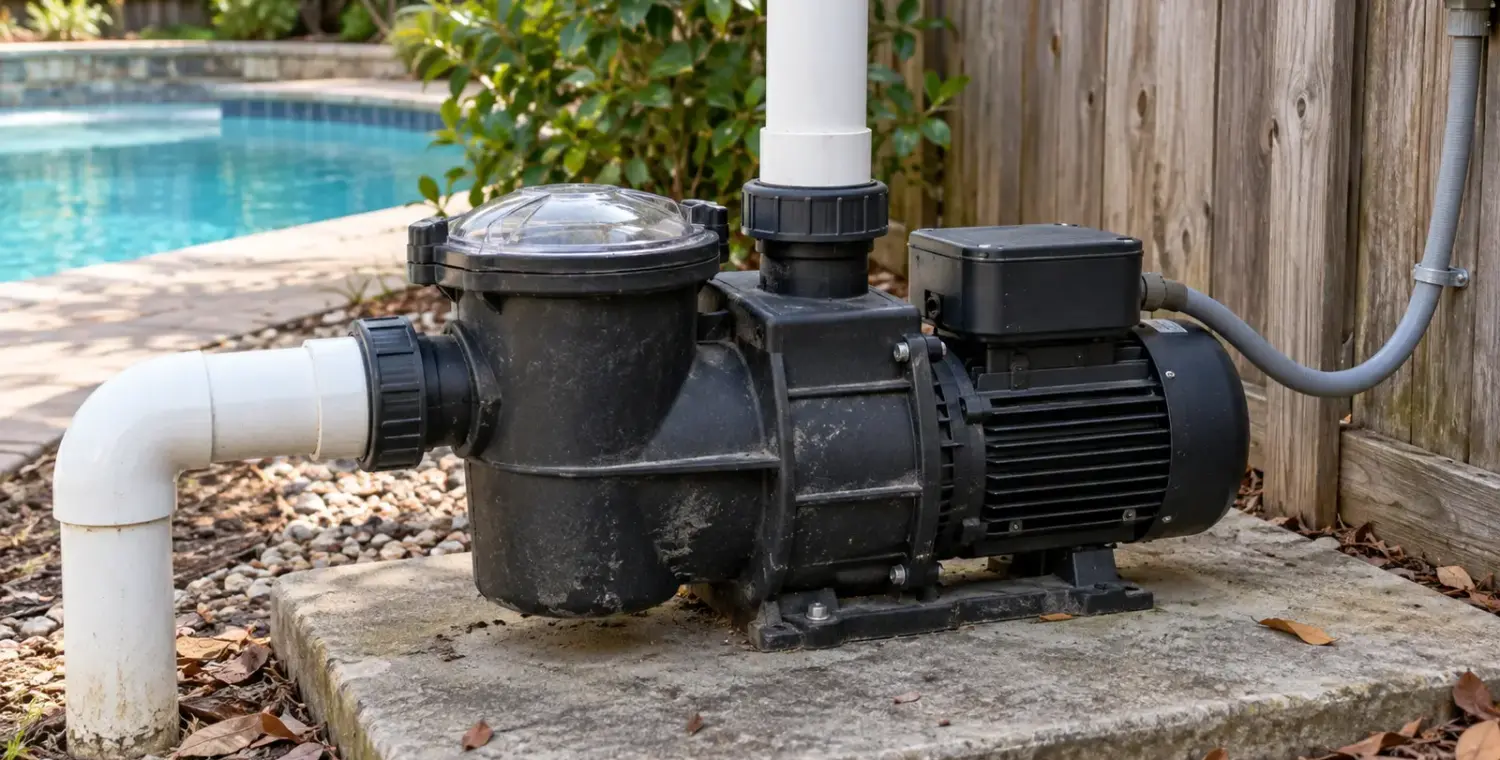
A pool pump costs watts ÷ 1,000 × hours run × your price per kWh. A pump drawing 1,500 watts for 8 hours a day uses 12 kWh a day. At the July 2026 US average residential price of 18.31 cents per kWh, that is about $2.20 a day, or about $66 a month. ENERGY STAR says a pool pump can cost as much as $310 a year in energy, enough to make it a home’s second-largest energy user.
Your own number depends on three inputs: how many watts your pump really draws, how long it runs, and what your utility charges.
The formula, step by step
A kilowatt-hour (kWh) is 1,000 watts used for 1 hour. Your bill charges per kWh, so:
- Watts to kilowatts: 1,500 ÷ 1,000 = 1.5 kW.
- Energy per day: 1.5 kW × 8 hours = 12 kWh a day.
- Cost per day: 12 × $0.1831 = about $2.20 a day.
- Cost per month: × 30 days = about $66 a month.
What your electricity price does to the answer
Your electricity price moves the answer a lot. In July 2026, EIA’s all-sector averages ran from 9.09 cents per kWh in North Dakota to 30.71 cents in California. The same 1,500-watt, 8-hour schedule over 30 days:
| Price per kWh | 30-day cost |
|---|---|
| $0.10 | $36 |
| $0.1831 (US residential average) | about $66 |
| $0.30 | $108 |
Use the energy (per-kWh) price from your bill, including any per-kWh delivery charges. Fixed monthly customer fees don’t change when the pump runs, so leave them out. On a time-of-use plan, price each block of hours at its own rate.
Variable-speed pumps: add up each speed
A variable-speed pump changes its draw with speed, so add up each stage of the schedule. Example: 200 watts for 6 hours (1.2 kWh) plus 1,200 watts for 2 hours (2.4 kWh) is 3.6 kWh a day, about $20 a month at the average price.
Speed matters far more than hours. ENERGY STAR notes that halving pump speed cuts energy use to one-eighth. That’s why a variable-speed pump running longer at low speed usually costs less than a single-speed pump running fewer hours. Cutting hours also helps: running the filter 6 hours a day instead of 24 cuts energy use by 75%. Run the pump long enough to keep the water clear. Our guide to how long to run a pool pump covers the hours, and the variable-speed vs single-speed comparison covers the upgrade.
Where to get your pump’s real wattage
- The pump’s display or app. Many variable-speed pumps show live watts. Pentair’s IntelliFlo3 Run Data screen, for example, displays estimates of current power consumption.
- Nameplate. Volts × amps on the label gives an upper limit. The pump usually draws less than that while running, so an estimate built on it comes out high.
- Your utility. A smart-meter app showing hourly use will show the jump when the pump turns on.
Read numbers from the outside only. Pentair’s manual says never open the inside of the drive motor enclosure: its capacitors stay charged even with the power off.
Sources
- U.S. Energy Information Administration: Electricity glossary
- U.S. Energy Information Administration: Electric Power Monthly: Retail service by customer sector (July 2026 data)
- ENERGY STAR (EPA/DOE): Pool Pumps
- Pentair: IntelliFlo3 and IntelliPro3 VSF User’s Guide
Research checked 2026-10-08.