Hot tubs hold far less water than pools, so a little extra chlorine or a recent shock can push the level up quickly. A high reading is usually temporary and easy to fix, but it is a reason to wait before soaking. This guide covers what “too high” means for a hot tub, how to confirm the reading, what causes it, and how to bring it down safely.
The short answer
Stay out of the water, stop adding chlorine, and retest to confirm the reading. With the cover open, chlorine usually falls on its own as the water is used and circulated. Hot tub maker Master Spas says that if chlorine measures above 5 ppm, bathers should not enter until the level drops, either by waiting or by using a chlorine neutralizing product. A partial drain and refill also lowers it. Never mix chemicals while you do this.
Key takeaways
- Hot tub targets are higher than pool targets. CDC recommends at least 3 ppm in hot tubs; Health Canada gives 3-5 ppm for residential spas and hot tubs.
- Very high chlorine can bleach a DPD test and read falsely low.
- Shock treatment, overdosing and lower use are common reasons for a high reading.
- Use neutralizers only according to the label, and add one product at a time.
What counts as “too high”?
| Source | What it says |
|---|---|
| CDC (United States) | At least 3 ppm chlorine in hot tubs, with pH 7.0–7.8 (a minimum) |
| Health Canada | 3-5 ppm free available chlorine or bromine for residential spas and hot tubs |
| Public Health – Seattle & King County | At least 3 ppm; chlorinate back to 3-6 ppm after use; notes some owners keep 4-6 ppm |
| Master Spas (manufacturer) | Above 5 ppm, bathers should not enter until the level drops |
Evidence conflict: the upper figures differ. Health Canada’s range tops out at 5 ppm and Master Spas uses 5 ppm as its “do not enter” point, while King County’s guide mentions 3-6 ppm after use and 4-6 ppm kept by some owners. CDC gives only a minimum. Follow your hot tub manufacturer’s manual and your sanitizer label first; when in doubt, wait until the reading is within the lower range.
Confirm the reading
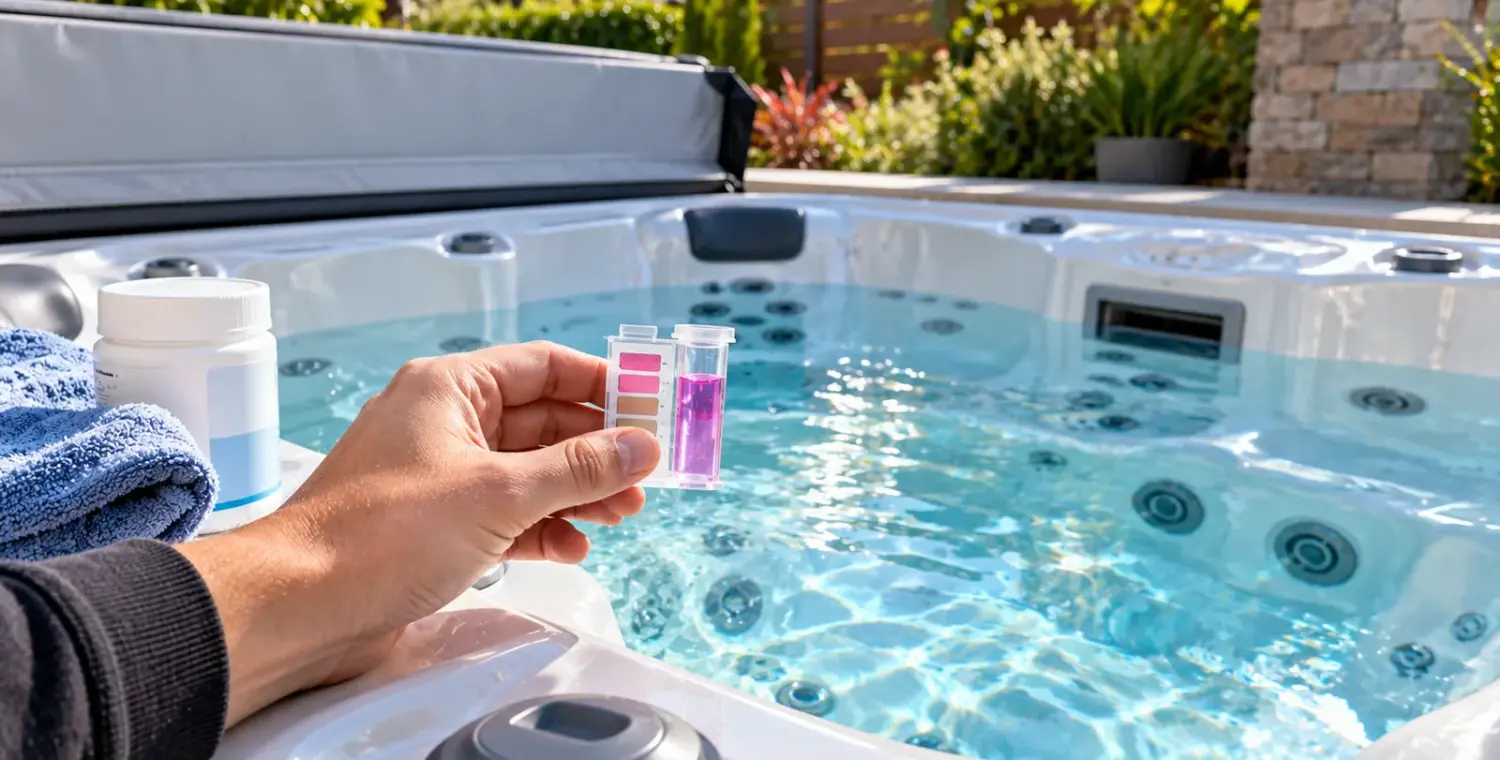
CDC explains that if chlorine is above 10 ppm, a DPD test can partially or totally bleach out and show a false low or 0 ppm result. A hot tub right after shocking can easily be in that zone. If a result looks odd, retest carefully and follow your kit’s directions for diluting the sample.
Why hot tub chlorine runs high
Shock treatment
Shocking deliberately raises chlorine. King County’s guide, for example, recommends a weekly superchlorination to 10 ppm free chlorine to remove chloramines. After a shock, the level is meant to be high for a while. Test before anyone gets in.
Too much product
Small water volume means a small overdose has a big effect. Measure doses using the product label and your hot tub’s volume from its manual.
A dispenser or feeder set too high
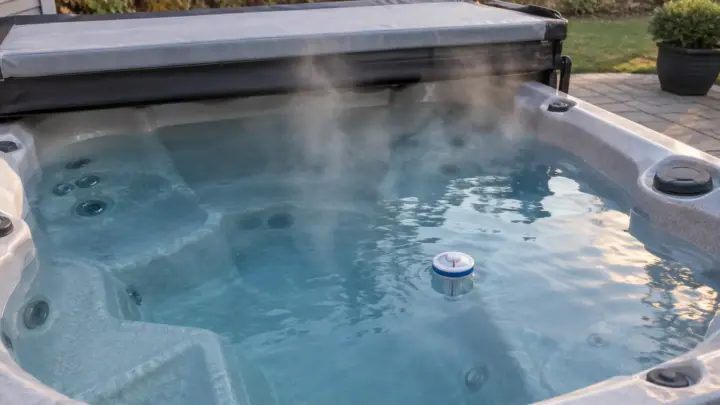
Floating dispensers and other feeders keep releasing chlorine. If readings stay high, turn the dispenser down or remove it according to its instructions. King County also warns never to put granular chlorine in a tablet chlorine feeder.
Less chlorine being used
CDC lists swimmer inputs and hot tub jets that create mist among the things that reduce chlorine. King County adds sunlight, heat, bubbling water, perspiration and body oils. When the tub sits unused with the cover on, less chlorine is used up, so the same dose leaves a higher reading.
Symptoms
People usually notice irritated eyes or skin. Those symptoms have several possible causes, so test rather than guess. King County notes that both low and high pH cause skin and eye irritation. A strong chemical smell is often from combined chlorine, not too much free chlorine; see hot tub water smells bad. King County also notes gradual bleaching of swimsuits at about 8-10 ppm free chlorine, which it says poses no health hazard.
Is it safe to soak?
There is no single number that every source agrees on. A conservative approach is to stay out until chlorine is back within the range your hot tub manual, sanitizer label and local health guidance give, and pH is in range too. Master Spas uses 5 ppm as its point to stay out.
How to lower chlorine safely
- Stop adding chlorine. Pause dispensers or feeders.
- Open the cover and run the circulation. Let the water circulate with the cover open. Master Spas says to keep the cover open for at least 15 minutes when adding chemicals, to prevent gas damage to the cover.
- Retest. Check every few hours until the reading is back in range.
- Consider a neutralizer only if needed. Master Spas mentions using a chlorine neutralizing product. Follow its label exactly, add it alone, and retest before adding anything else.
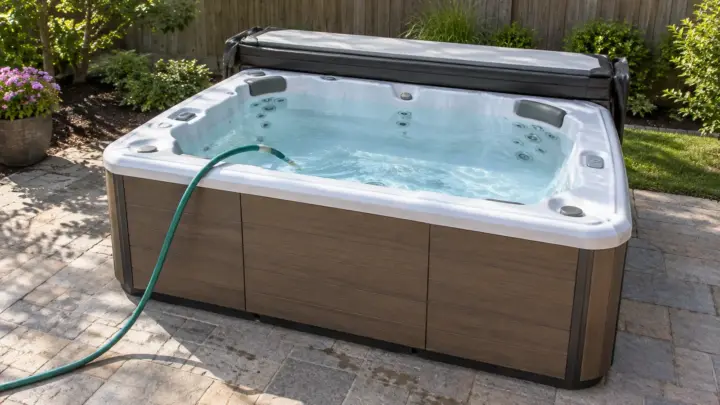
- Or partially drain and refill. Replacing some of the water with fresh water dilutes the chlorine. Check your manual for draining steps and switch the power off as it directs. Check local rules on where chlorinated water can be drained. If the water is old anyway, see how often to change hot tub water.
Handle chemicals safely
- CDC warns that pool chemicals can injure people when mixed together or handled without protective equipment.
- Read the label. Health Canada notes the label states how much to use and how to handle the product safely.
- Wear gloves and goggles, as Health Canada suggests.
- Store chemicals in their original labeled containers, away from children and pets.
After it comes down
Check pH. King County gives an acceptable hot tub pH range of 7.2-7.6, while CDC’s range is 7.0–7.8. Use your manual’s range, and see hot tub pH and alkalinity. Keep an eye on chlorine so it does not fall too low. If it does, see hot tub chlorine too low. If chlorine is hard to manage in your tub, bromine vs. chlorine compares the two sanitizers.
When to call a professional
- An automatic sanitizing system keeps producing high readings after you adjust it according to its manual.
- You cannot get consistent test results.
- Someone has symptoms after soaking. Seek medical advice, or poison control if chemicals were swallowed or mixed.
FAQ
How long does it take for hot tub chlorine to drop?
It depends on how high it is, the temperature, use and whether the cover is open. Retest rather than waiting a set time.
Can I add water to lower the chlorine?
Yes. Draining some water and refilling dilutes the chlorine. Then rebalance and retest.
Sources
- CDC: Home Pool and Hot Tub Water Treatment and Testing
- Health Canada: Swimming pool and spa chemicals
- Master Spas: Hot Tub Water Care & Basic Maintenance Guide
- Public Health – Seattle & King County: Staying Happy and Healthy in Your Spa & Hot Tub (6th ed.)
- CDC: Pool Chemical Safety
Research checked October 1, 2026. We only claim hands-on testing when we’ve actually tested the product ourselves. Manufacturer guidance applies to the named products; follow the manuals and labels for your own equipment.